
I was sitting at the Anodyne in Bay View one afternoon this past summer when a song caught my attention. It was a cover of a song I’d grown up listening to. I hit the song search button on my phone and got a result: “Mambo No. 5” by Masayoshi Takanaka (a cover, I should note, of the original Pérez Prado song, not the Lou Bega wedding reception mainstay). This was the first time in a long while that I’d found something completely new to me, and it didn’t come from an algorithm, but from the pure serendipity of being out in the world, in the right place at the right time.
Admittedly, the next thing I did was open Spotify to save the song to revisit later.
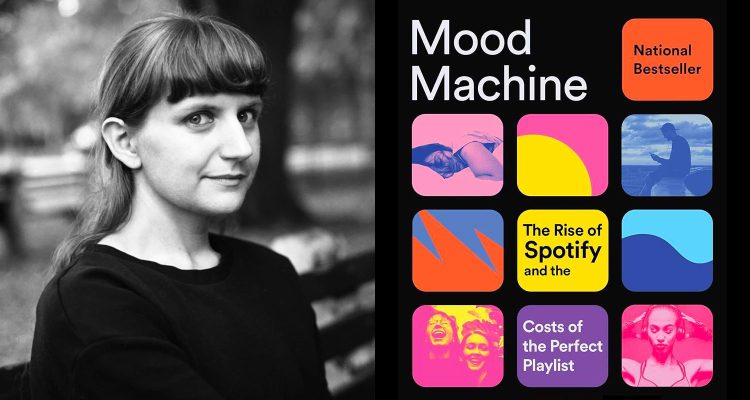
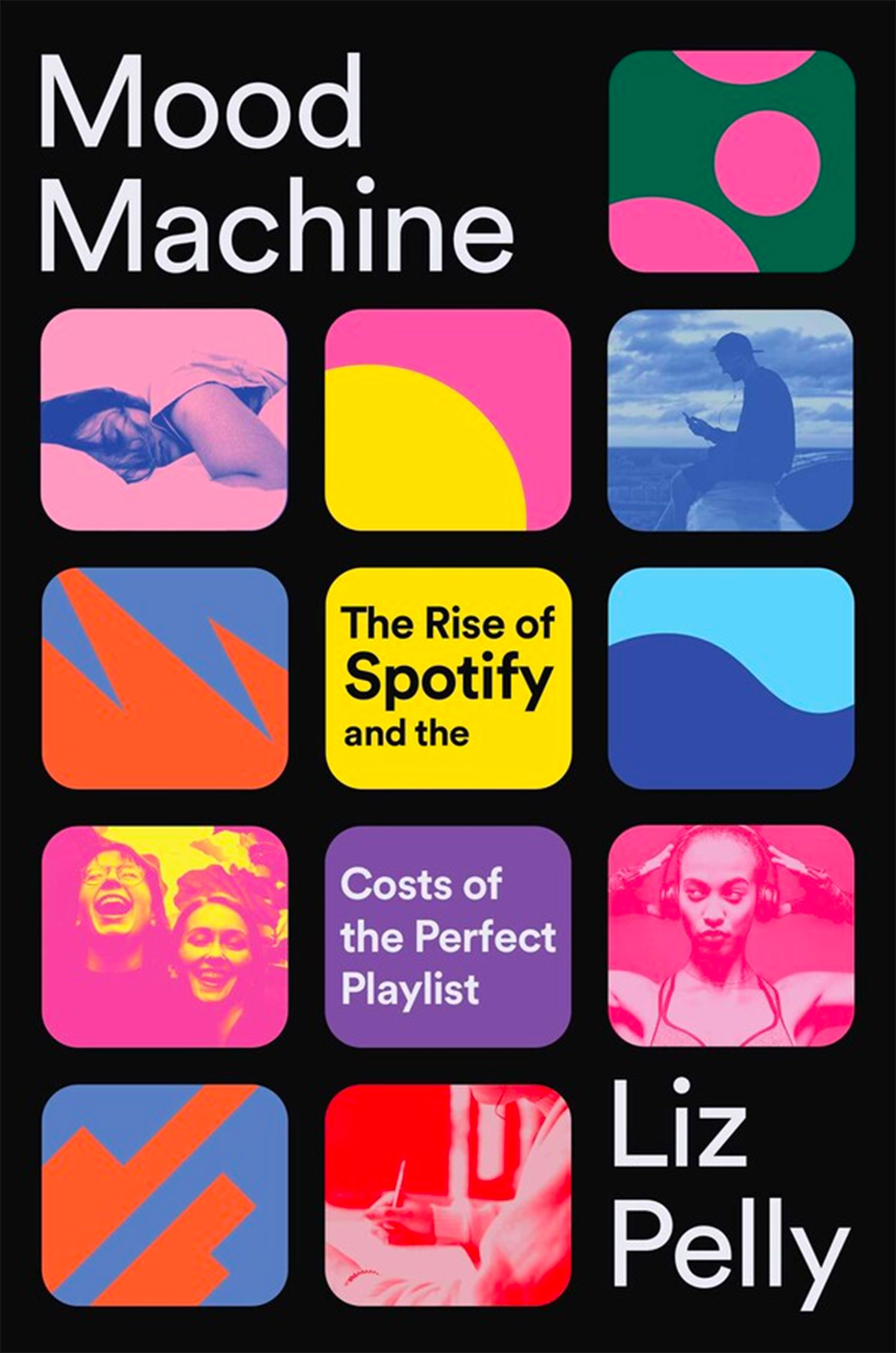
I love music, but I often get stuck in listening ruts. When I first signed up for a Spotify account sometime in the early 2010s, I was in awe—the platform offered not only the ability to stream any song I wanted on demand, but to discover whole new genres of music through curated playlists. For a few years, Spotify did help me find quite a few gems that I might never have come across otherwise, but that magic faded a long time ago. After reading Liz Pelly’s Mood Machine: The Rise Of Spotify And The Costs Of The Perfect Playlist, it’s hard not to look back and realize that the magic was never really there to begin with.
There’s this mythology around the origins of Spotify in which Swedish founders Daniel Ek and Martin Lorentzon set out to democratize music access and revolutionize the industry as the world knew it. But as Pelly reveals, that’s all this story is—a myth. Ek was something of a young tech prodigy, and together with Lorentzon, he wanted to create something that would generate revenue by blending advertising, streaming, and peer-to-peer file sharing. They registered their software companies, all bearing a variation of the Spotify name, before they had decided what exactly the traffic source for their ad machine would be. They ultimately landed on music because the files were easier to share than, say, video files, and the Swedish government’s ability to tamp down on music piracy was notoriously shaky.
I was stunned by how eerily identical this origin story sounded to that of another tech behemoth’s—Amazon. Though many of Amazon’s early employees genuinely believed that the company’s mission was to democratize reading, in truth, it had always been a way for founder Jeff Bezos to explore the nascent world of e-commerce. Books just happened to be cheap enough to source and ship, a simple means to a much larger end.
Knowing, then, the true intent behind Spotify’s creation–to be a revenue-generating flywheel for a couple of tech bros–helps all the other puzzle pieces fall into place. It was never a platform meant to level the playing field. The gulf between major international labels and independent artists only widened, with the platform rewarding those who could pay to play.
Pelly sounds another alarm here. To make more money, Spotify needed to incentivize consumers to stay on the platform as long as possible, racking up more and more streams. So came the rise of playlists for passive listening—white noise playlists for sleep, chill instrumental playlists to soundtrack a workday, et cetera. It’s music (or just sound, in many cases) that fills silence but doesn’t cause any ripples, made for “lean-back listening,” as Pelly names it, rather than active listening.
Though it seems, on the surface, inoffensive, this shift in listening culture has brought about lasting, damaging effects. “It follows,” Pelly writes, “that a population paying so little conscious attention to music would also believe it deserving of so little financial remuneration.” Add to all this the rise of generative AI. The lo-fi genre, once a subculture full of creative experimentation by independent musicmakers, is now flooded with cheaply made songs by ghost artists, giving rise to a sort of neo-Muzak. In effect, by getting pulled into this new wave of lean-back listening, we are in fact listening to nothing, and we are paying others nothing for it, and in the process, Spotify reaps all the wealth while degrading how we connect with and experience art.
Earlier this month, local band Gallowscrown, fronted by a friend I made through Ladies Rock camp, announced the release of “The Green Man,” their latest single. In an Instagram caption, the band wrote, “Unfortunately, because we are not releasing it to Spotify, it has been more challenging for us to promote this song.” I went to their Bandcamp page and downloaded the song, and it was a revelation–ethereal vocals blended with loud, thumping guitar and drums, the antithesis of the passive sound Spotify wants to keep us all tethered to. It’s a song I want to keep listening to because it’s a fantastic song, but also, because I know the people who made it, and I know that they’re doing it out of a love of the art form itself. It’s like a warm embrace amidst the cold of our increasingly AI-slop filled world.
Spotify promises ease and convenience at the cost of human connection. It makes sense, then, as Pelly notes in the conclusion of the book, that human connection is the perfect antidote, the solution that can restore color and texture and feeling to the soundtrack of our lives. She highlights community-driven music cooperatives like Catalytic Sound, through which indie musicians have combined their efforts to run a collective merch store and DIY streaming service with a more equitable pay structure. There are projects springing up across the country in which public libraries pay local bands for the rights to distribute their music to library patrons.
Though the argument around whether to engage with Spotify, and other tech giants like it, is often presented in financial terms, what we are ultimately choosing is the kind of life we want to live. Music is messy, and emotional, and yes, it’s not always easy to create and share and discover, but isn’t that what makes it all the more magical when we do find something new that moves us? If the cost of a so-called perfect playlist is all of the weird and wonderful humanity that music is made of, then we owe it to ourselves to finally break out of the Spotify cycle.
There is no convenient, one-size-fits-all solution to the problem that is Spotify, Pelly writes. “But buying music directly from artists and independent record labels makes an actual difference; it is an important part of supporting the culture you’d like to see keep existing.” To preserve this culture, we have to be active participants in it–attending live shows, keeping tabs on local bands and downloading their new tracks, tuning in to our favorite radio stations, visiting our neighborhood record stores more often, and ultimately, just choosing real, human connection over the empty promises of yet another app.
A few weeks after I first heard that Masayoshi Takanaka track at Anodyne, I was strolling through Beet Street Fest outside of Cactus Club when I came across Ripple Records‘s tent. I spotted a crate labeled “Japanese” and decided to take a peek. “Oh shit!” I blurted out, to the amusement of the vendors there. There it was: a Takanaka album, All Of Me. It felt like kismet. I handed over my $40 (to a real person!) without hesitation and spent the rest of the afternoon walking up and down Wentworth Avenue with the record tucked under my arm, saying hi to friends I hadn’t seen all summer, swaying to the live music, reveling in the beauty of this little pop-up world, and feeling thankful that we could all just be here, together, alive and deeply human.
Liz Pelly’s Mood Machine: The Rise Of Spotify And The Costs Of The Perfect Playlist is the December 18 selection for the Lion’s Tooth + Milwaukee Record Music Book Club.
Want more Milwaukee Record? Subscribe to our free weekly newsletter and/or support us on Patreon.