
Sunday Sauce is a monthly Milwaukee Record series about the area’s Italian food and the places, people, and traditions that make a meal feel like home. I’m chasing how these restaurants, grocery stores, events, and small details keep feeding people into comfort, community, and a sense of belonging in a loud world.
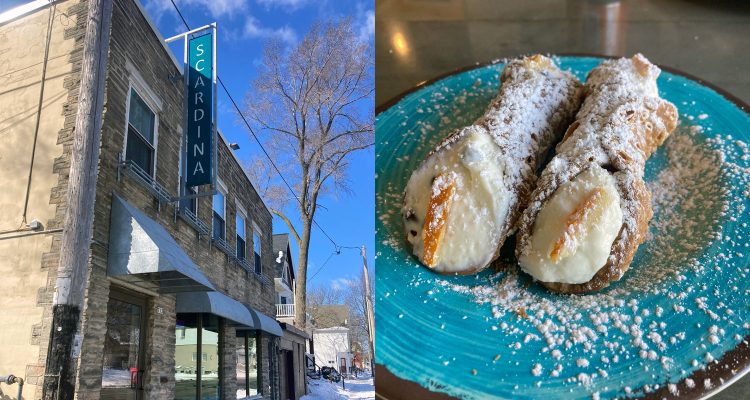
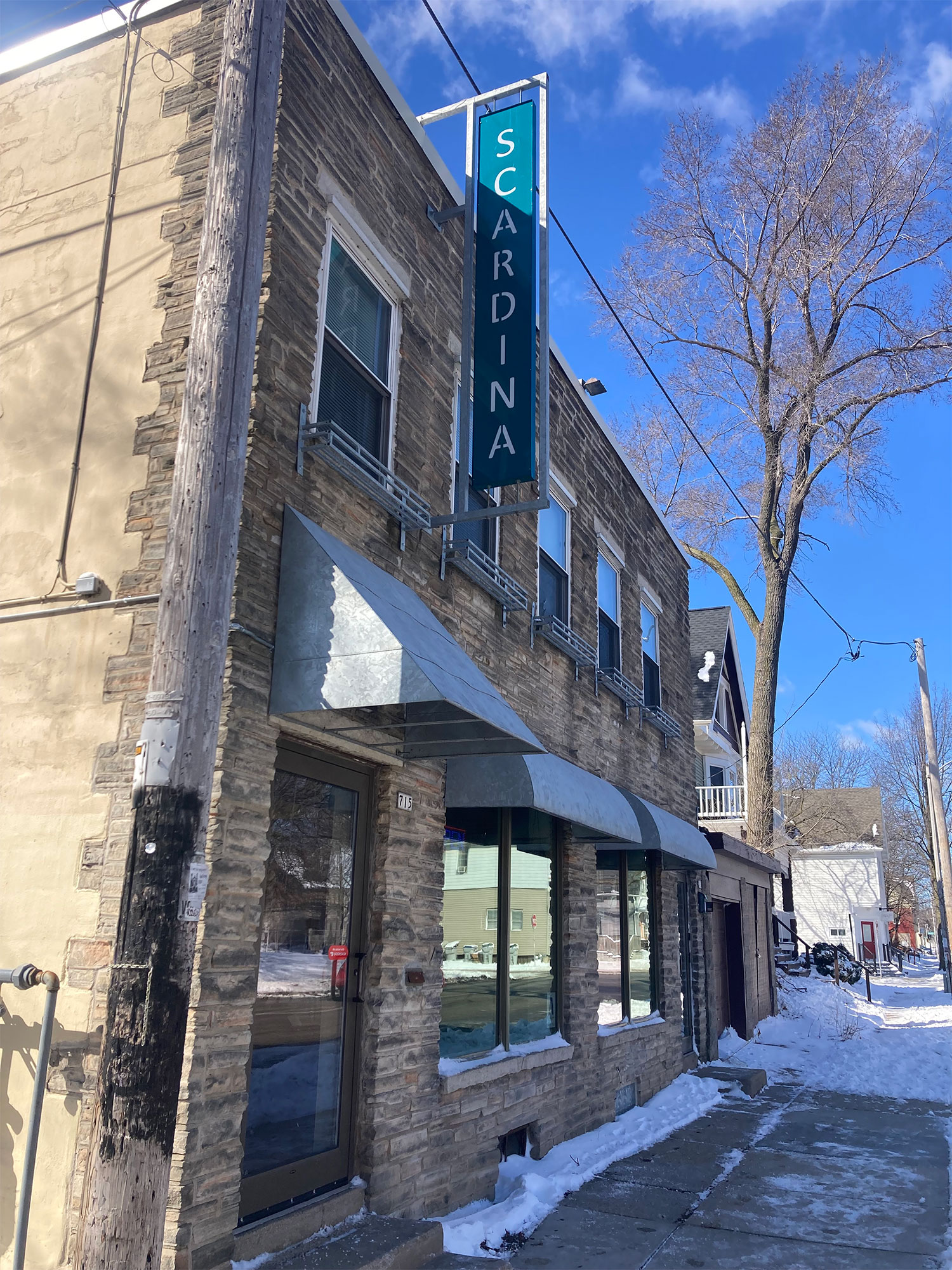
For this month’s installment of Sunday Sauce, we’re heading to Locust Street in Milwaukee’s Riverwest neighborhood, where Scardina Specialties (715 E. Locust St.; 414-395-3369) stands as a family-owned Italian deli with deep Sicilian roots.
A Sicilian Home on Locust Street
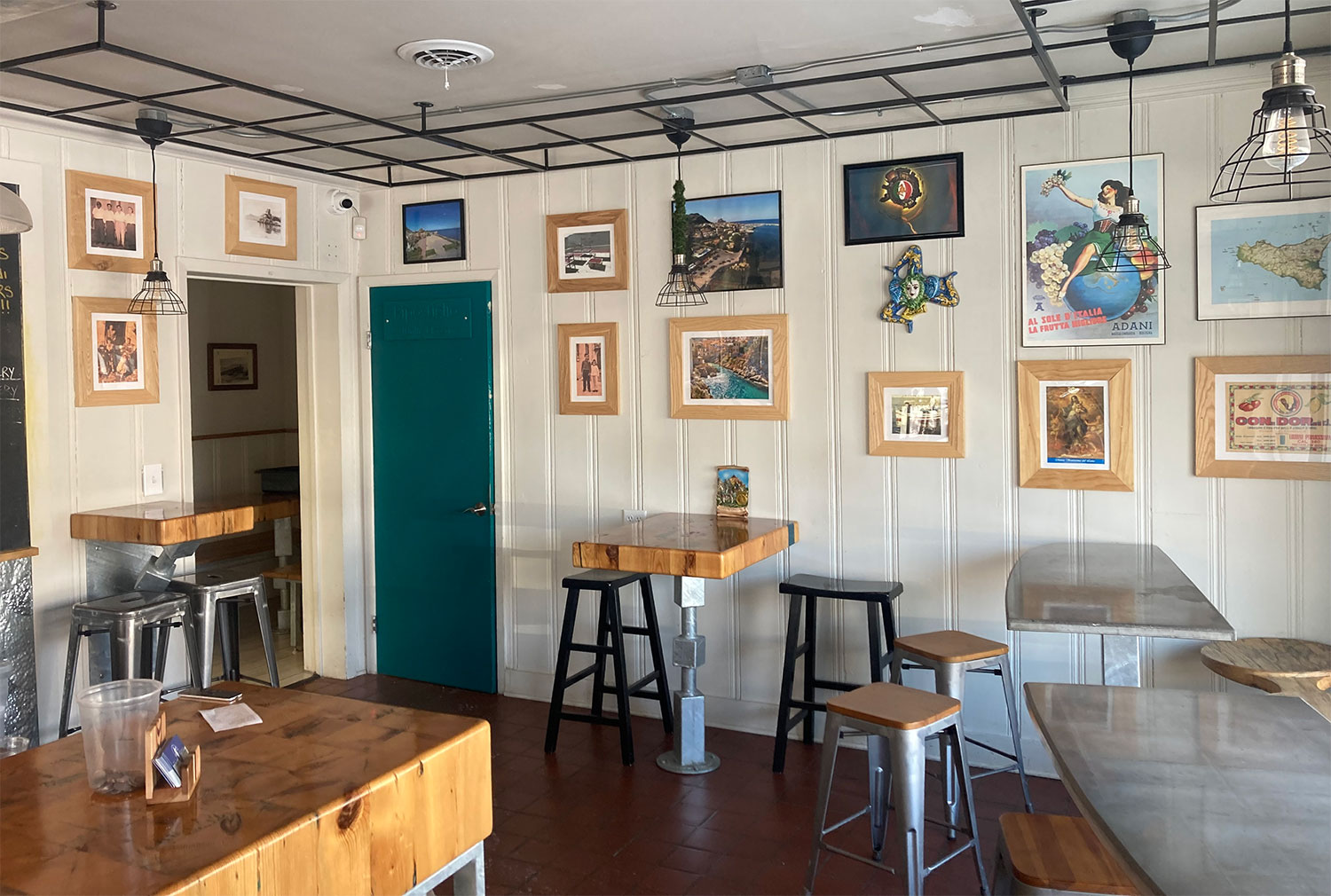
At Scardina’s, Sicilian identity is visible the moment you walk in. Opened in 2012 by Peter and Maria Scardina, who emigrated from Sicily, the shop is now owned and operated by their son Damien Scardina. Everything about the space carries a strong sense of heritage and pride. The business logo and decor nod to the official flag of Sicily, including the three-legged symbol known as the triscele. At its center is the head often identified as Medusa, while the three bent legs are said to represent the island’s three capes. Historically, the image has been tied to protection, fertility and agricultural abundance.

My first visits to Scardina’s were at its former home at 818 E. Chambers St. That address has its own bit of Milwaukee lore, having also housed the original Lakefront Brewery location, making it the Bethlehem of Riverwest Stein Amber Lager. As memorable as that old location was, the move to Locust Street in 2022 feels like a smart long-term fit. It is more visible, more walkable, and more woven into the daily neighborhood life.
The shop itself is small, with about five tables, mostly two-tops with butcher-block surfaces and custom metal bases. Wood and metal give the room a warm, sturdy feel, while photos of Sicily’s coastal landscapes hang on the walls. When you walk in, you’re greeted immediately by the deli counter and several large chalkboards advertising catering, beer on tap, take-and-bake pizzas, wraps, pasta, daily specials, and paninis.
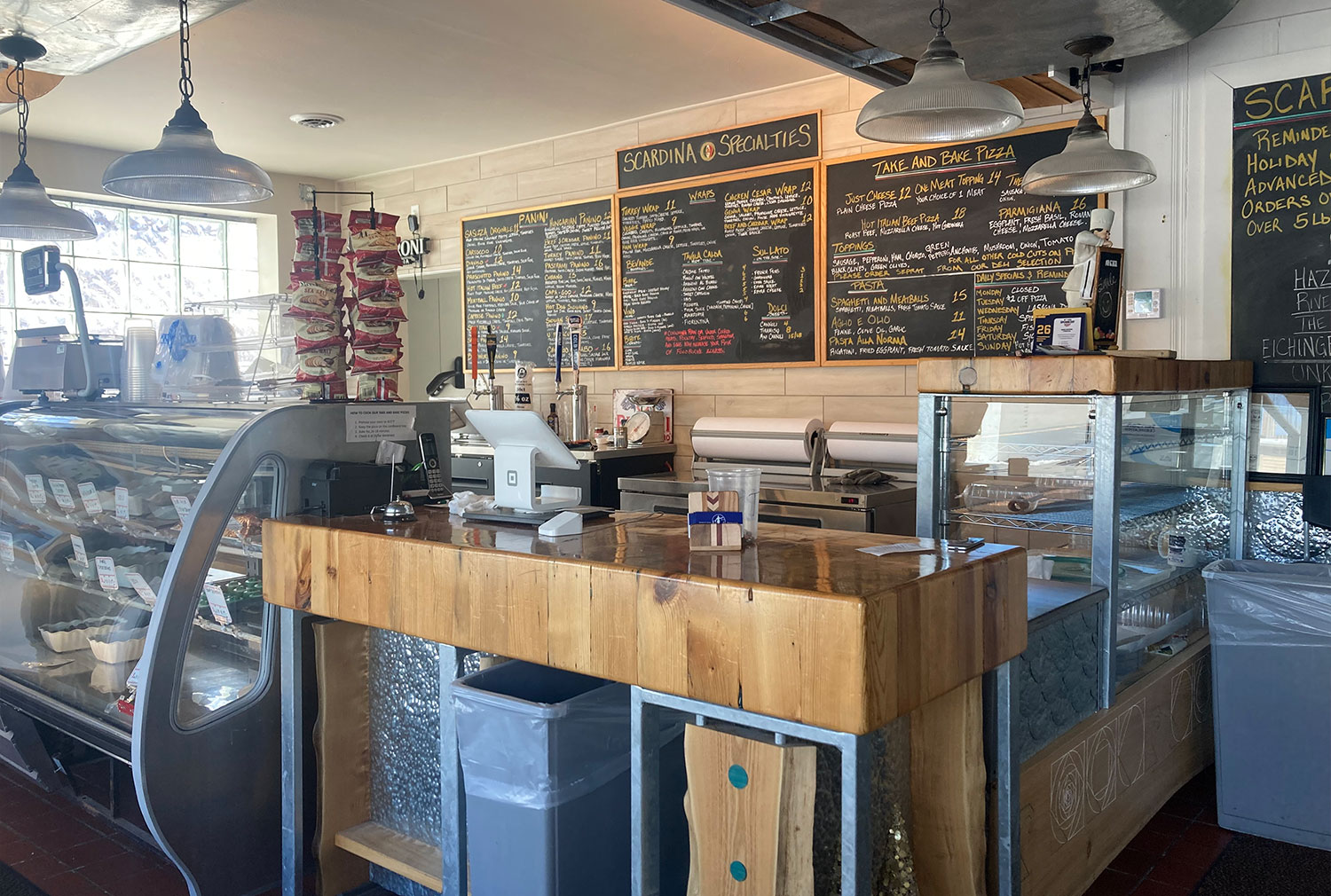
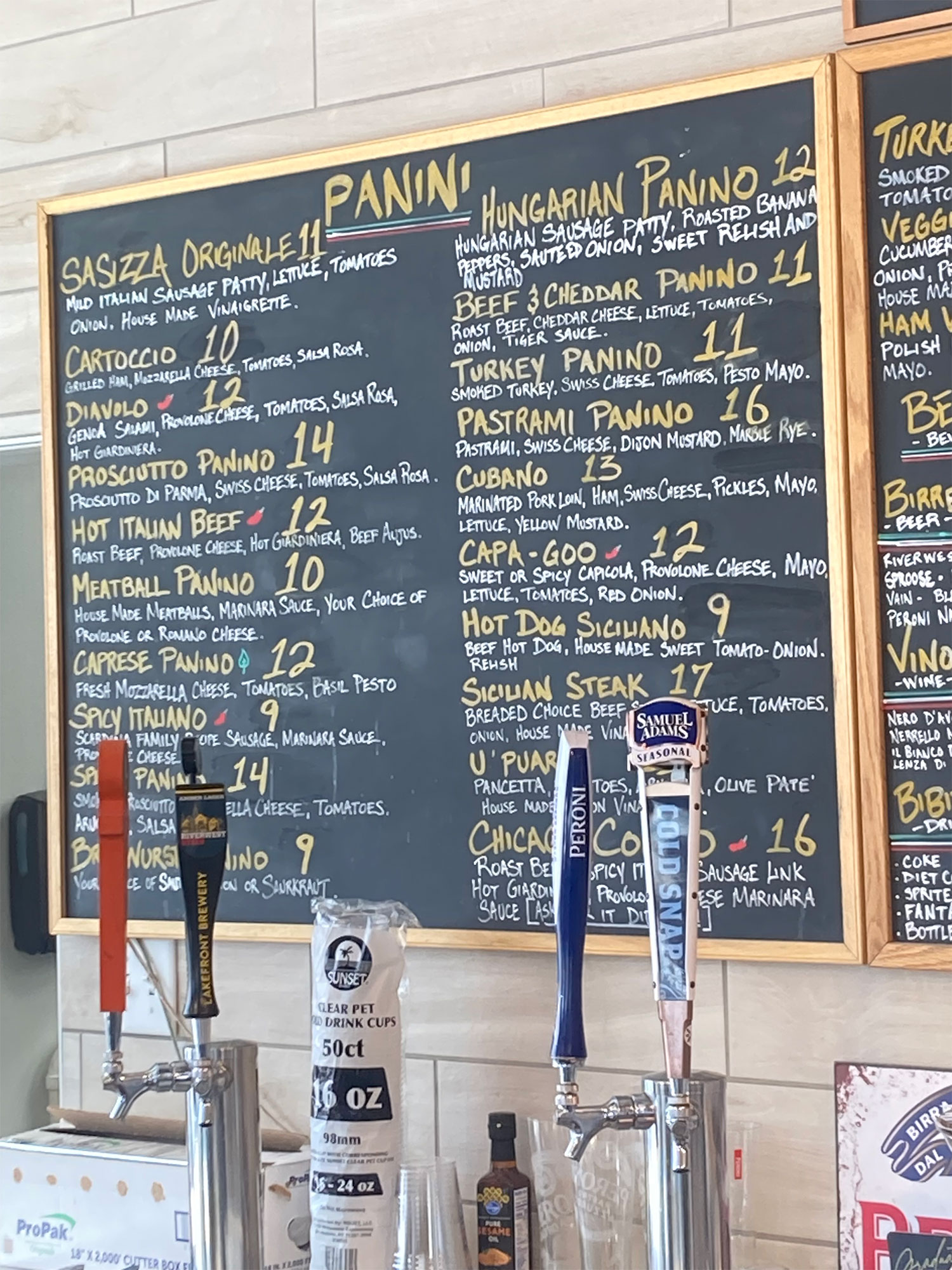
The pasta menu includes classics like Spaghetti and Meatballs, Aglio e Olio, and Pasta alla Norma. Each day brings a different special, and I made note to come back on a Saturday for the Sicilian-style pizza. On this visit, though, it was all about the paninis. Scardina’s offers 20 of them. My buddy and I agreed to split our sandwiches. I ordered the Capa-Goo and he ordered the Hot Italian Beef.
The Capa-Goo and the Long Life of Capicola
The Capa-Goo, Scardina’s wink at “gabagool,” the Sopranos-popularized pronunciation that the internet has turned into dust through overuse. I’m not innocent there. Still, I can honestly say I never heard anyone in the Italian community I grew up around use the word “gabagool.” We just called it what it was: capicola or capocollo.
The name refers to the cut itself, taken from the area between the neck and shoulder. After butchering the meat is dry salted, rubbed with spices, and held in a cool environment for at least a week. It is then wrapped in natural casing, tied, and moved to drying rooms, where it cures for a minimum of six months. The tradition runs deep. Evidence of pig farming in Italy dates back to the first millennium BC, and ancient Roman artifacts depict pigs as part of everyday life and food culture. Centuries later, a 12th century mosaic at the Abbey of San Colombano in Bobbio shows the ritual of pig slaughter, while by the early 15th century, merchants in Milan and Lombardy were already creating cured meats from Piacenza and elsewhere in the Po Valley. By the 18th century, these specialties had found their way into elite circles in France and Spain.
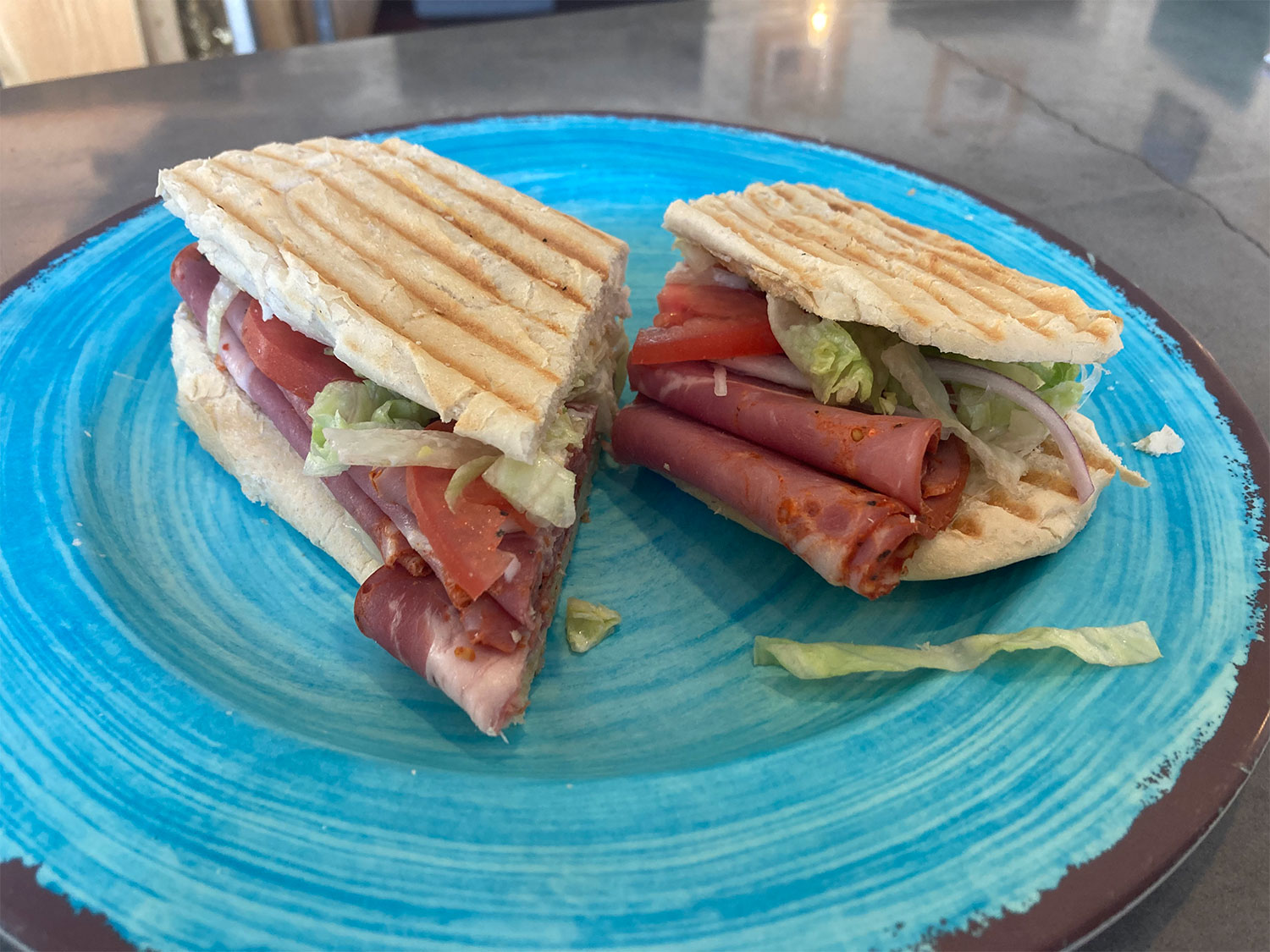
All that history eventually landed on my table at Scardina’s. The capicola came in seductive marbled slices, sweet and delicate, dancing beautifully with provolone, mayo, lettuce, tomato and red onion. It’s a strong case for keeping things simple.
From Chicago Banquets to Riverwest Lunch
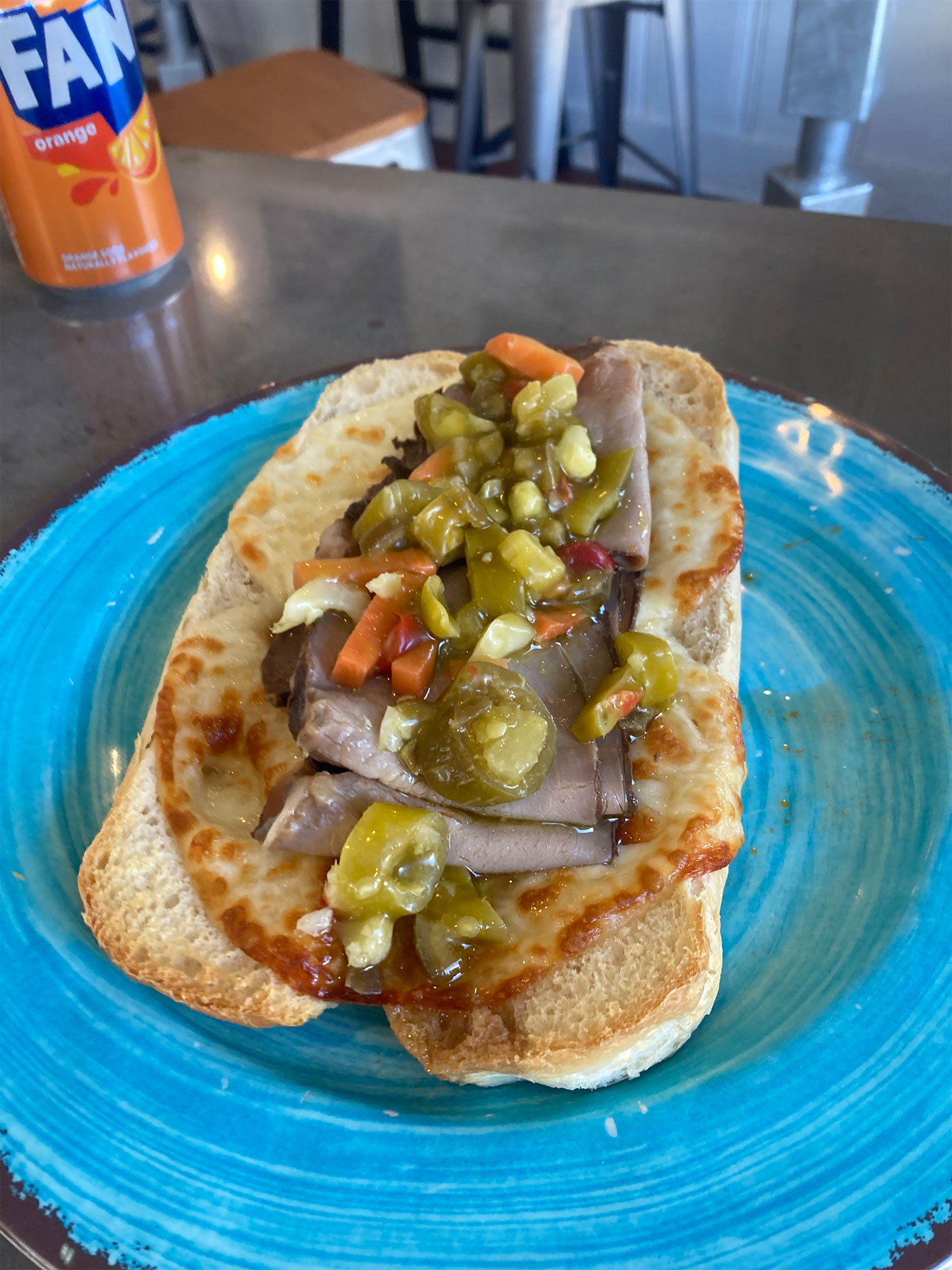
My friend ordered the Hot Italian Beef, and because we split the sandwiches, I got some quality time with it too. It arrived as an open-face stack of roast beef, provolone, hot giardiniera, and au jus on a roll. The kind of sandwich that is excited to put oil stains on your new shirt.
You can order it dry or dipped, but I’m here to say this: get it dipped. Fully dipped. Triple Lindy dive it into the deep end of the au jus swimming pool. The roll soaks up the jus in a way that makes the whole sandwich better.
I love giardiniera, but sadly everything below my tongue has been enduring trench warfare with my taste pallet these past few years and I can’t really go all in on the hot giardiniera anymore. So eating this sandwich (which was delicious) became the latest round in a long-running chess match with myself, one I reliably lose. The heat was real. Not ruin-your-day hot, but enough to bring on a little scalp sweat.
Unlike the long, old-world history behind many cured Italian meats, the Italian beef sandwich is not really an Italian invention so much as an Italian American one. Most accounts trace it to Chicago’s Little Italy in the early 20th century, where immigrant families built lives in working-class neighborhoods and found jobs in places like the union stockyards, where cattle, sheep, and pigs were processed. Those laborers would often bring home cuts of less desirable meats and with that the families learned that if beef was slow roasted, sliced thin, and simmered in broth, it could become something deeply flavorful and tender enough to feed large family gatherings.
That part resonated with me immediately. Growing up, trays of Italian beef and sausages were regular fixtures at summer family picnics in Wausau. I can still picture helping my father and grandfather roast peppers, the smell of the air and the sense that a good meal was never just about food.
By the 1920s and ’30s, that preparation started to move from family tables and wedding halls into storefronts. Many point to Pasquale Scala, who was serving roast beef in Chicago by 1925, as one of the first to popularize it commercially. Others credit Anthony Ferreri with his shop Al’s #1 Italian Beef. Who got there first is still debated, what matters is that Italian beef spread from immigrant gatherings to the wider canon, taking its place among the great Italian American dishes.
The Art of the Cannoli
One of The Godfather‘s most memorable scenes comes after Paulie Gatto betrays the Corleone family. Clemenza and Rocco lure him into the car under the pretense of routine mob business, then execute him on the side of the road. In the aftermath, Clemenza remembers the promise he made to his wife to bring home cannoli. With Paulie dead and the murder treated as just another piece of business, he delivers the film’s famous line: “Leave the gun. Take the cannoli.” The line endures because it makes the cannoli feel like a small but meaningful symbol of family, duty, and appetite. At Scardina Specialties, far removed from the Corleone orbit, the cannoli offered a much better way to consider that legacy.
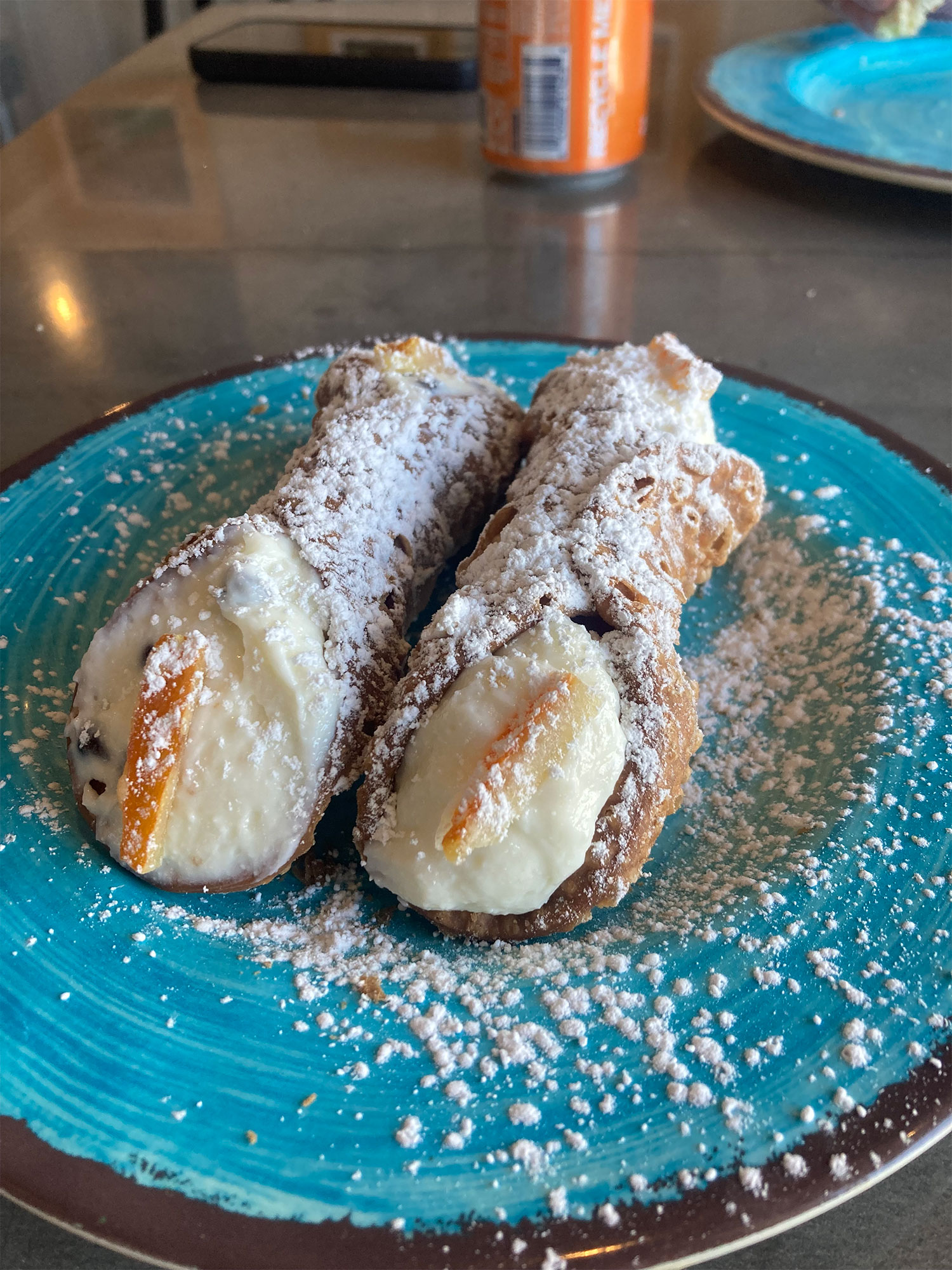
Traditionally the cannoli is a crisp-fried shell made from flour, lard and a little sugar, filled with sweetened ricotta and often mixed with chocolate, pistachios, almonds, cherries, or, in the Sicilian style and beautifully represented at Scardina’s, candied orange peel.
The true origin of the cannoli is unclear, but one of the few firm points is its long association with Carnevale, a celebration built around indulgence and excess before Lent. Various legends trace it to Arab influence in Sicily, and later to convents where nuns played a major role in pastry-making. What matters most here is the sensory contrast between the crunchy shell and soft sweet cream filling. Scardina’s nails that contrast. I don’t usually like speaking in absolutes, but I’ll say it anyway: this is the best cannoli I’ve had in Milwaukee.
A Place Worth Returning To
I didn’t get a chance to speak with Damien this time around, but this lunch was the highlight of my week, and it was a real pleasure to speak with Maria at the counter. The pride she had in what they do was unmistakable. She spoke passionately about food made in-house and recipes rooted in Sicily. It was another reminder of why family-run places like this matter so much. They are worth celebrating, protecting, and absolutely worth returning to.
Want more Milwaukee Record? Subscribe to our free weekly newsletter and/or support us on Patreon.
RELATED ARTICLES
• Sunday Sauce: Santino’s Little Italy is a Bay View Italian daydream
• Sunday Sauce: Glorioso’s is where my Milwaukee story starts