

Sunday Sauce is a monthly Milwaukee Record series about the area’s Italian food and the places, people, and traditions that make a meal feel like home. I’m chasing how these restaurants, grocery stores, events and small details keep feeding people into comfort, community, and a sense of belonging in a loud world.
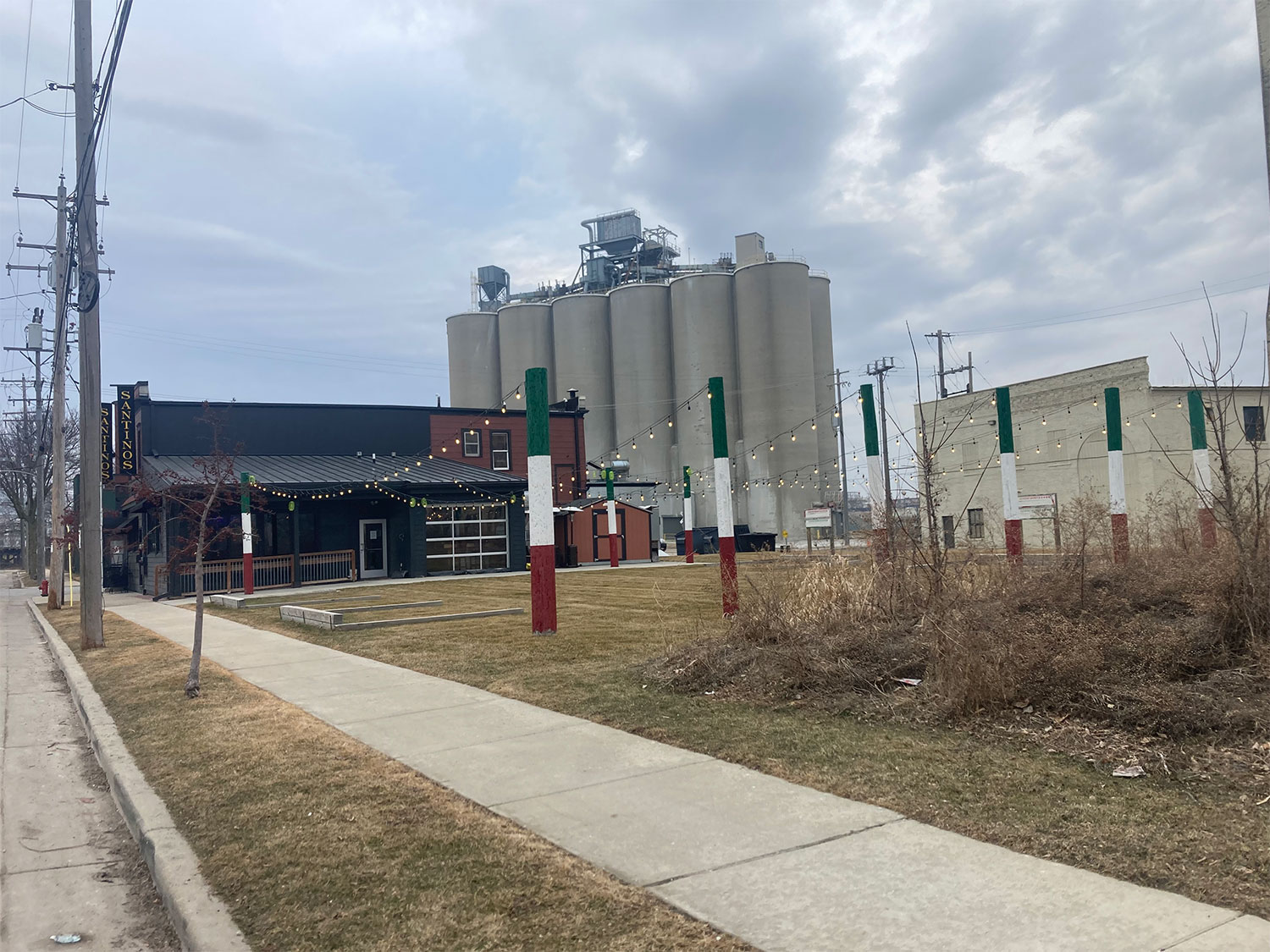
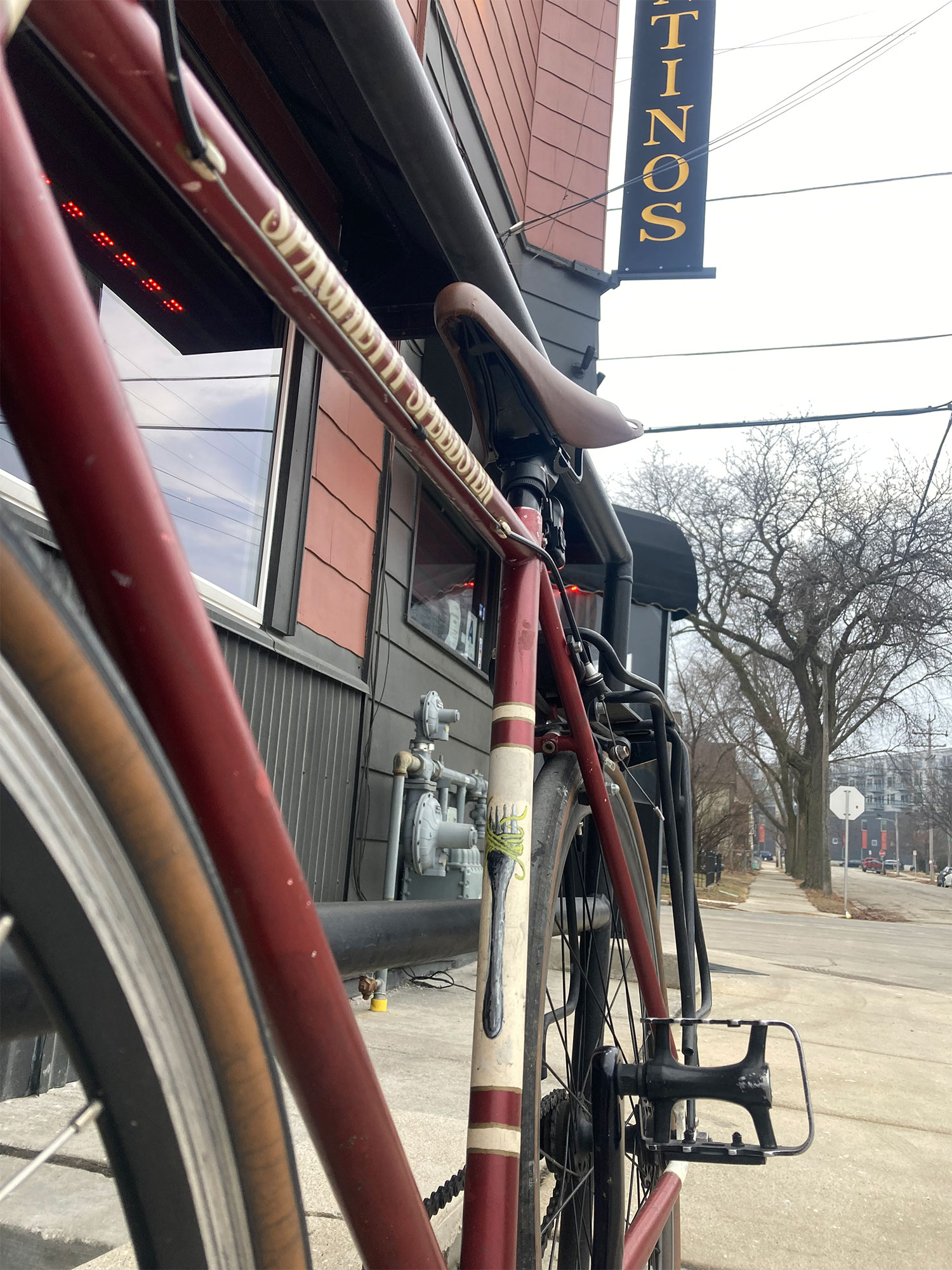
On a cloudy but balmy February afternoon, I rolled out on my single speed, a bike of my own design unironically dubbed the “Spaghetti Speedster,” and coasted through Bay View’s Northside industrial labyrinth to one of my neighborhood favorites: Santino’s Little Italy (352 E. Stewart St.; 414-897-7367), where co-owners Greg Huber and Santo Galati have been quietly turning an old Bay View corner into an Italian daydream. Under an overcast sky and the watch of looming silos, strings of café lights hang above what looks like a simple lawn, until you realize it’s the restaurant’s bocce ball courts, a built-in invitation to linger. A little slice of Napoli, cooked right into Milwaukee’s working skyline.
A former Pabst Brewing Company Tied House Reborn
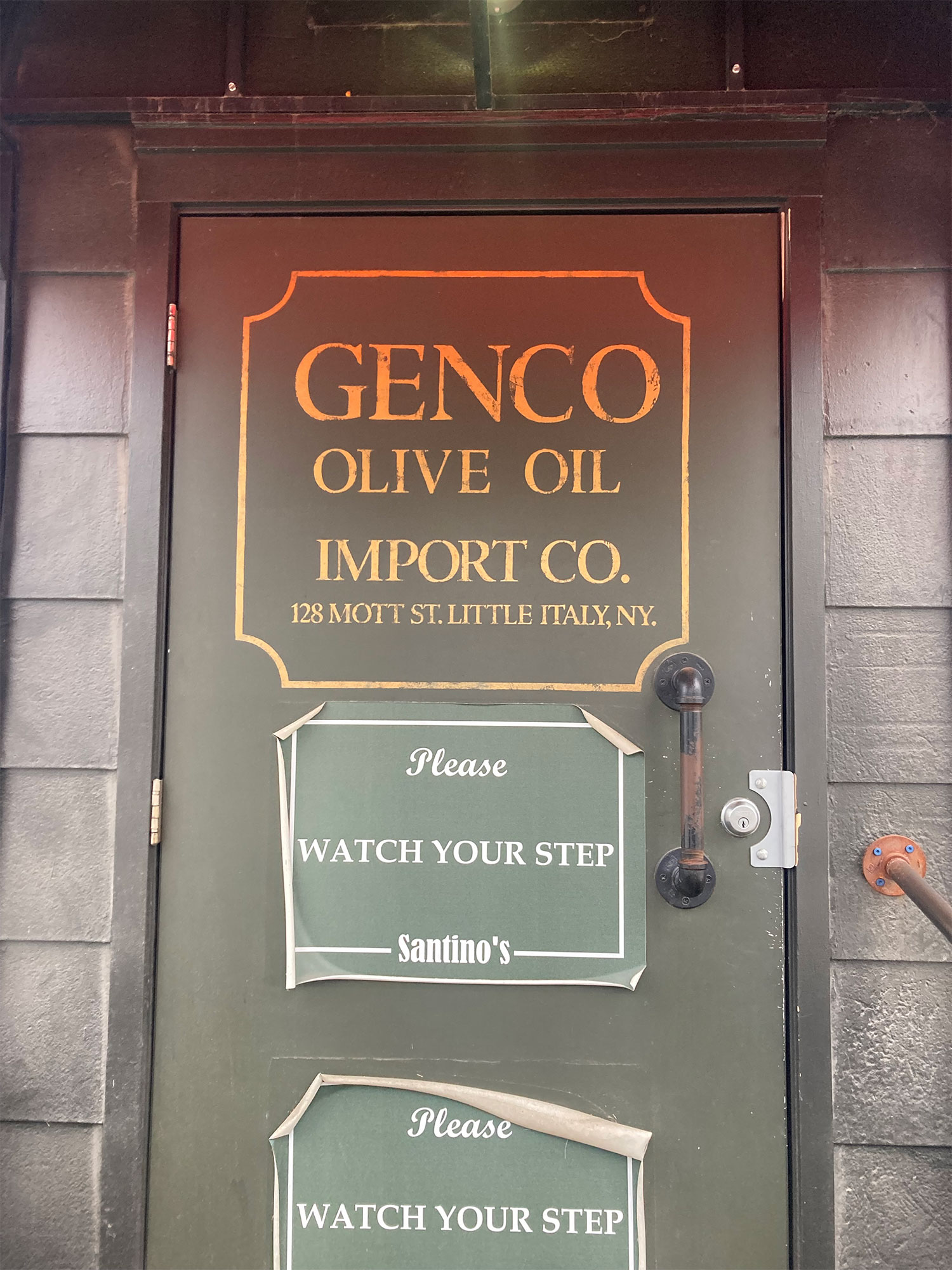
The ambiance hits the second you reach the front door, where a hand-painted, vintage-style “GENCO Olive Oil Import Co.” sign reads like a wink at old-city Italian storefronts. The New York address is pulled from that overlap zone where Little Italy bleeds into Chinatown, and it also tips its hat to the Corleone family’s front in The Godfather. Which feels especially fitting in Milwaukee, considering this 1899 building started life as a Pabst Brewing Co. tied house, then became a rumored brothel, and later cycled through various taverns over the decades.
When I asked about the building’s past, Huber said the Pabst-and-brothel stories track. “A building with that kind of history has character you simply cannot manufacture,” he said. By the time they found it, it was a run-down biker bar called the Nautical Inn. Santo called Huber one day and put it plainly: “Hey, do you want to buy an old run-down bar in Bay View?” “The bones were always there,” Huber said. “The age, the walls, the soul of the place, it was all there waiting.”

Sofia Loren on the Walls, Crooners in the Air
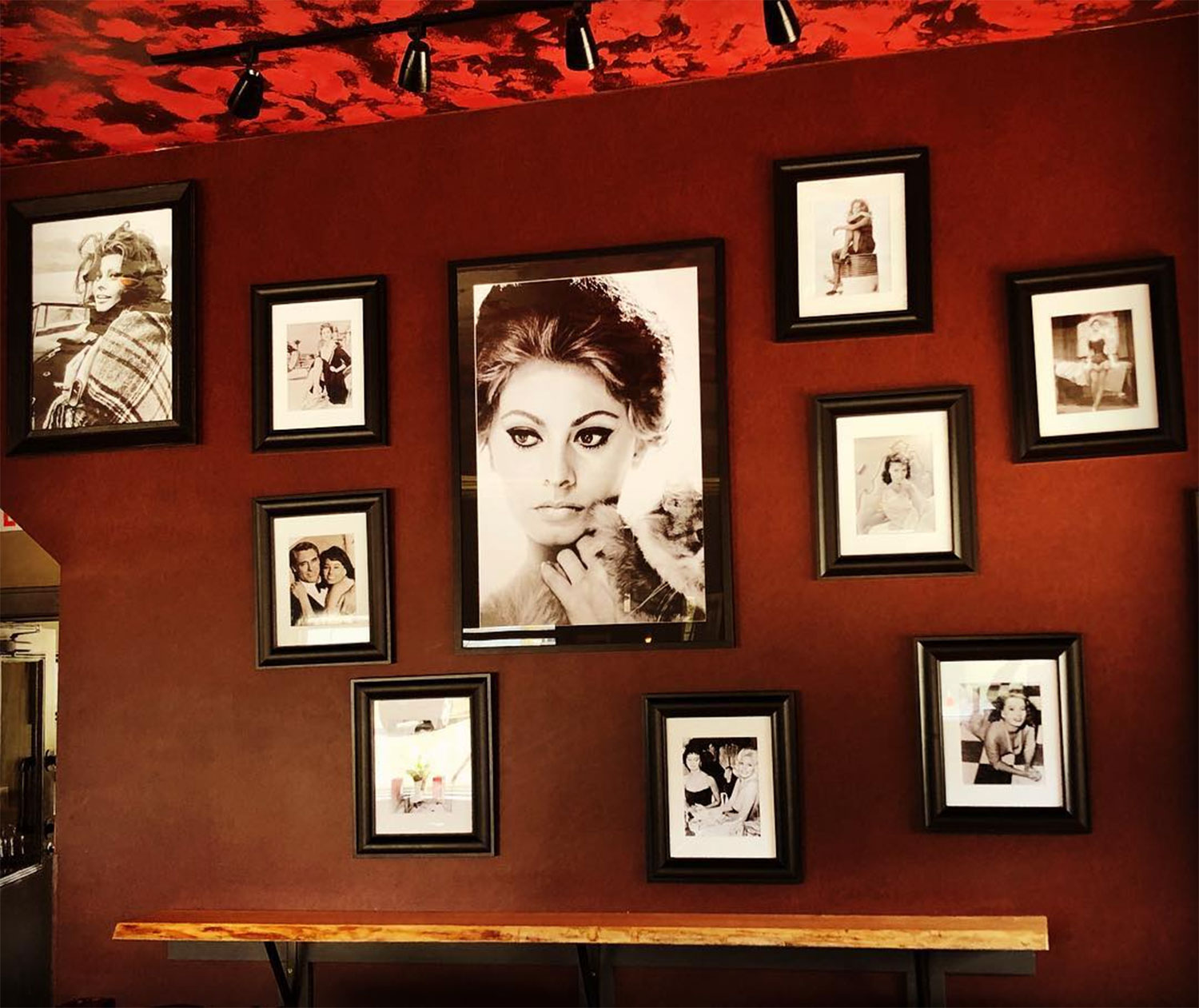
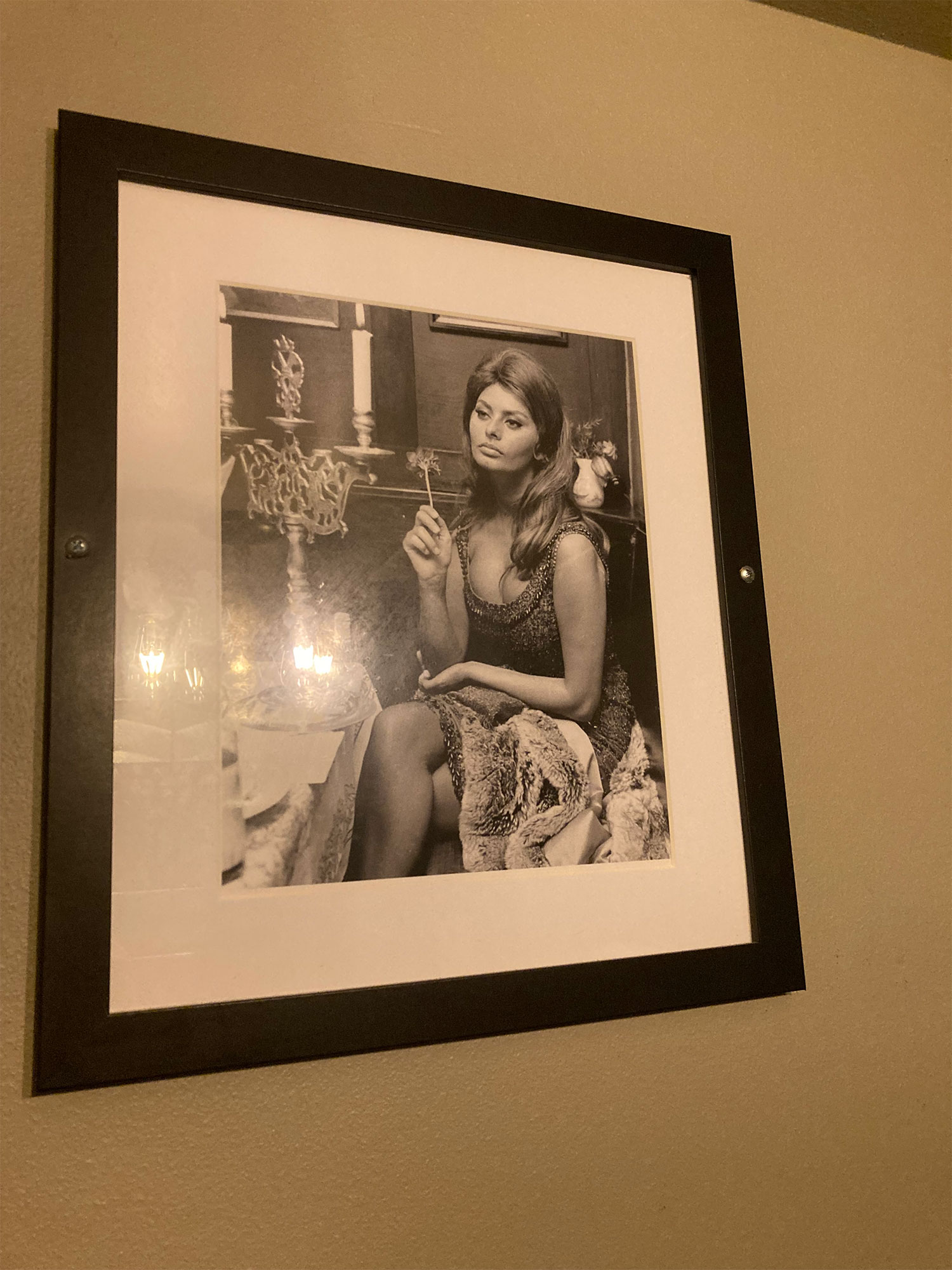
Once inside, the olive-green walls set the scene, washed in red light and dotted with framed photos of Sofia Loren. Huber told me Loren became the room’s north star because she embodies “class, beauty, and sophistication,” with “warmth” and “depth.” As for the count, I chuckled as he admitted they genuinely don’t know, but “we can never have enough.” In the bathrooms, some of the photos are literally screwed into the wall, a decision he said came after they proved to be “very popular.” No successful thefts since.
My ears were immediately blessed with Dean Martin’s “Volare,” followed by Luciano Pavarotti’s “Nessun Dorma,” the kind of crescendo that gives me goosebumps every single time. TVs are strewn throughout the place, but thankfully they weren’t locked onto sports. Instead, they were playing classic technicolor films, and today’s feature was the original Ocean’s 11 with Frank Sinatra, Martin, and Sammy Davis Jr.
That was intentional. “Sports belong in bars,” Huber said. “Classic Italian cinema belongs here.” The films, he said, live in the same emotional neighborhood as the food: family, love, loyalty, loss. “Everything has to speak the same language,” he said.
Between the movies and Loren’s watchful glamour, I was dropped straight into childhood. When my grandparents watched me, my grandfather had zero patience for kid’s TV, so instead of Blue’s Clues I was raised on Turner Classic Movies. If you’d ask nine-year-old me for a favorite film, I probably would’ve said Roman Holiday or The Bridge On The River Kwai. And I know my grandfather would swoon over Sofia Loren anytime TCM was screening Marriage Italian Style. Honestly, who wouldn’t? All of it adds up to old-world romance: mood, pacing, and cinematic charm. It’s the quintessential recipe for Italian restaurant ambiance, and Santino’s nails the landing.
Pasta for the Main, Amaro for the Fadeout
I bellied up to the bar as a solo diner and scanned the cocktail menu, clocking the Sofia Loren-named drink before landing on the “Yesterday, Today, and Amaro.” It’s a beautiful mash-up of American rye whiskey and Italian Cynar. Cynar isn’t exactly a crowd favorite, but you’ve probably seen it lurking on a shelf or back bar, and I’m here to say: don’t sleep on it. It’s a mysterious blend of 13 herbs and botanicals, peculiarly anchored by fermented artichoke (though it doesn’t really taste like it), and it delivers this gorgeous, bitter backbone. In this case, it reads like an American-Italian collaboration reminiscent of classic spaghetti western films.
When I asked Galati what dish, ingredient or ritual triggers a personal memory for him, he informed me that it starts with his family’s table: “The pastas, the sauces, the smell of my mother’s kitchen,” he said. That memory isn’t abstract at Santino’s. “That’s not a metaphor for us,” he said. “Those dishes are literally on our menu.” And the best compliment, he told me, is when someone takes a bite and says it reminds them of their grandmother’s cooking.
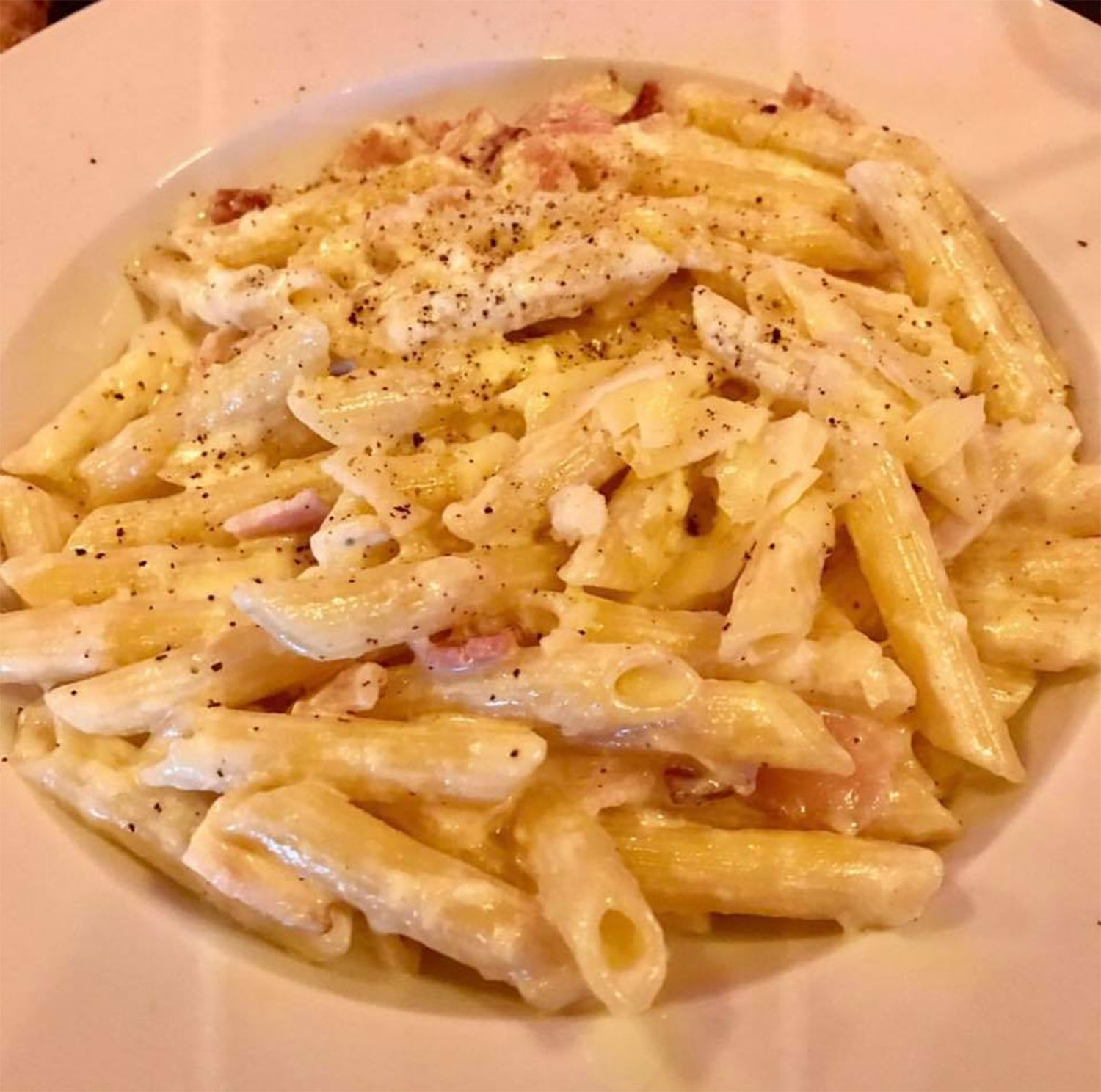
Though Santino’s is known for its wood-fired pizza, I was dining solo and on my bike, so I steered toward the pasta menu and ordered the carbonara. Still, it’s hard not to feel the pizza’s pull in the foundation of this place. The owners brought in a 6,000-pound Italian wood-fired oven and had to remove a wall to get it inside.
If you ever go digging into the history of a dish, you’ll usually find an argument waiting for you, and carbonara is no exception. For something that feels like an old classic, it’s relatively young in the grand timeline of Italian cuisine, really popping up in cookbooks in the mid-20th century. Whatever the origin story, the only undisputed fact is this: People really love carbonara.
Depending on who’s cooking, you’ll typically see guanciale or pancetta (similar cuts to bacon), whole eggs, Pecorino Romano, Parmigiano Reggiano, and black pepper.
And, maybe unintentionally following the same Italian-American handshake as my cocktail, Santino’s version opts out of imported pancetta and instead utilizes Wisconsin-made Nueske’s bacon. Hardly a fault considering this writer’s opinion that Nueske’s bacon is the best damn bacon in the world.
On the first bite, the sauce was rich and creamy, with Nueske’s bacon bringing immediate smoke and the black pepper snapping it all in focus. My cocktail played perfect backup, with Cynar’s bitterness cutting through the richness like a palate reset.
Built from the Guest’s Side Outward
The bartender was excellent and conversational, and when he mentioned he was family, it clicked. Unlike performative corporate Olive Garden, Santino’s isn’t trying to cosplay intimacy. Huber told me they didn’t come up through restaurants, and that ended up helping. They built the experience from the guest’s side outward: sound, lighting, and that first-second feeling when you walk in and somebody makes you feel expected. “Making every single person who walks through the door feel like they’re expected, welcome, and genuinely appreciated, that personal touch, that’s ours,” he said.
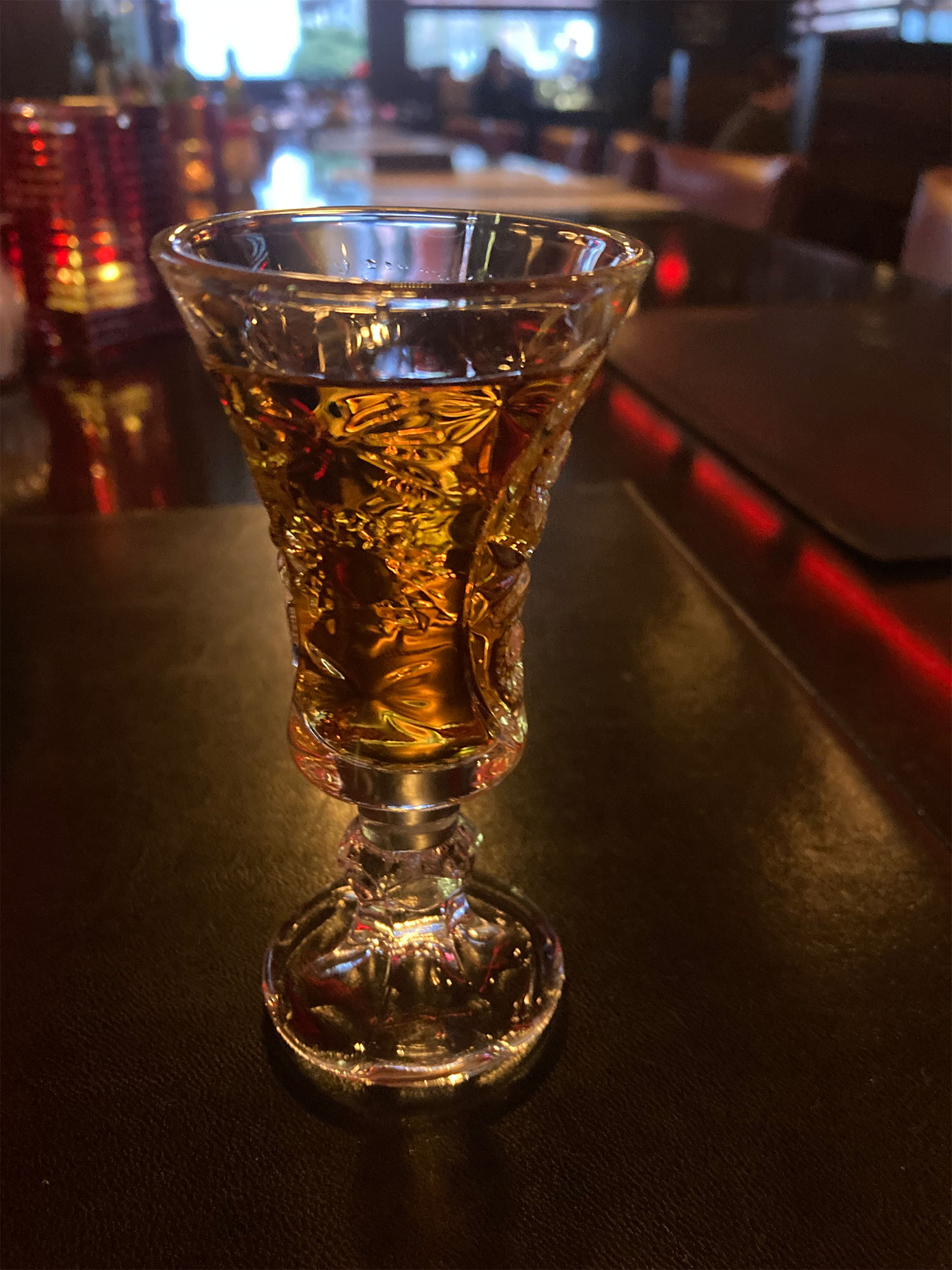
When I was asked about the dessert options, I went with the liquid kind: a gentle pour of Amaro Montenegro.
It’s my current favorite amaro, straight out of one of my favorite Italian cities, Bologna, in a bottle as vivacious as Sofia Loren herself. Made from a blend of 40 botanicals, it opens with a sweet citrus before sliding into a warm anise-y baking spice note that always takes me back to my great aunt’s homemade biscotti. It was a magnificent way to end a wonderful meal.
The Next Chapter Will Be Elevated and Unhurried
Santino’s Little Italy feels like a hidden treasure, but Galati and Huber aren’t stopping there. Coming soon, the duo will open Calogero’s just two blocks away, which Huber calls “an Italian cocktail lounge, sophisticated, intimate, and built around the idea that every great Italian evening deserves a perfect beginning and an even better ending.”
He described it as a different creature than Santino’s. “Santino’s is the Sunday dinner, the table, the family, the full meal experience,” he said. “Calogero’s is something different entirely… Italian ice cream drinks, martinis, Italian-inspired cocktails, wine,” all in a setting that feels “elevated and unhurried.” “We’re not making Santino’s 2,” he said. “We’re making the place that makes a great evening feel complete.”
Want more Milwaukee Record? Subscribe to our free weekly newsletter and/or support us on Patreon.
RELATED ARTICLES
• Sunday Sauce: Glorioso’s is where my Milwaukee story starts