
Welcome back to Milwaukee Metal Monthly, the column where I talk to people who nerd out to metal as much, if not more, than I do.
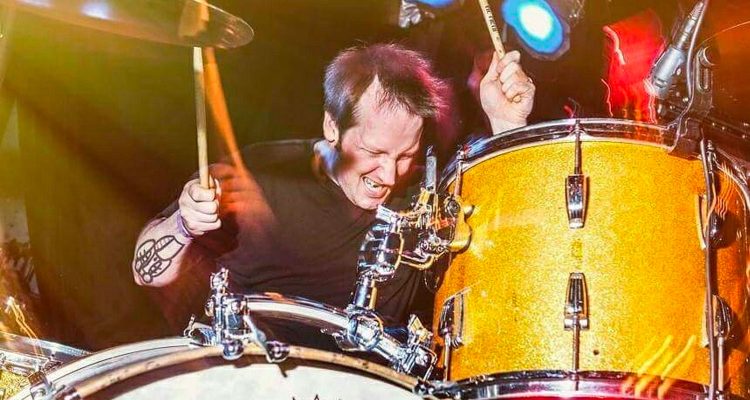
This month I’ve only got one interview, but, oh boy, it’s a doozy. (Hmm. Did I just show my age by using that term?) When I spoke to Niveous for July’s installment, Shane Hochstetler’s name came up because he was the dude that the band worked with on their excellent debut LP. During the interview, I asked the band if he’d be a good interview, and they said yes. (Longtime readers of the Record might recognize the name since he’s appeared before.)
So: on July 28, I went over to Howl Street Recordings and sat down with Hochstetler for an interview. Ninety-eight (!) minutes later, I went home assured this was my favorite interview in this column’s history. Indeed, I seriously considered making this month’s column be part one, and having next month’s be the sequel. And it wouldn’t have been difficult, either. The transcript’s word-count ended up being 14,000 ’n change, meaning there was too much good material to work with, such as an anecdote about meeting one of the Pixies at Electrical Audio in Chicago (“I carried Kim Deal’s luggage up one time when I was there.”), and a, let’s say, hot take regarding Megadeth that I agree with (“Rust In Peace is a fucking masterpiece, but I have to ignore Dave Mustaine’s voice.”).
As such, it became obvious pretty much instantly that when Hochstetler’s answering a question and/or explaining something, he’s just endlessly quotable. At one point he was discussing how he just wants to help people when it comes to being a producer and audio engineer, and to illustrate his point he casually offered this: “But at its core, this is a service industry. If I painted houses, and you hire me to paint your house and you want an orange house, but I fucking hate the color orange, it doesn’t matter. My job is to make sure you have the most bitchin’-looking orange house on the block. That’s it. And it wasn’t pulling teeth along the whole process.”
In terms of what Hochstetler does like—well, given what MMM covers, you can probably guess his preference(s). “I was a metal kid, man,” he reflects. “I grew up on Nuclear Assault and Metallica and Slayer and Megadeth. I was a little, 16-year-old hesher. My musical tastes are all over the board, but I’m definitely a metal kid. I still love heavy stuff.”
But just so it’s clear: because he’s worked on about a thousand records in the last quarter century, he likes diversity and can work within just about any genre. “I’m very lucky that because of my musical taste being all over the board, I can also enjoy so many different kinds of music,” he says. “I can make an indie-folk record with a band, and then the next day make a grindcore record, and totally understand the language between both bands.”
It’s pretty obvious, then, that music in general, and heavy metal specifically, (kinda) made Hochstetler who he is. “Metal and punk saved my life,” he declares earnestly. “Not in a dramatic way, but it shaped my worldview of how to see the world and how to treat people.” I suggest that maybe it gave him hope. “For sure, but it also gave me a place to belong. And I still have friends to this day from all over the country—and all over the world—because I’ve met them at punk shows playing in hardcore bands or metal bands back in, like, 1995. So it’s more than just, ‘Oh, I like metal.’”
And it helped him deal with a rocky homelife growing up, too. “One of the things about metal that I didn’t understand as a kid, but one of the things that attracted me to it, was also the extremes of it. And as a kid of an alcoholic family, it’s ups and downs. You come home, you don’t know what family life is gonna be. I know this now, but as a kid that was probably one of many reasons I was, like, ‘Headphones on in a chaotic house.’ Metal probably served something in me, but it was healing.”
Similarly, witnessing Hochstetler discuss recording and producing, it quickly becomes clear that when he calls it his “dream job,” he’s probably underselling it. “I count my fucking lucky stars every day that I get to come to the studio and that bands trust me with their babies and I get to make records,” he says.
Indeed, he appreciates—and perhaps even enjoys—the analytical and investigative aspects of the job, too. “Recording is a service industry, but it’s also non-stop problem solving,” he says. “That’s all it is. It can be creative, but even when it’s creative it’s just like, ‘Well, something’s not working.’ ‘Okay, gotta fix it.’ ‘Now it’s working.’ ‘Okay, on to the next problem.’” I say that it probably takes a certain aptitude to constantly deal with something like that. “Makes sense to me,” he responds with a shrug. “It’s good for my brain. We’re all drawn to certain things. People are drawn to gardening. Sounds like hell to me. I can appreciate it, but I’m like, ‘Oh god, all day out in the sun toying with plants? No thanks.’ Put me in the studio. This is my happy place.”
And while Hochstetler loves being in the studio, he’s got a notably clinical take on how he views his role. “I could record an indie-rock band one day, and then record a bluegrass band the next day, and then record Niveous the third day, and the only thing that I’m doing the same is recording a band,” he says. A more nuanced explanation arrives bit later: “What I try my best to do is just document what a band sounds like the best I possibly can, and to make sure that the sounds that the band has naturally is what comes out of the control-room speakers, as close as I can help it to represent what they sound like. And I try my best to keep my thumbprint off of a band’s record as much as possible because I don’t wanna influence what they’re doing.”
Which, as Hochstetler points out multiple times during our conversation, was the approach of a widely respected music engineer and noted curmudgeon. “I try to not put too much of my own creativity into it,” he says. “Very similar to [Steve] Albini. Like, what if the thing that I suggest is a thing that everyone else fucking hates when that record comes out? Now, it’s my fault. It’s a very delicate balance to walk. And as well as, what if the thing that I suggested is the one thing in a song that makes the song all of a sudden fucking blow up? Now, that’s great. However, the band has to answer for that. I don’t wanna put them in that position.”
Instead, Hochstetler would rather make life easy for bands by making sure they’re comfortable in the studio “so they have a good time but also get work done” because it’s, ya know, s’posed to be fun. “Most of the time, I work quickly because studio time costs money,” he says. “So especially when you go to the studio, there’s no time to burn, you know? I mean, unless you’re independently wealthy, which none of us are. But more importantly, I think if you’re in the studio taking forever to make a record, you’re not ready for the studio. Like, you should be able to get into the studio and, in my opinion, if you can’t get a take that you’re stoked on by take three, maybe four, is the song ready to be recorded?”
Which, of course, is how Hochstetler and Niveous recorded the band’s whole album in four days. “Those guys are machines,” he says. And a bit later, he uses a comparison to another Milwaukee band he’s worked as a way to discuss the granular details of how drums are recorded for different flavors of metal. “[Niveous’ Nortaath] is amazing. Super-powerful drummer. But because of the speed of that drummer, there are some things you have to do with mic positions. Whereas, if I have a stoner-rock band, and it’s really mid-tempo—just kinda caveman beats—I can do different things with the microphones. There was a band from Milwaukee called Northless, and I did a buncha records with them. But, for example, the difference between a Niveous record as opposed to a Northless record. Northless were super-slow and sludgy and heavy. Niveous is very fast and very heavy. They’re not sludgy. They have some mid-tempo parts, but largely because of the speed of Niveous, you’re probably not gonna use a lot of large-room mic sounds for the drums because it’s just gonna get messy and smeary. Whereas, with Northless you certainly can.”
Listening to, say, Northless’ Last Bastion Of Cowardice or Niveous’ Cult Of The Void Star, you’ll notice that Hochstetler allows for heaviness and clarity. So, using Metallica’s self-titled album and Green Day’s American Idiot as examples, I ask him if a really good recording can elevate the quality of the songs themselves. “I think at the end of the day, the performance is what matters,” he answers. “When the stars align, you have a great song, and a great performance of that song, and a proper recording of that song. And the sounds of the band are captured in a way that also gives you a visceral reaction to that song. It’s like, ‘Does the song and the performance grab me?’ If it does, then I can easily look past a shitty-sounding recording.’”
But he also respects bands that go all-out with production. “Going back to, like, Metallica’s Black Album—it’s a fantastic fucking record from a engineering standpoint. My god. They have, like, four twenty-four track, two-inch machines synced up. That’s bananas. I can’t even imagine. Whether you like the sounds or not, I can’t not respect the process that they went through to make a record that sounded that way. And at that time, man—like, that’s fucking bonkers that you could get those sounds. It’s crazy to me. And I will defend Metallica. I will always fangirl over Metallica.”
Of course, Hochstetler will fangirl over bands he’s worked with, too. “A lot of times, for me, I don’t even get a chance to enjoy the record as a listener until the record’s come out, and I’ve had months away [from it],” he explains. “Because I’ve heard it a thousand times. I know every little hair that’s on the record at that point. I can enjoy it as I’m working on it, for sure, but it’s a different kind of enjoyment. It’s more like I enjoyed working on it.” I reply that he’s acting like a mechanic while recording, then. “Yeah,” he agrees. “When I got the Niveous record, and I put it on and hadn’t heard it for months, I’d forgotten half the shit we did. Which was awesome. Now I got a hundred-percent fresh perspective of ‘I get to listen as a listener and just enjoy the record as a fan.’ And I forgot how musical it was. I remember thinking, ‘Oh, the Niveous record kicks ass. They made a killer record. This is better than I remember it being.’”
But don’t mistake his enthusiasm towards his own effort for arrogance or a sense of entitlement. “I’m always flattered anytime somebody wants me to work with them,” Hochstetler beams. “Still to this day. It’s probably the freelancer brain. I can’t believe people still ask me to make records with them. I love it. It’s great. But in the back of my head I’m like, ‘It’s gonna be the last record. I don’t know.’ I’m so not the kind of person that’s like, ‘I wanna record that band.’ If somebody wants me to record them, I’m just flattered that I’m fucking being asked to do it.”
Want more Milwaukee Record? Subscribe to our free weekly newsletter and/or support us on Patreon.
RELATED ARTICLES
• My First Band: Shane Hochstetler (Call Me Lightning, Howl Street Recordings)
• Shane Hochstetler talks Howl Street relocation, new drummer video series
• Milwaukee Metal Monthly: Niveous summons black metal sci-fi concept record ‘Cult Of The Void Star’