
Sunday Sauce is a monthly Milwaukee Record series about the area’s Italian food and the places, people, and traditions that make a meal feel like home. I’m chasing how these restaurants, grocery stores, events and small details keep feeding people into comfort, community, and a sense of belonging in a loud world.
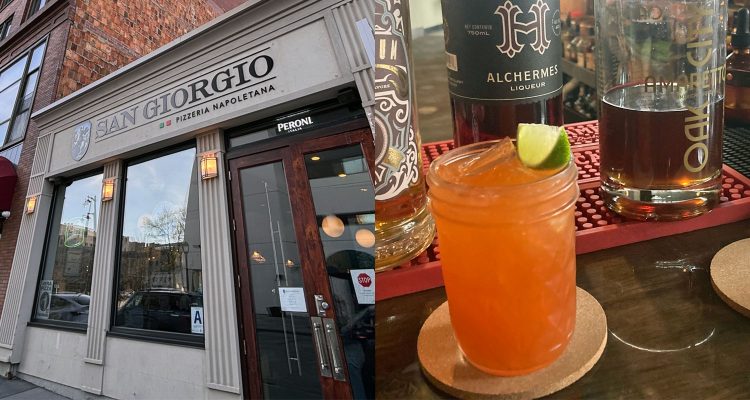
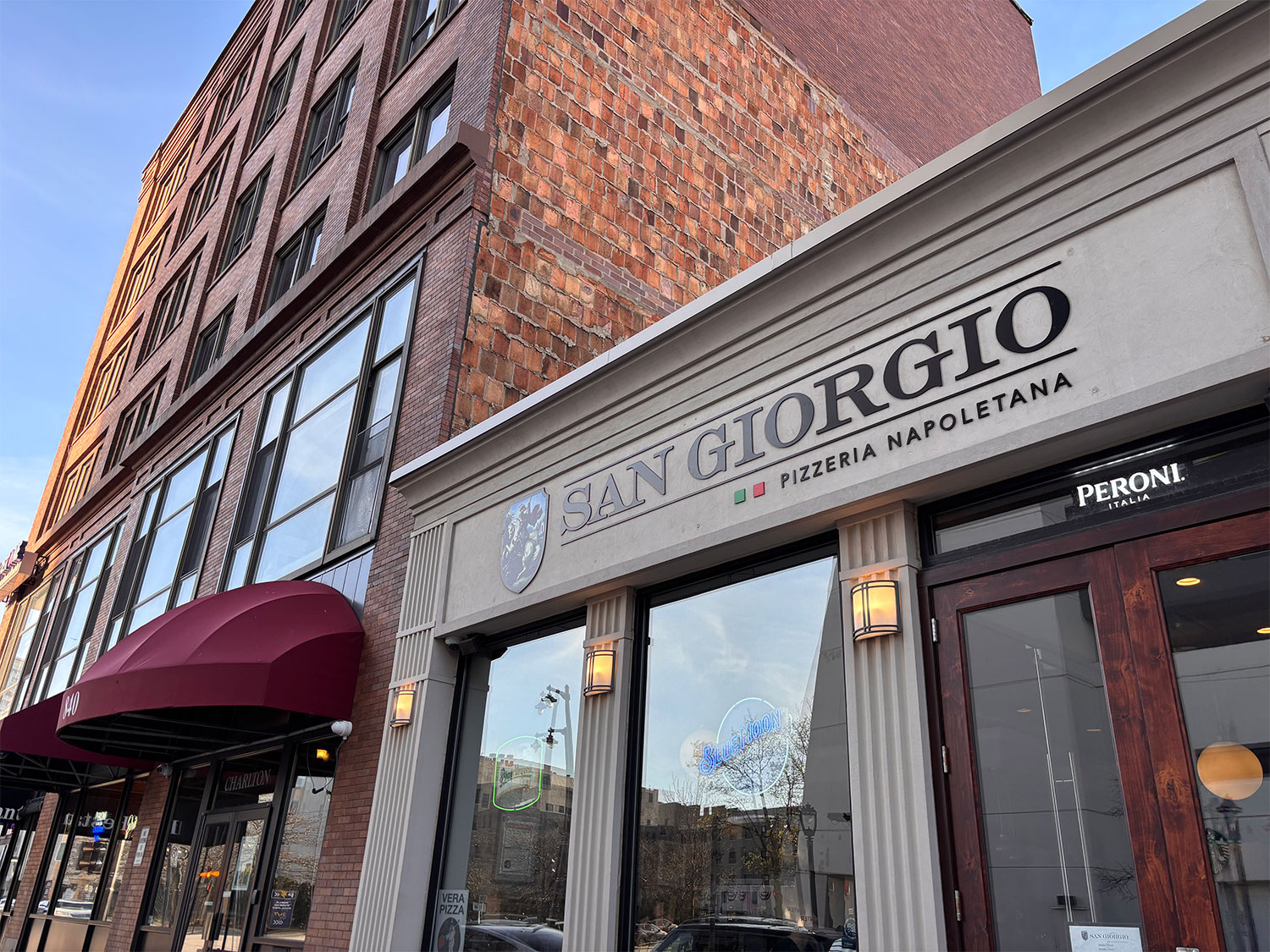
For this month’s installment of Sunday Sauce, we’re going downtown to San Giorgio Pizzeria Napoletana for dinner (838 N. Old World 3rd St.; 414-276-2876) before heading to the 17th Ward cocktail bar (2150 S. Kinnickinnic Ave.; 414-212-8632) to meet up with Anthony Scalabrino of Oak City Amaretto to explore locally crafted Italian cocktails.
Front Row Dining
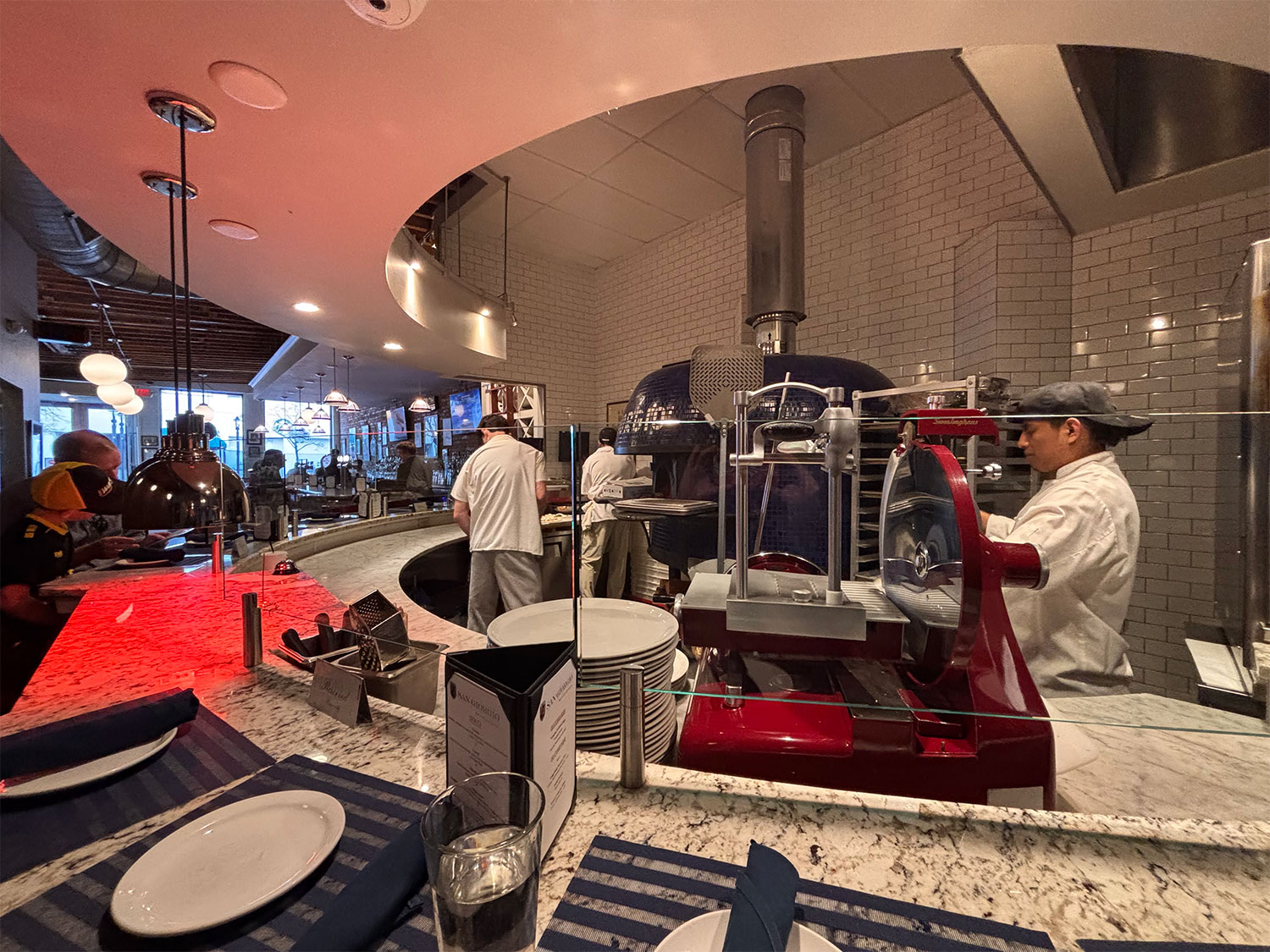
I walked into San Giorgio for a date night with my wife, and we were seated right next to the imported blue-tiled Italian wood-fired oven, the centerpiece that glowed like the restaurant’s ever-chugging engine. It pulled our attention to the heat, smell, and choreography of the kitchen.
I was struck by how beautiful the cooking space was. Open, polished, and almost theatrical, the curved marble counter wrapped around the prep line and oven with stacks of firewood nestled beneath it. Perfectly blistered pizzas slid in and out as the pizzaioli moved with quiet focus behind the glass.
The room had a nice contrast to it: white subway tile, marble, and glass kept everything clean and bright, while the oven brought warmth and color. Off to the side sat a gorgeous Corvette-red prosciutto slicer, which I bashfully hoped to see perform, but alas, she wasn’t ready for her close-up yet.
Watching the cooks work that close brought me back to my late teens and early twenties, when I was a pizzaiolo at Red Eye Brewing Co. in Wausau. They also had an open kitchen, and while I loved that station, there was always a faint sense of being on display, like Tommy the orangutan at the Milwaukee County Zoo. Sitting that close to the glass, I anxiously wondered if San Giorgio’s cooks ever felt that same pressure of being watched.
It makes sense why everything felt so dialed in. Chef and owner Gino Fazzari studied at the Culinary Institute of America in Hyde Park, New York, and San Giorgio’s dough is made fresh in accordance with Vera Pizza Napoletana certification standards. The pizzas are cooked at 900 degrees in a Stefano Ferrara wood-fired oven and finished in just 70 to 90 seconds, creating that light, airy crust and soft, thin center.
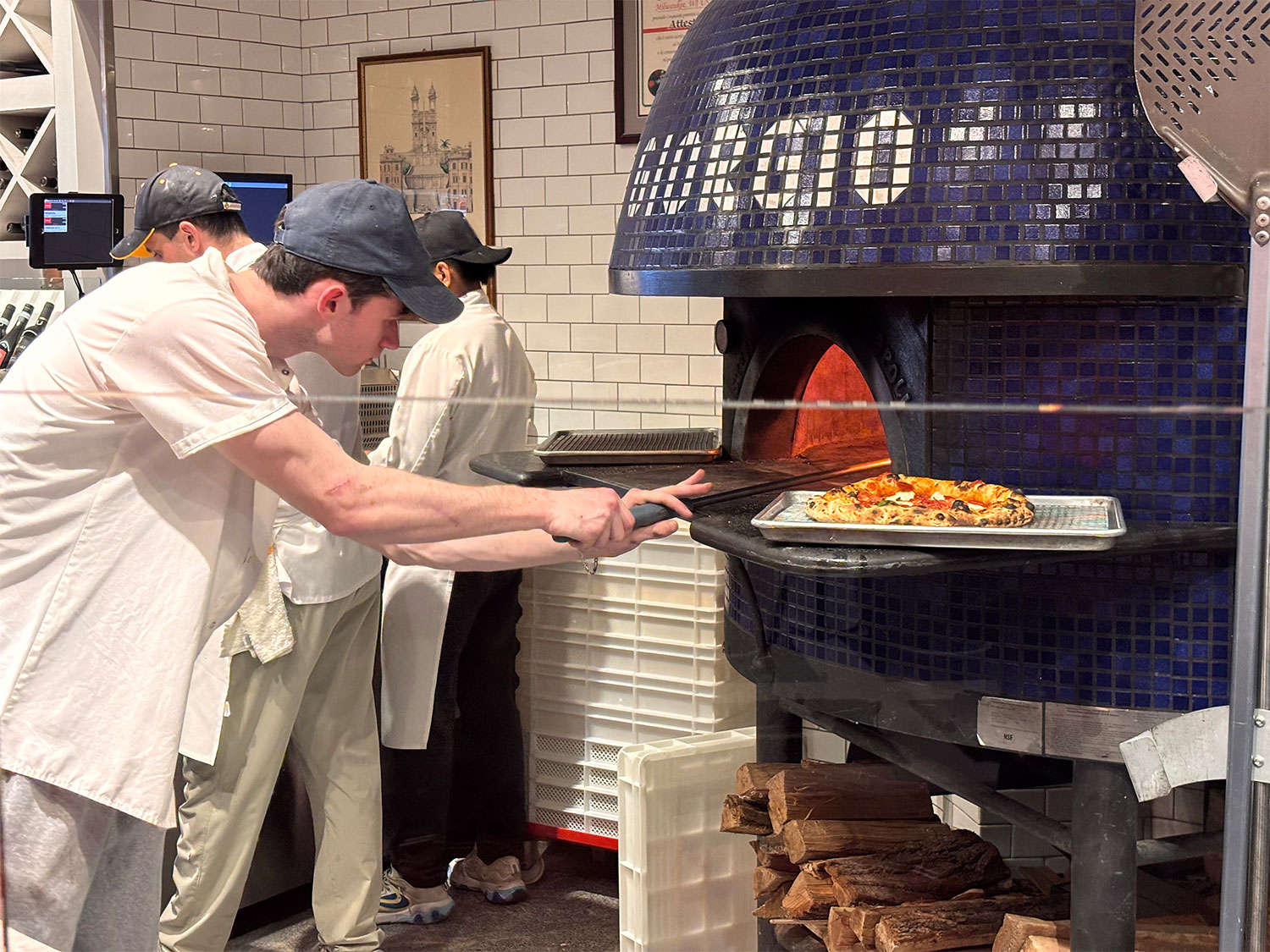
The certification isn’t just some Boy Scout badge. To qualify, a pizzeria has to follow a strict set of rules. The dough must be made with only flour, water, salt, and yeast, then carefully mixed, fermented, and shaped by hand without a rolling pin. Even the toppings follow a script: hand-crushed peeled tomatoes, buffalo mozzarella spread evenly, grated cheese applied in a circular motion, fresh basil placed on top, and extra virgin olive oil poured in a spiral. What looks casual from the counter is actually carefully coordinated. Wisconsin has well over 1,000 pizzerias, but only four have this certification for true Neapolitan pizza.
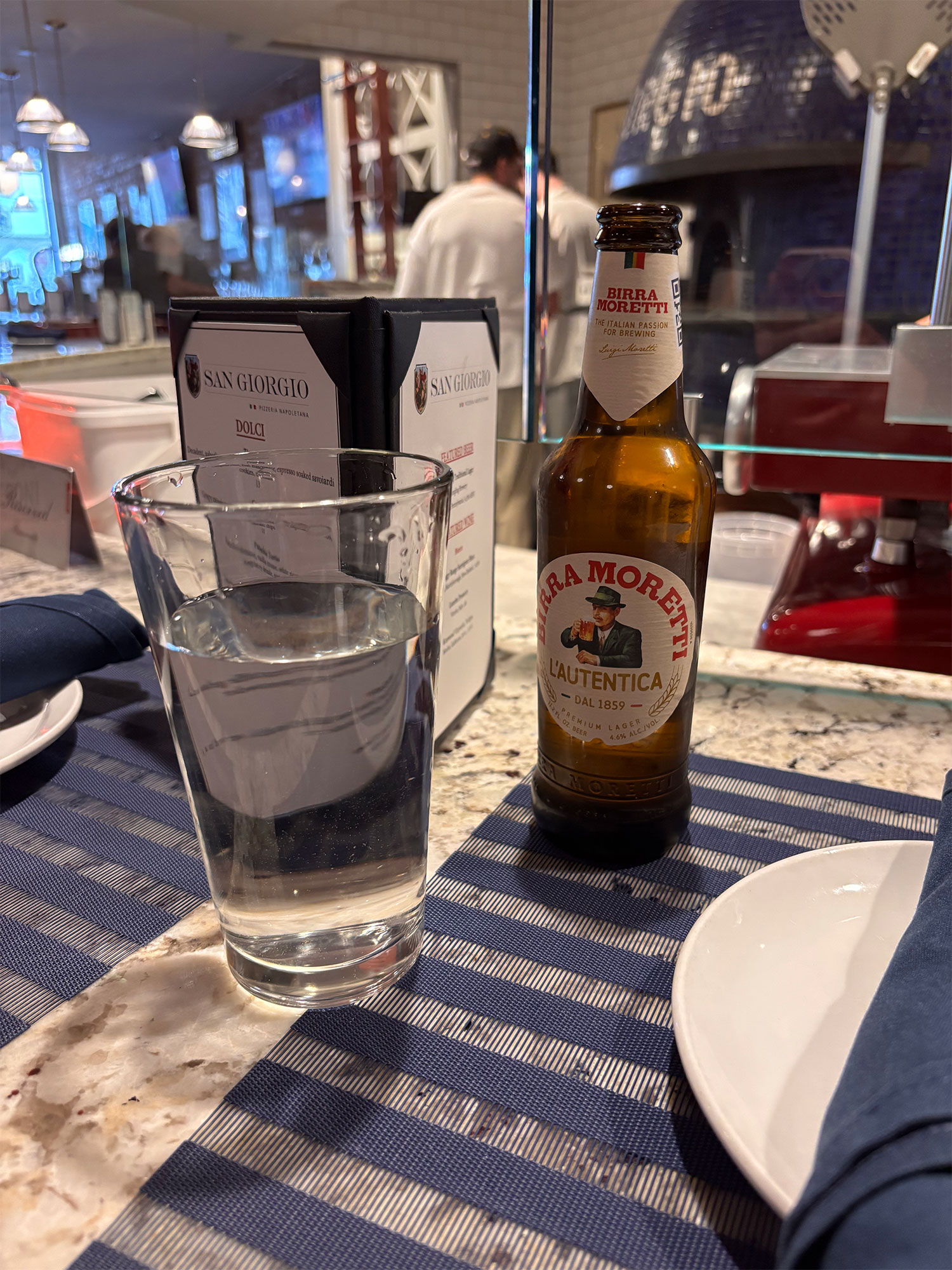
After settling in with a Birra Moretti, I loosened up and let the room come to life. The memory softened into something calmer: the rhythm of the station, the solace of repetition, and the satisfaction of finding balance in the rush.
The House Pie
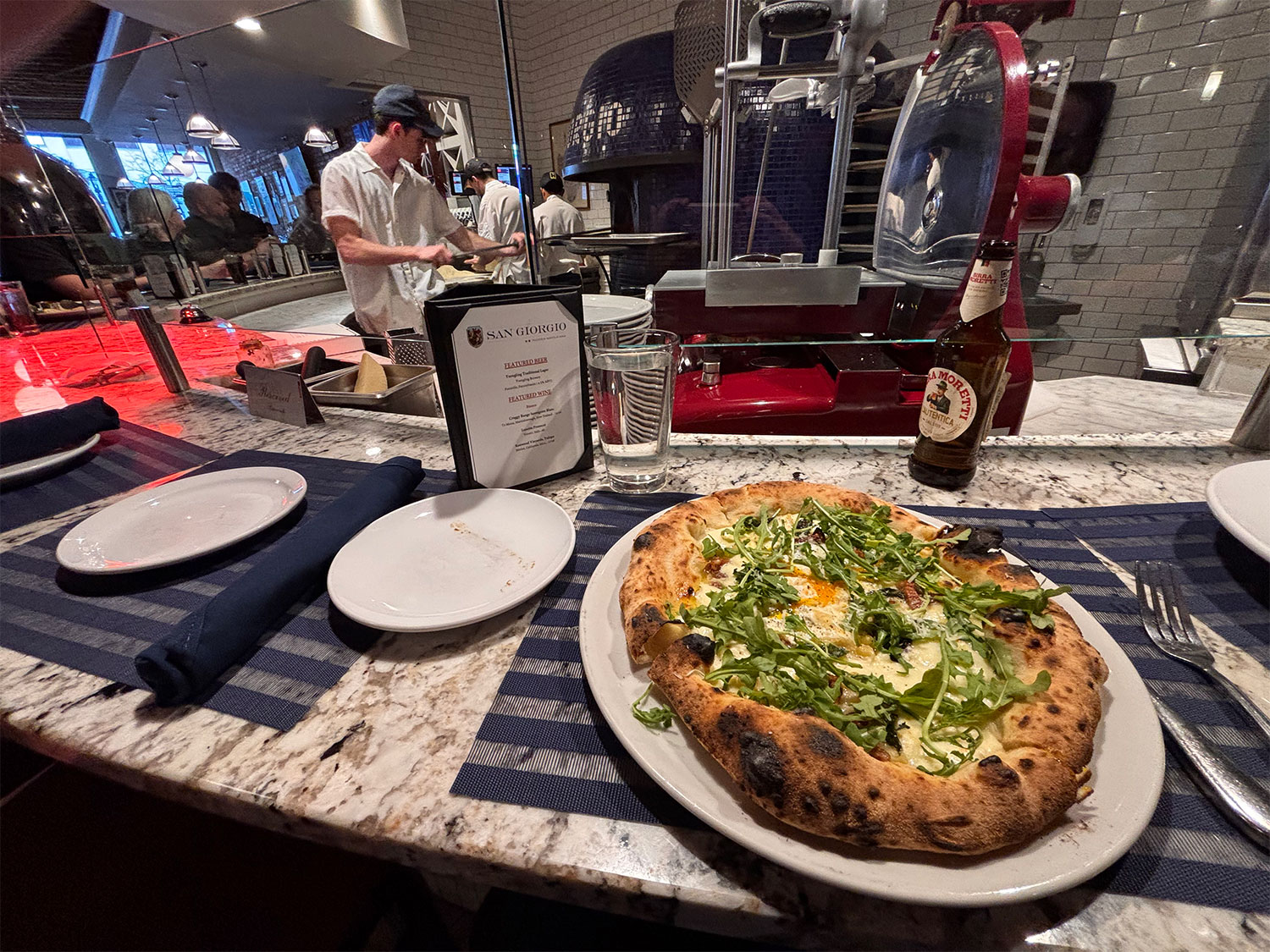
With all of that in mind, I ordered the pizza that shares its name with the restaurant: the San Giorgio.
Listed under Pizze Bianche, the San Giorgio is a white pie, made without tomato sauce. It arrived with a leopard-spotted crust that puffed high around the edges before giving way to a soft center. The pizza leaned rich and savory, with peppery arugula cutting through a perfectly done sunny-side-up eff, its yolk streaming like molten lava across a landscape of Mozzarella and sharp grated Pecorino Romano. Sweet braised fennel, pancetta, and extra virgin olive oil brought it all together. It was a pizza pie that dreams are made of.
The Pasta Course
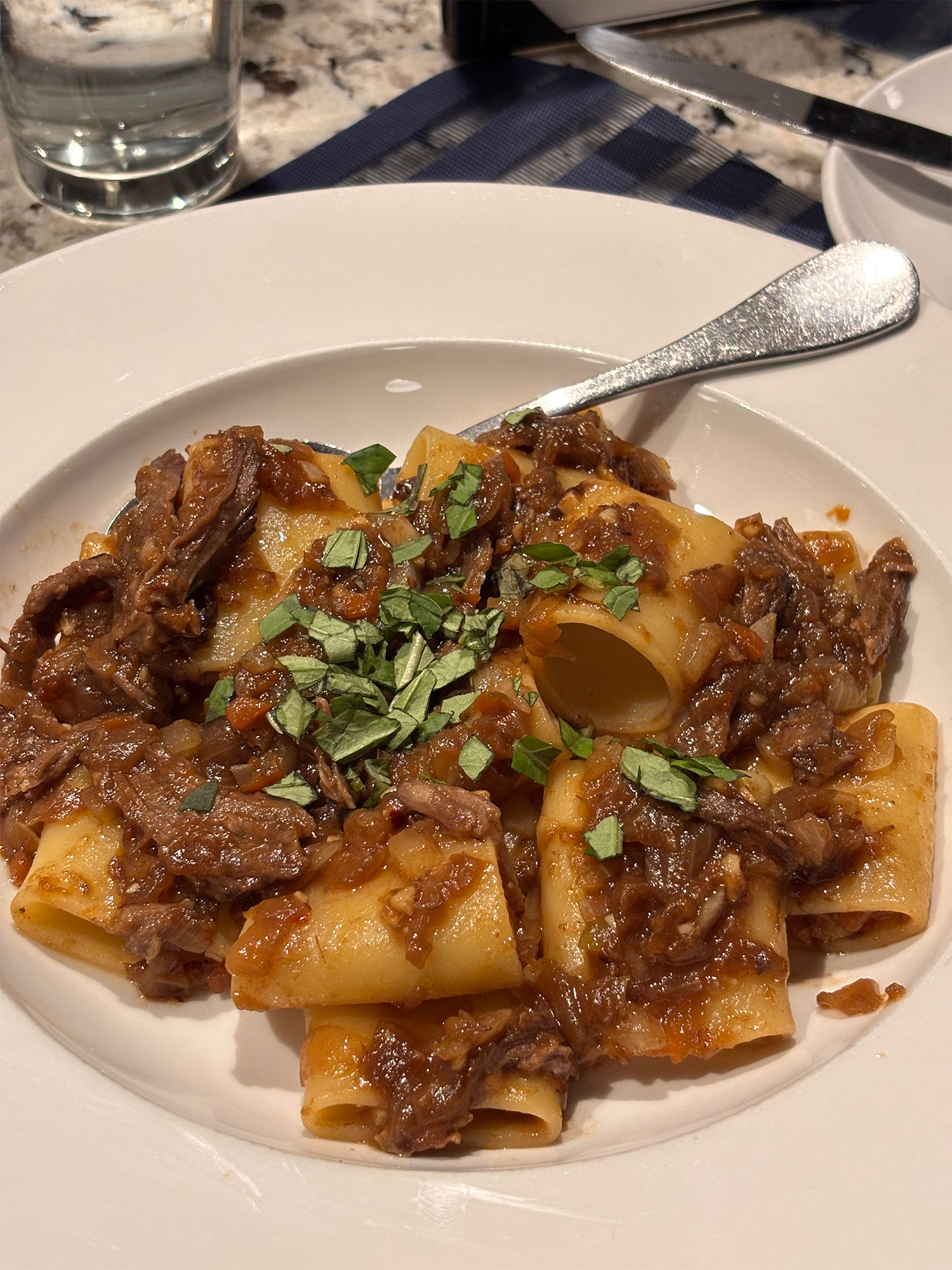
The pizza could have fed the both of us, but my wife Shelby made the right decision and ordered the Paccheri Genovese from the pasta menu.
She was kind enough to let me try a bite or two, and it brought a deeper, slower kind of comfort. The wide tubes of Pasta di Gragnano had a sturdy structure, with enough chew to catch the slow-cooked onion and celery ragù in every bite. The Angus beef chuck roast collapsed into tender strands that clung to the pasta, adding savory richness to a dish that felt hearty without being too heavy. It was another stellar addition to an already fantastic dinner.
By that point, the meal of the night had settled in, and I made note that I should come spend time downtown more often as our experience at San Giorgio gave me a new sense of enthusiasm for being there. A fitting first half for this month’s Sunday Sauce.
A Nightcap: Drinks and Conversation with Oak City Amaretto’s Anthony Scalabrino
On another night, my search for Italian comfort led me to the 17th Ward cocktail bar in Bay View, where I met up with Oak City Amaretto founder Anthony Scalabrino for cocktails and conversation about the family story behind his locally crafted, Sicilian-inspired liqueur. With help from accommodating bartender Madeline Park, who was happy to riff on a few drinks using Oak City, the bottle made clear that it’s more than a sweet after-dinner pour, it had range.
What drew me to reach out to Oak City Amaretto in the first place was how naturally Anthony’s story fit into my thesis for Sunday Sauce. Beyond restaurants, I’m looking for the small details that carry the Italian American memory forward: the rituals, recipes and family traditions that keep feeding us long after the meal is over. For Anthony, that thread runs straight through his late grandmother, a woman he described as “quiet, but strong,” whose amaretto recipe became the foundation for Oak City Amaretto.
An Amaretto Sour to Start
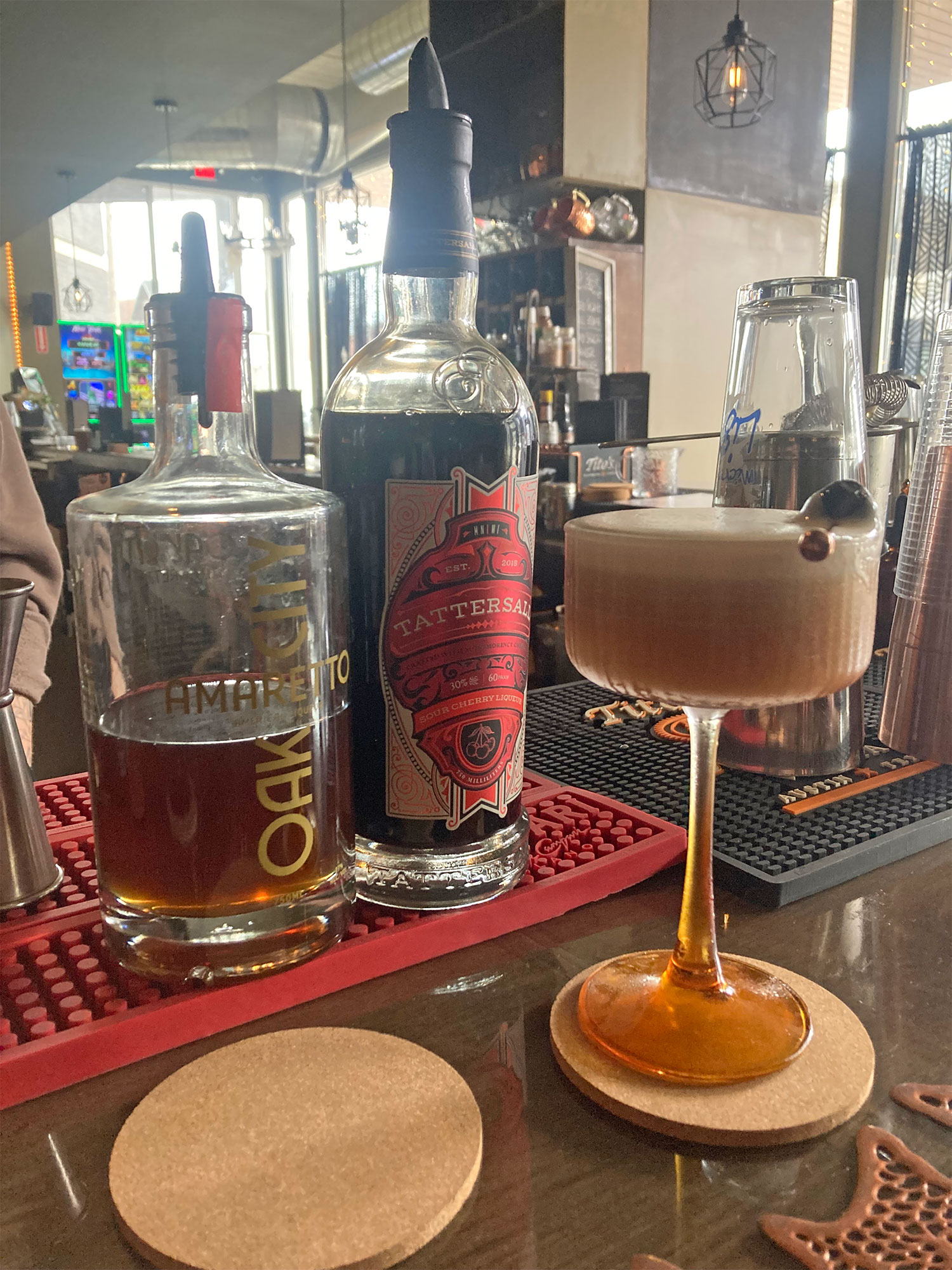
Before we got too deep into the family history, Park offered us our first cocktail: a classic Amaretto sour. A lustrously frothy, cherry leaning sour built with Oak City Amaretto and Tattersall Sour Cherry Liqueur. It was rich but easily drinkable, the nutty sweetness of the Amaretto with the dark fruit gave it just enough tartness to keep it lively.
From there our conversation widened. Anthony’s path to Oak City was not exactly linear. Before building a liqueur brand around his grandmother’s recipe, he served for nearly a decade in the Navy as a pilot, and that mix of discipline and self-reliance still comes through when he talks about the business. Oak City may begin with a family memory, but it also feels shaped by someone wired to keep moving, improvise, and build something of his own.
The story starts simply enough, Grandma Scalabrino decided she could make amaretto her self and started to incorporate it during those important family holidays. Drinking wasn’t the norm for his family but Scalabrino remembers Christmases when bottles from Grandma would be handed out to his dad, grandfather, and uncle, and how those moments made the drink feel special. “I thought drinking Amaretto was like family,” he told me. “And it was.” Long before it was a business, it was a marker of togetherness.
From Raleigh to Milwaukee
Park’s second cocktail pushed Oak City in a different direction. Mixed with rum, Heirloom Alchermes, Bittercube bitters, passion fruit, and lime, it landed somewhere floral, herbaceous, and lightly tropical. Sitting there with that drink, it was easy to see how Scalabrino saw room for his grandmother’s recipe to become something bigger than a holiday tradition.
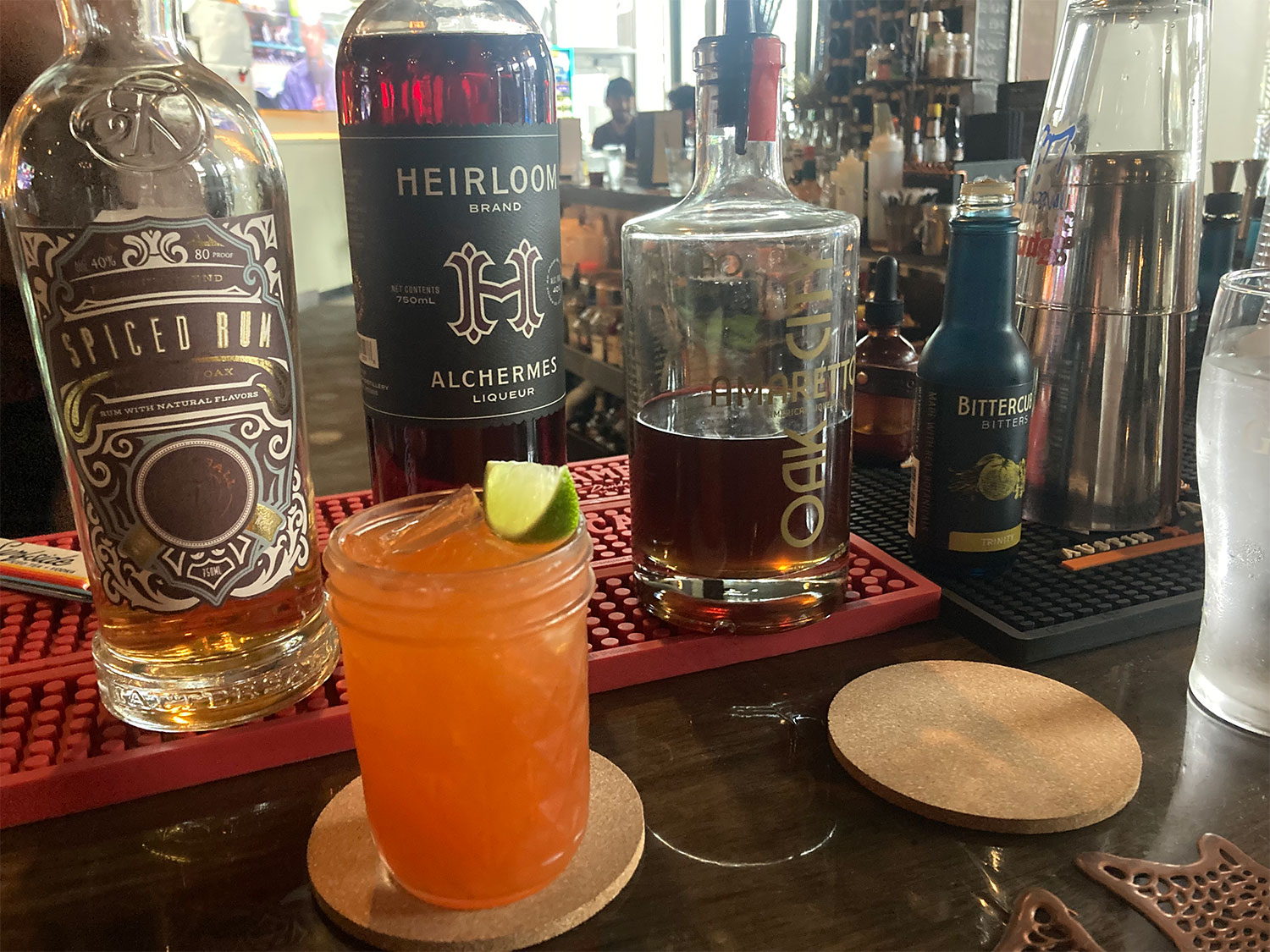
Though the business didn’t fully spring from nostalgia. Scalabrino started the company in Raleigh, North Carolina where he started wondering what it would take to make his grandmother’s amaretto at a commercial scale. He was already juggling plenty, taking the MBA classes at NC State while working with Naval ROTC, but the idea stuck. He asked a local distillery if they would be open to helping him produce the recipe and that conversation became the first real step toward Oak City as a company. The name itself points back to those beginnings: Raleigh is known as the “City of Oaks.”
The company started in 2017, and for the first several years Scalabrino handled production with the help from his wife, Miranda Scalabrino, Oak City Amaretto’s chief scientist. When she isn’t working in neuroscience, she pitches in on all things Oak City Amaretto, helping keep the small family operation moving forward. “My wife helped me label and package it on weekends,” he said. Beyond the industry being labor-intensive, it’s clear that it’s a deeply personal labor of love.
When the Scalabrinos moved to Milwaukee a few years ago for her work at the Medical College of Wisconsin, Oak City Amaretto came with them. Milwaukee seems to have given it a softer place to land. Scalabrino said the people he has worked with here have been “really open and welcoming,” and his production relationship with Central Standard Distillery appears to have grown from that same spirit. He described that next phase as being built on “mutual respect,” which made Milwaukee feel like the right place for Oak City to keep growing.
Values Beyond the Bottle
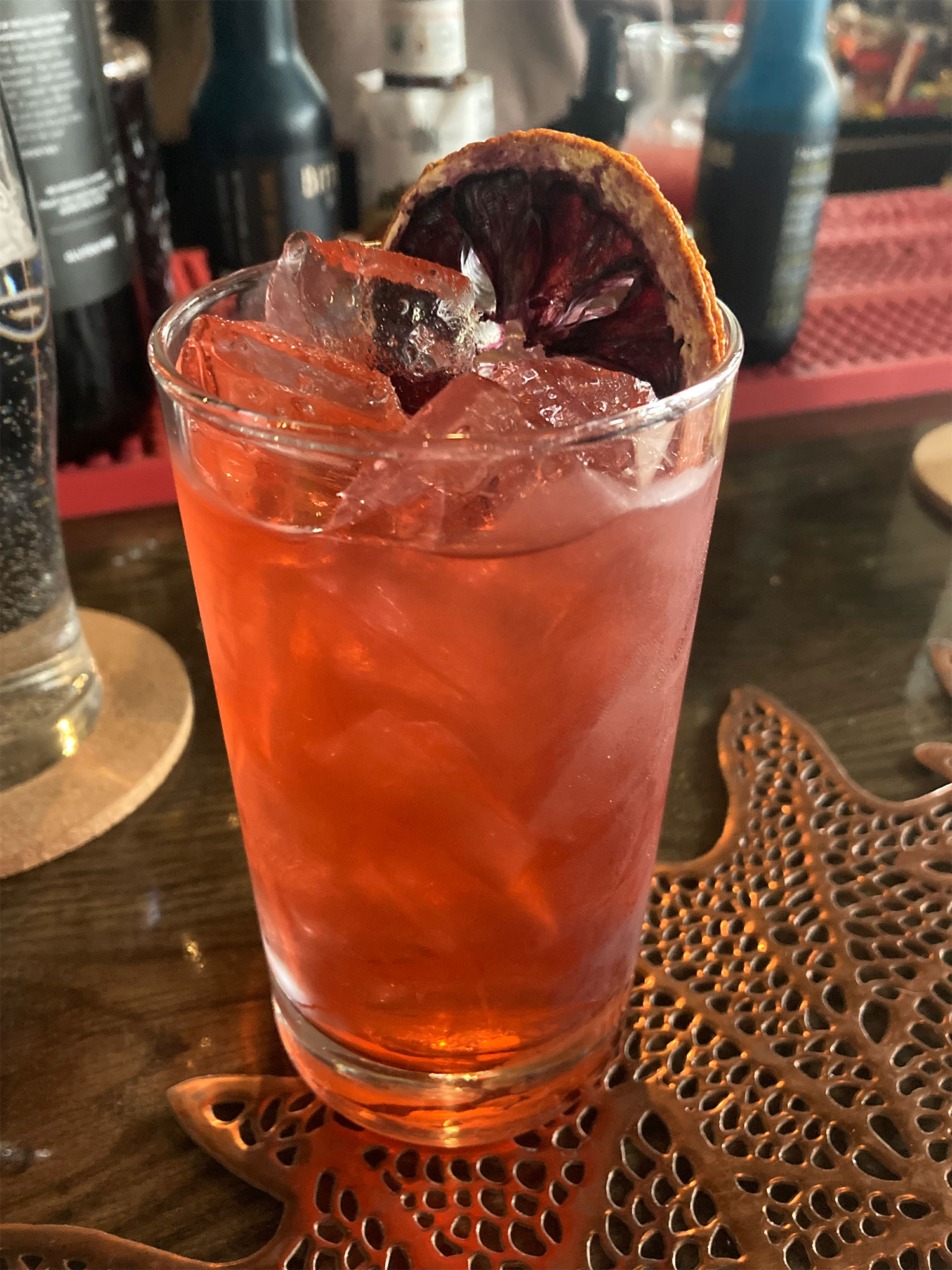
Park’s final cocktail took Oak City in yet another direction. Built as a Negroni-ish riff with gin, Campari and Oak City Amaretto in place of sweet vermouth, and a hit of Bittercube’s chipotle cacao bitters, leaning more bitter and spirit forward than the previous drinks. Served over ice with a dried blood orange, it was bright, herbal and pleasantly bitter, with the amaretto softening those edges just enough.
That same balance between tradition and forward motion seems to define how Scalabrino talks about Oak City as a company. He pointed first to a version of the Golden Rule: treat others with respect and love. From there, he talked about “strive for excellence,” though not in some joyless, perfectionist sense. For him, excellence has more to do with humility, compassion, and grace. The final value, “we live to serve,” may be the clearest through line of all.
Want more Milwaukee Record? Subscribe to our free weekly newsletter and/or support us on Patreon.
RELATED ARTICLES
• Sunday Sauce: Capicola, Italian beef, and the best cannoli in Milwaukee at Scardina Specialties
• Sunday Sauce: Santino’s Little Italy is a Bay View Italian daydream
• Sunday Sauce: Glorioso’s is where my Milwaukee story starts