
It’s understandable if most readers of Milwaukee Record haven’t heard of the Yerkes Observatory (373 W. Geneva St., Williams Bay, Wisconsin). Hell, your humble narrator—a lifelong astronomy enthusiast who hauled his old telescope up from the basement during COVID and got back into stargazing to stave off the insanity of quarantine—only became aware of the Yerkes’ existence a couple years before lockdown.
Owned and operated by the University of Chicago since its opening in 1897 (!), the building and grounds were transferred to the nonprofit Yerkes Future Foundation in May 2020 after a two-year negotiation that started when the university decided it was no longer financially feasible to operate the observatory. In 2022, the Yerkes (pronounced YER-keys) was opened to visitors as the Foundation began an ongoing 10-year project to fully renovate and update the building and its facilities, all while offering tours and special events devoted to raising awareness about the project and to maintaining the Yerkes’ standing as a destination for astronomical and astrophysical study. (Lake Geneva native S. Carey of Bon Iver fame even played a “living room” show in their rotunda this past Valentine’s Day).
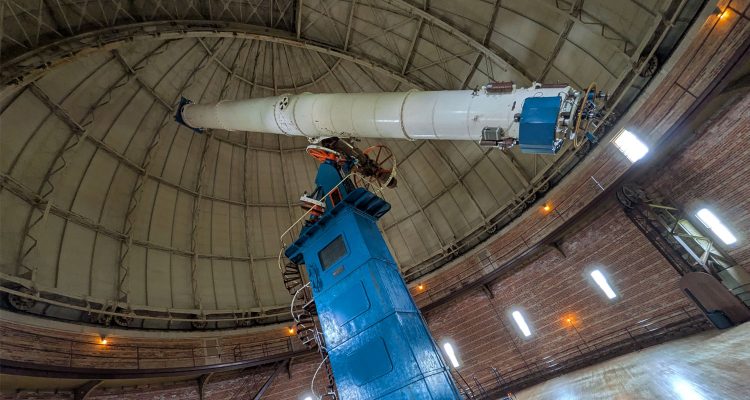
The tours also serve as instant catnip for fans of 19th century architecture, or anyone intrigued by the idea of walking the same halls that names like Edwin Hubble, Gerard Kuiper, Nancy Grace Roman, and Carl Sagan once tread. But the real centerpiece of the Yerkes—the money-maker, if you will—is in the observatory’s gargantuan 40-inch refracting telescope, which in 1897 was the world’s largest.
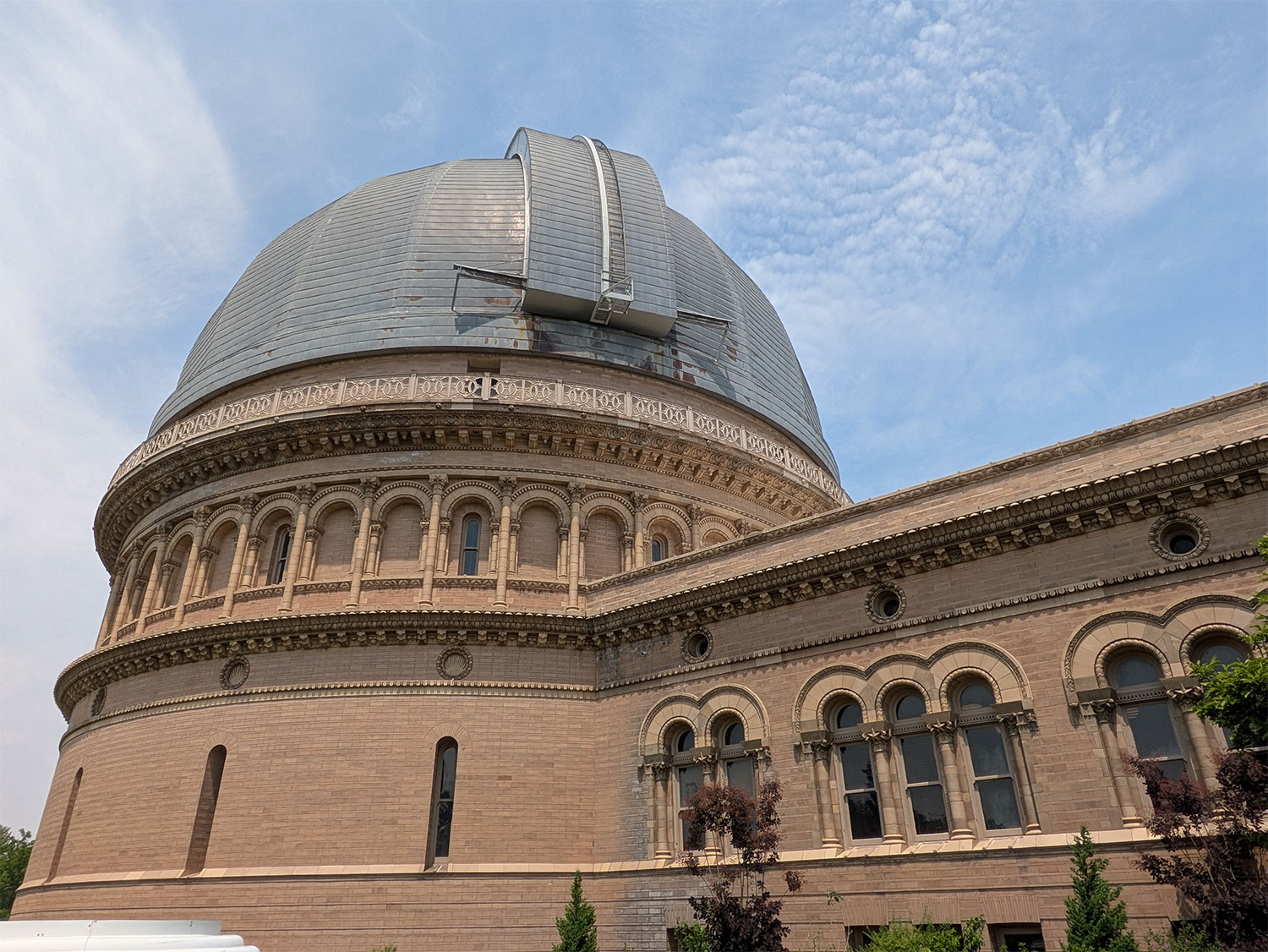
For the record, while other, bigger reflecting telescopes have been built since, the Yerkes Great Refractor is still the world’s largest refracting telescope, simply because the lenses become too heavy to be structurally sound beyond 40 inches. We learned this when taking the observatory’s “Space and Spaces” tour, one of several different tours offered by the Foundation. “Space and Spaces” is your basic tour of the building and grounds; also offered are the “Hidden Spaces” tour, a guided trip behind the scenes and a peek into less-accessible parts of the building, and—holy shit—the “Exploring the Night Sky with the Great Refractor Telescope” tour, which allows 12 people per night to actually peer through the 40″ refractor. Again—holy shit. This being our first trip, we opted for the “Space and Spaces” tour in order to whet our appetites for future visits to come.
The hour-long trip down I-43 to Williams Bay, right next to Lake Geneva, is a breeze. The town of about 3,000 people is almost deceptively ordinary; the eye-popping, breath-catching building almost seems out of place amongst the routine homes, bars, and gas stations leading up to Observatory Place. Did someone put this here as a prank?
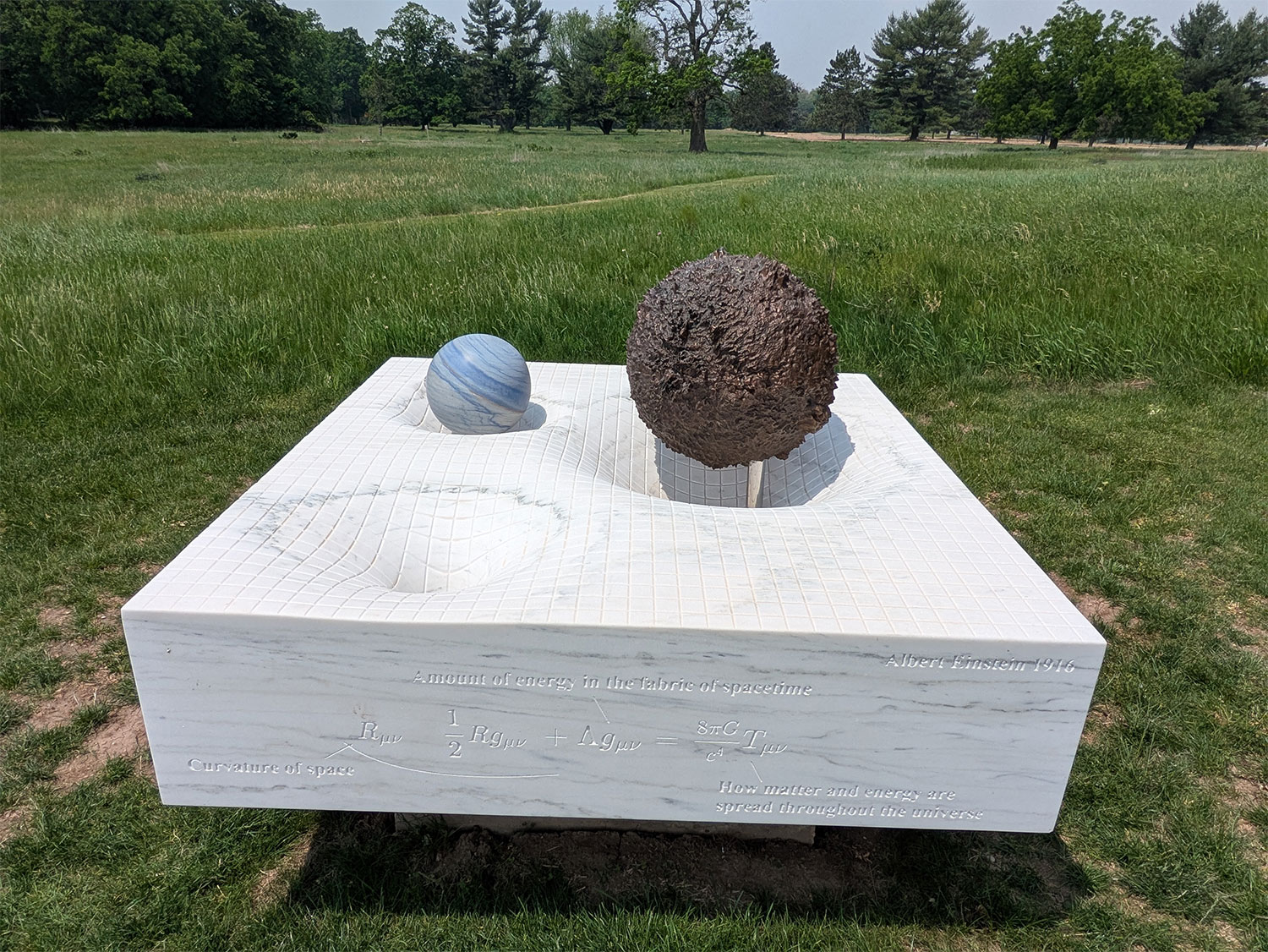
We arrived with plenty of time to wander around outside the grounds before we were admitted to the building for our tour. And wander we did, snapping photos of the observatory’s stunning exterior, examining a smaller observatory building elsewhere on the 50-acre campus, and admiring a sculpture by Ashley Zelinskie, Time Will Tell, depicting the curvature of space-time around a planet, star, and black hole.
Eventually we were let inside and shuttled to a classroom where the tour began with a thorough and entertaining history of the Yerkes Observatory, including a colorful profile of the facility’s original benefactor, Charles T. Yerkes. (Suffice to say that part of his motivation for funding the observatory was to rehabilitate his public image as a less-than-ethical businessman.) In 1897, needing a rural location for a telescope to be able to observe the night sky unencumbered by the light pollution of Chicago, but still easily accessible by rail, Williams Bay became the winner of the sweepstakes. (Also, the land was offered to the university for a song.)
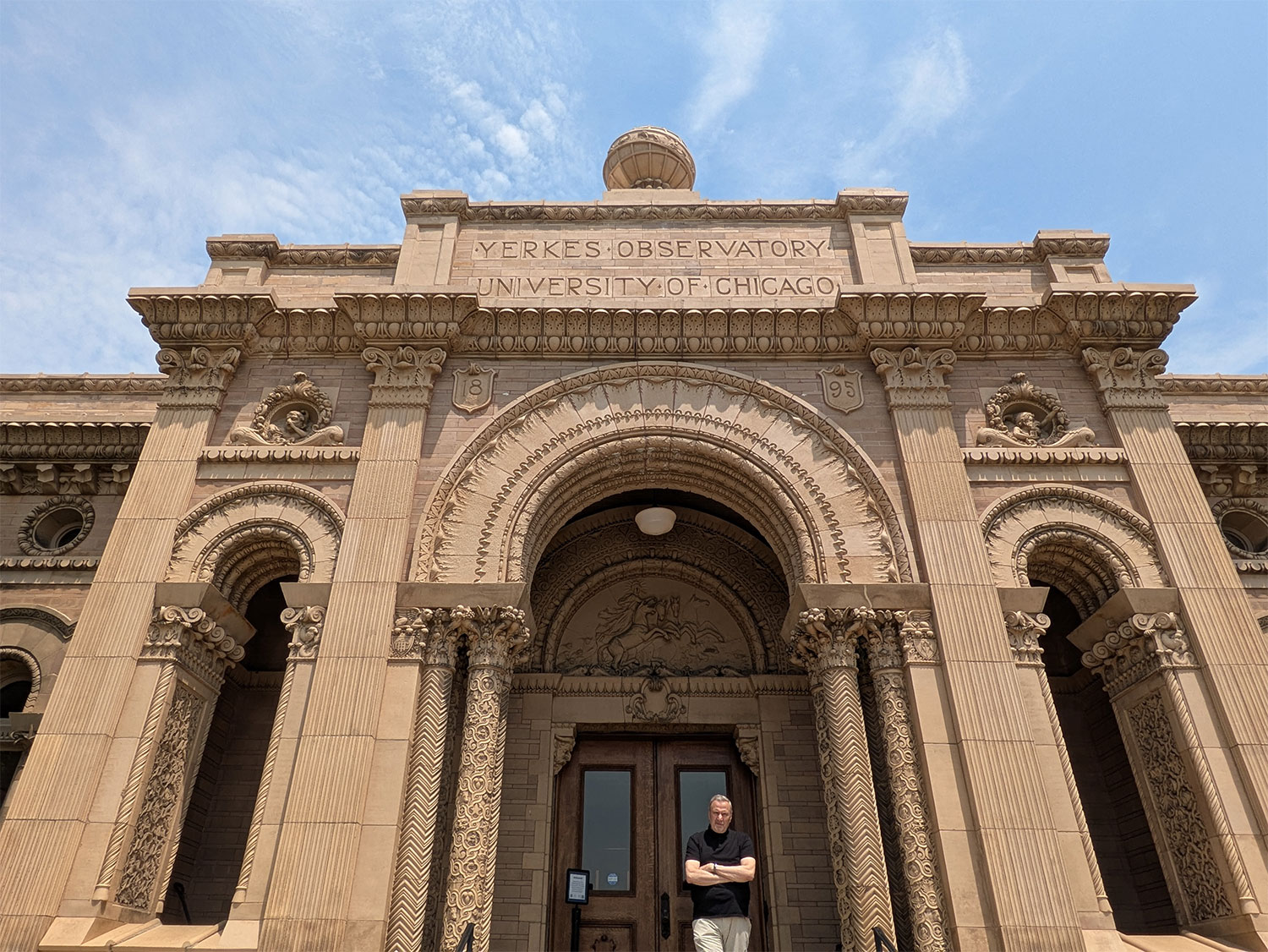
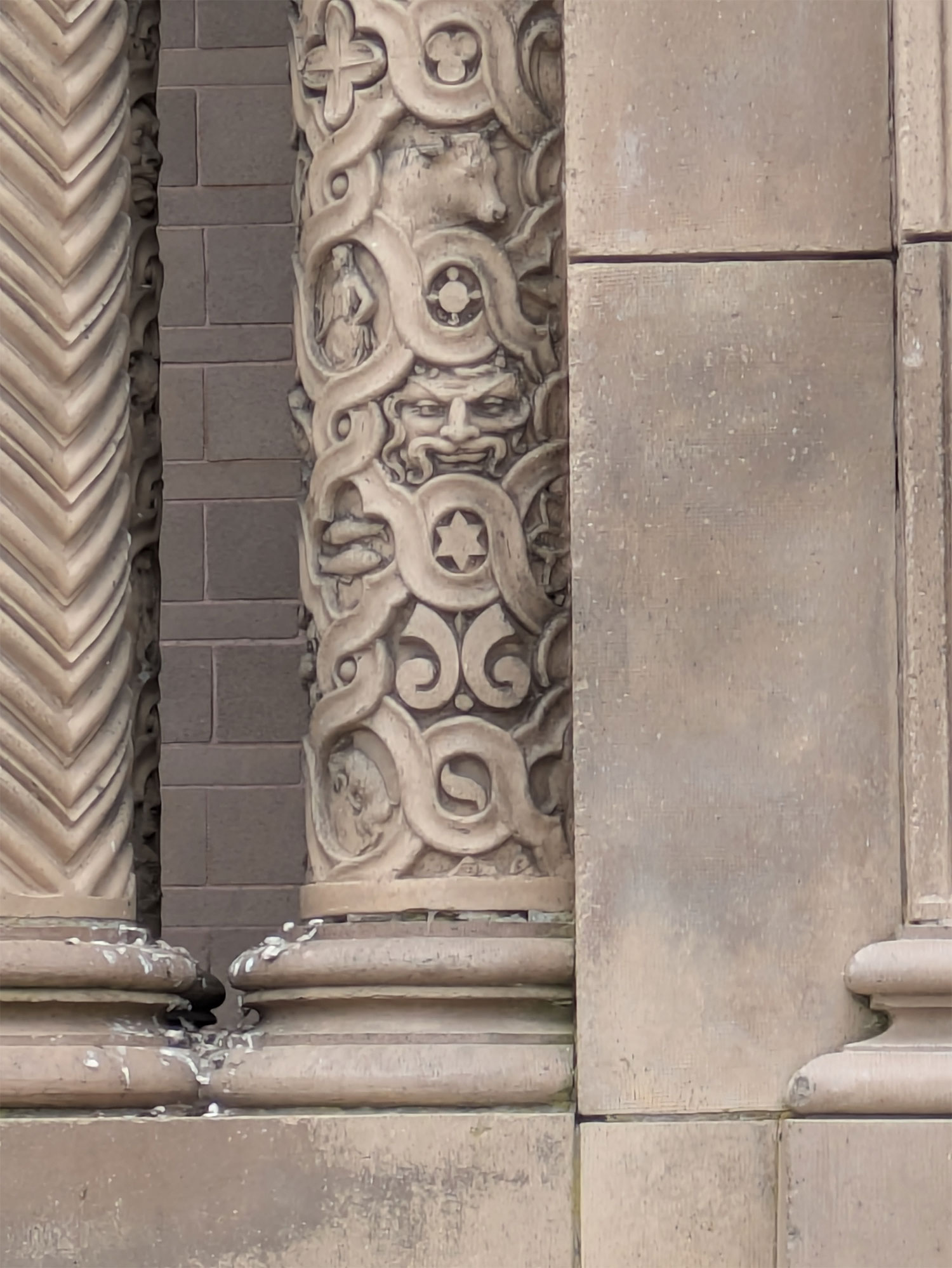
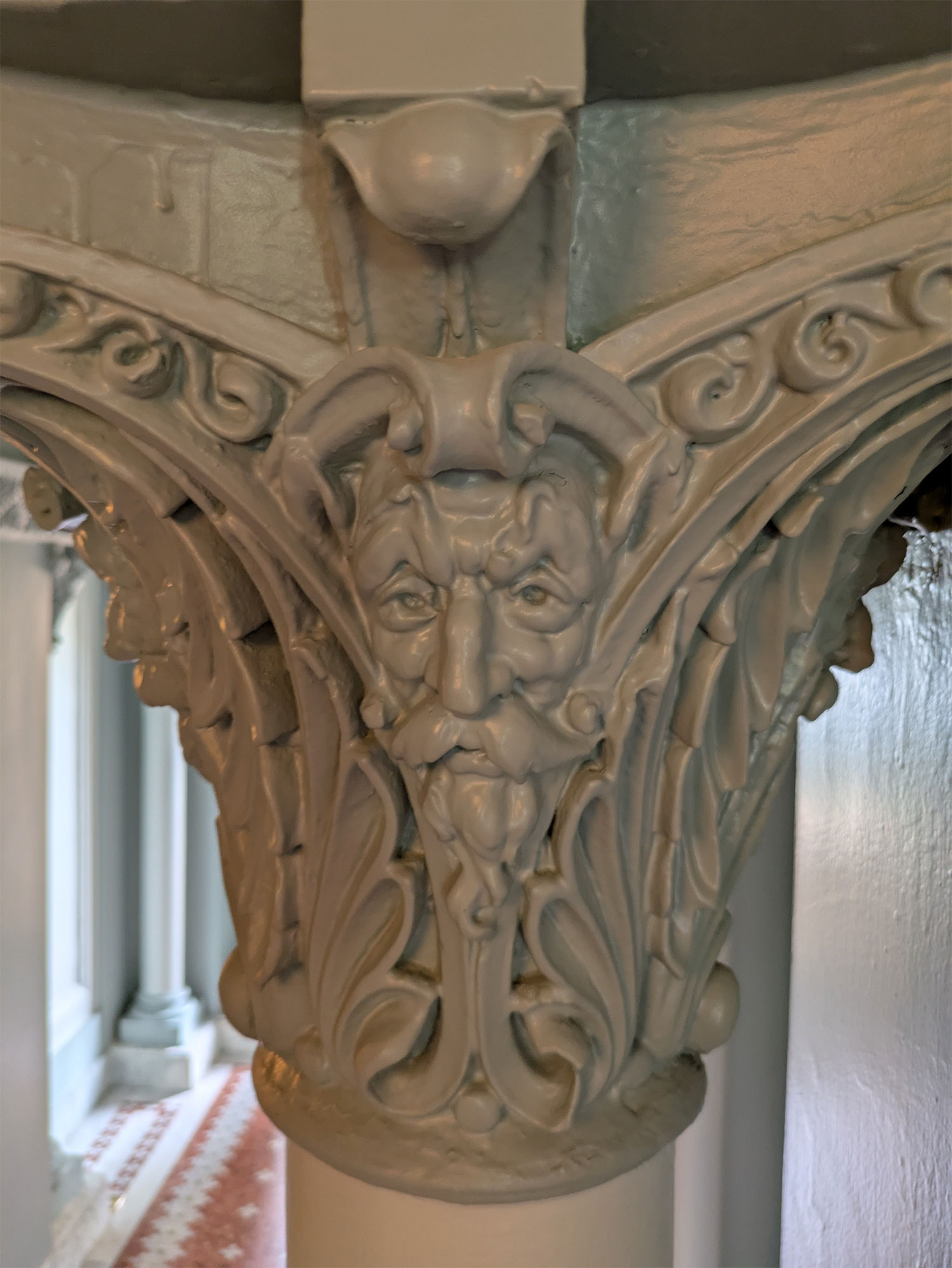
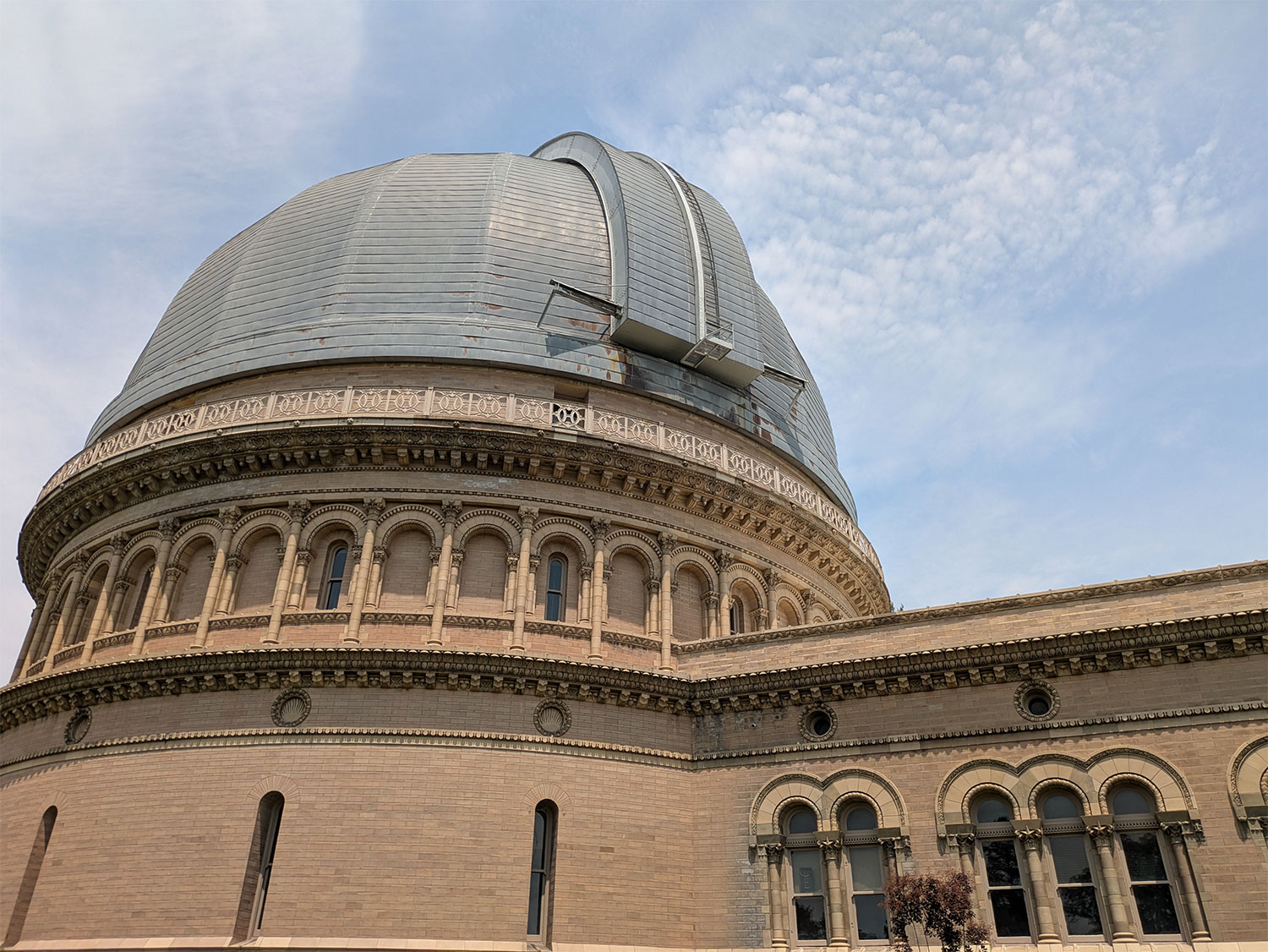
Our quick history lesson completed, we were led outside to admire the building’s exterior, designed by architect Henry Ives Cobb. The walls and columns of the Yerkes are adorned with suns, moons, zodiac symbols, and dozens of renderings of Charles Yerkes’ mustachioed face. We were then taken back indoors to admire similar craftsmanship around the edges of the Hagenah Rotunda.
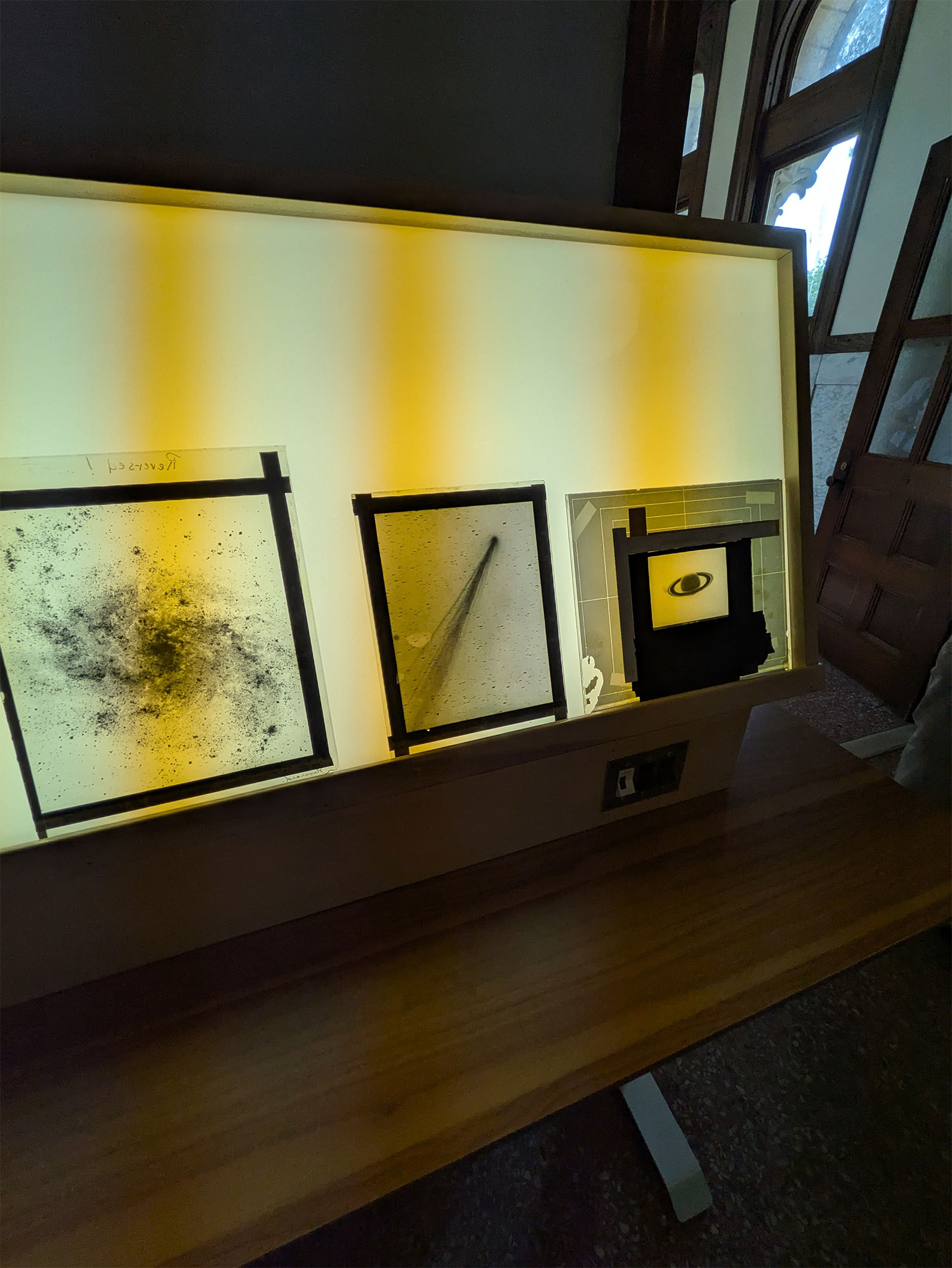
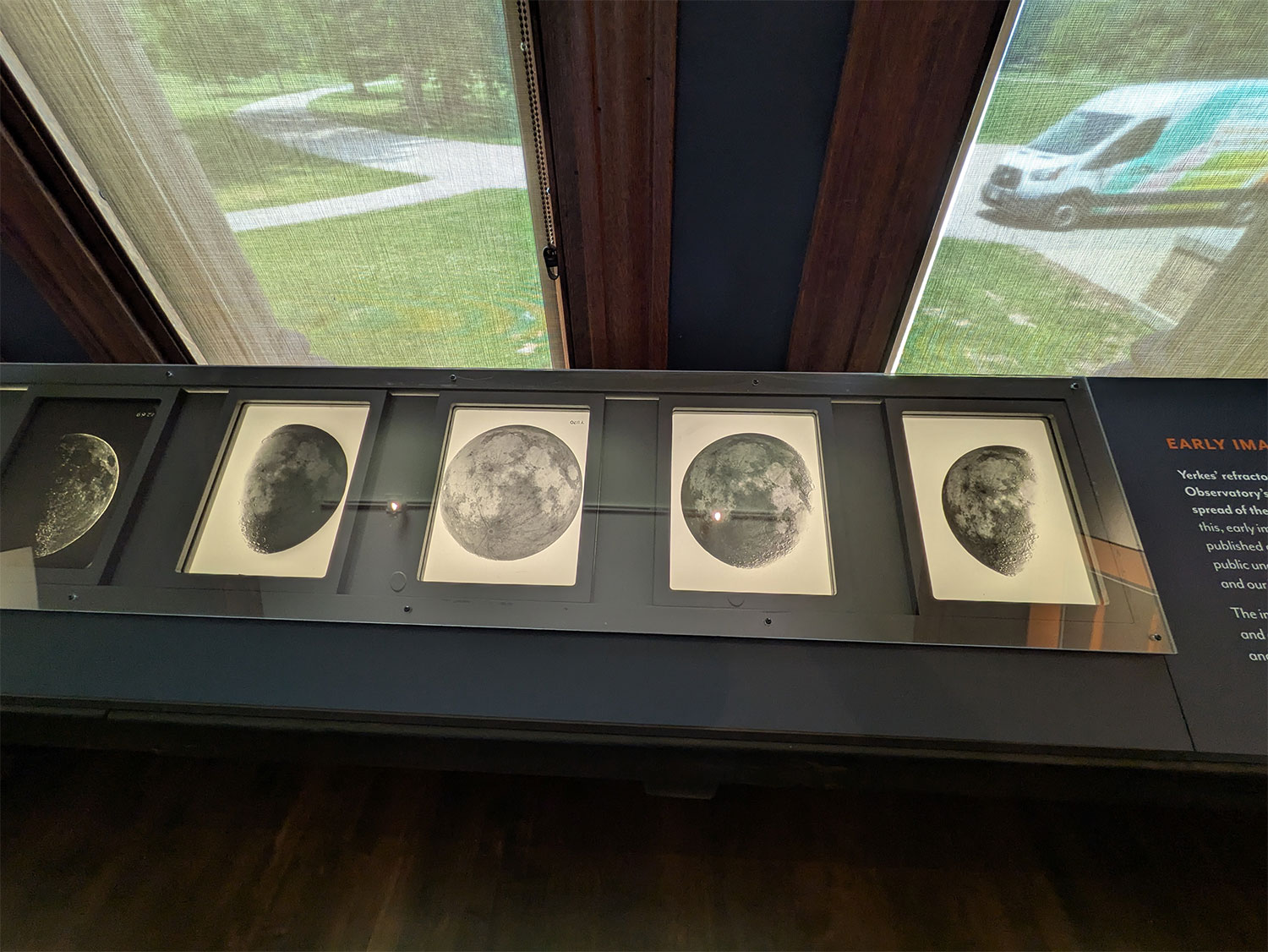
Next, it was time to check out some of the Observatory’s collection of 180,000-odd glass plates imaged from years of observations through the Great Refractor. Images of star clusters, galaxies, Saturn, and an image of Halley’s Comet from its visit in 1910 were on display, and were stunning to behold. Yes, images from the Hubble and James Webb space telescopes routinely put these images to shame now, but these plates are artifacts of astronomical history, in some cases the earliest examples of astrophotography on file. Our tour guide gleefully noted that in the earliest days of the observatory, the first published images of the planets spooked some more fundamentally religious types, leading some to condemn the Yerkes’ research as the devil’s work, which is just fantastic, really.
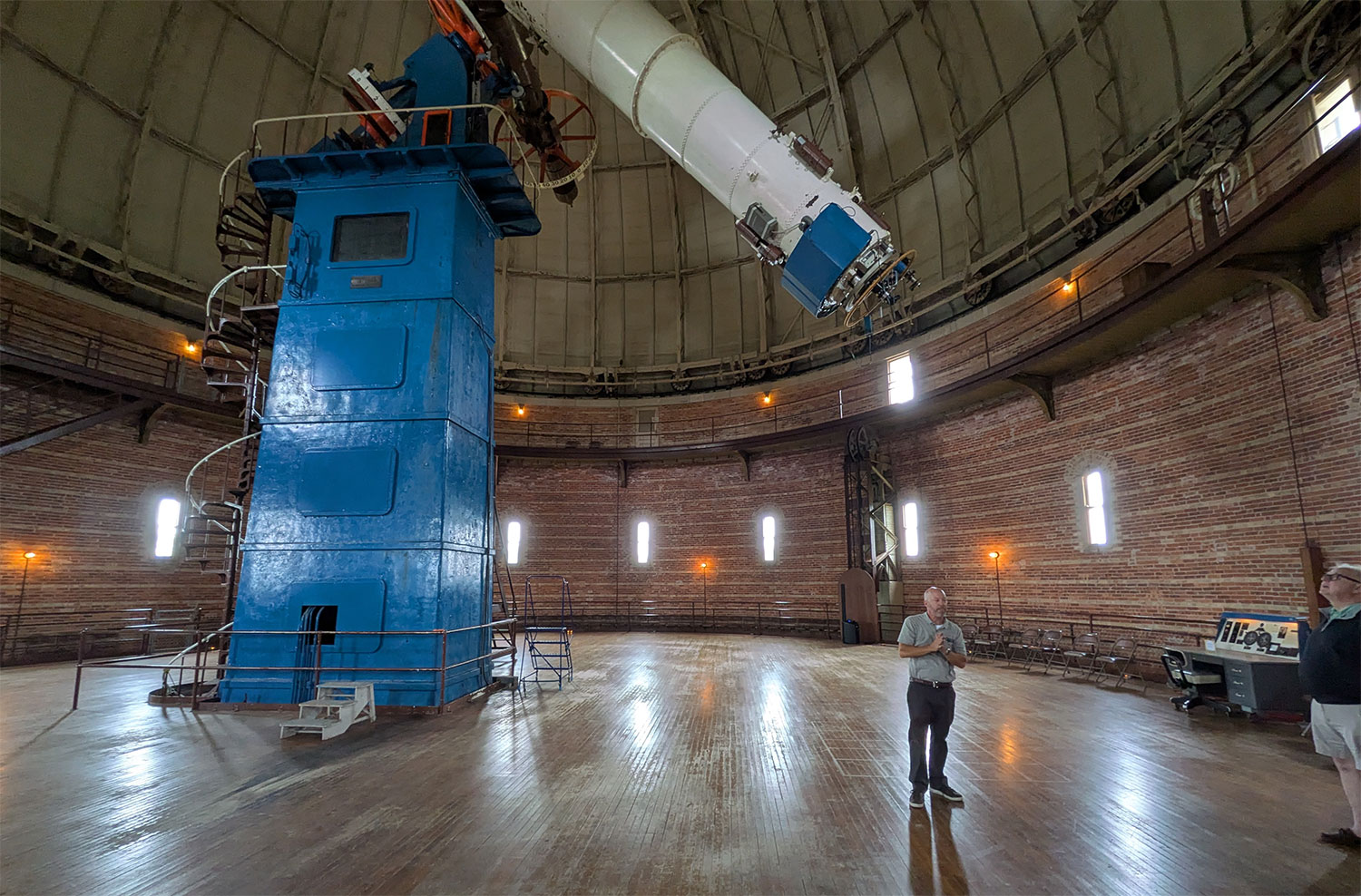
Finally, it was time for the main event—a stop in the dome that houses the 82-ton Great Refractor itself.
There’s something about seeing huge shit built by humans to understand the nature of the universe that fills one with a reverent sense of awe. Stonehenge is theorized to have been built as either a religious site or as an astronomical observatory in its own right. In 2011, a group of artists and musicians including your humble narrator were privileged to visit the Collision Detector at Fermilab, and get a first-person look at a piece of machinery that could almost be considered a modern Stonehenge. Seeing the Great Refractor up close and in person conjured many of those same feelings of spiritual excitement. Carl Sagan looked through this thing, man. We were positively vibrating.
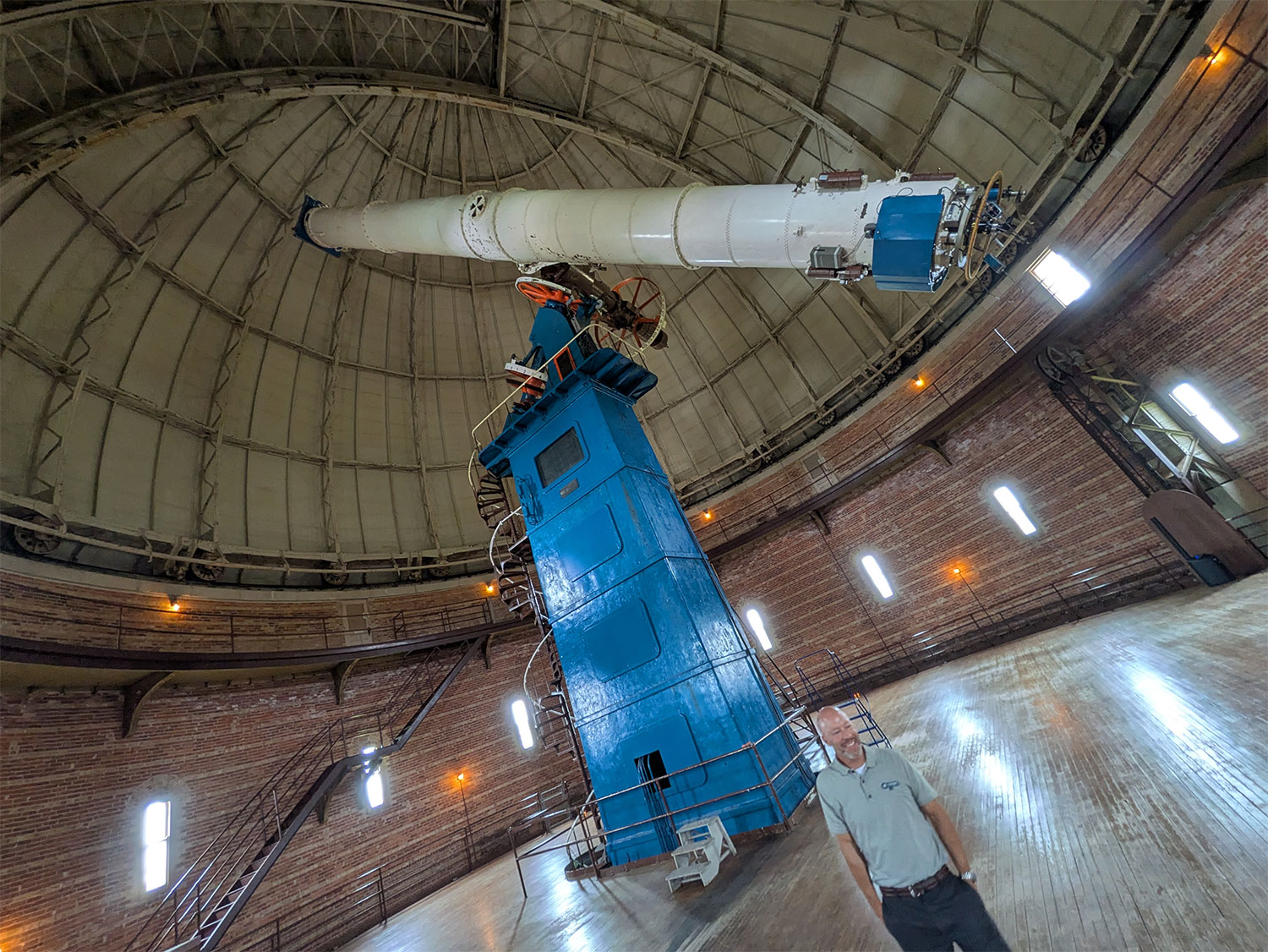
The telescope’s mount is so enormous that the actual eyepiece was far above the floor when our group entered the dome. So how the heck does anyone actually look through the thing? The entire dome floor is built on a hydraulic elevator that raises and lowers the floor at will, taking the observer right to the source of the action. We were ushered off to stationary railings at the edge of the room while the floor was raised in demonstration, allowing us to peek down at the anchored base of the mount itself. There’s no need to get overly poetic here—this was simply awesome to see. This telescope is friggin’ huge.
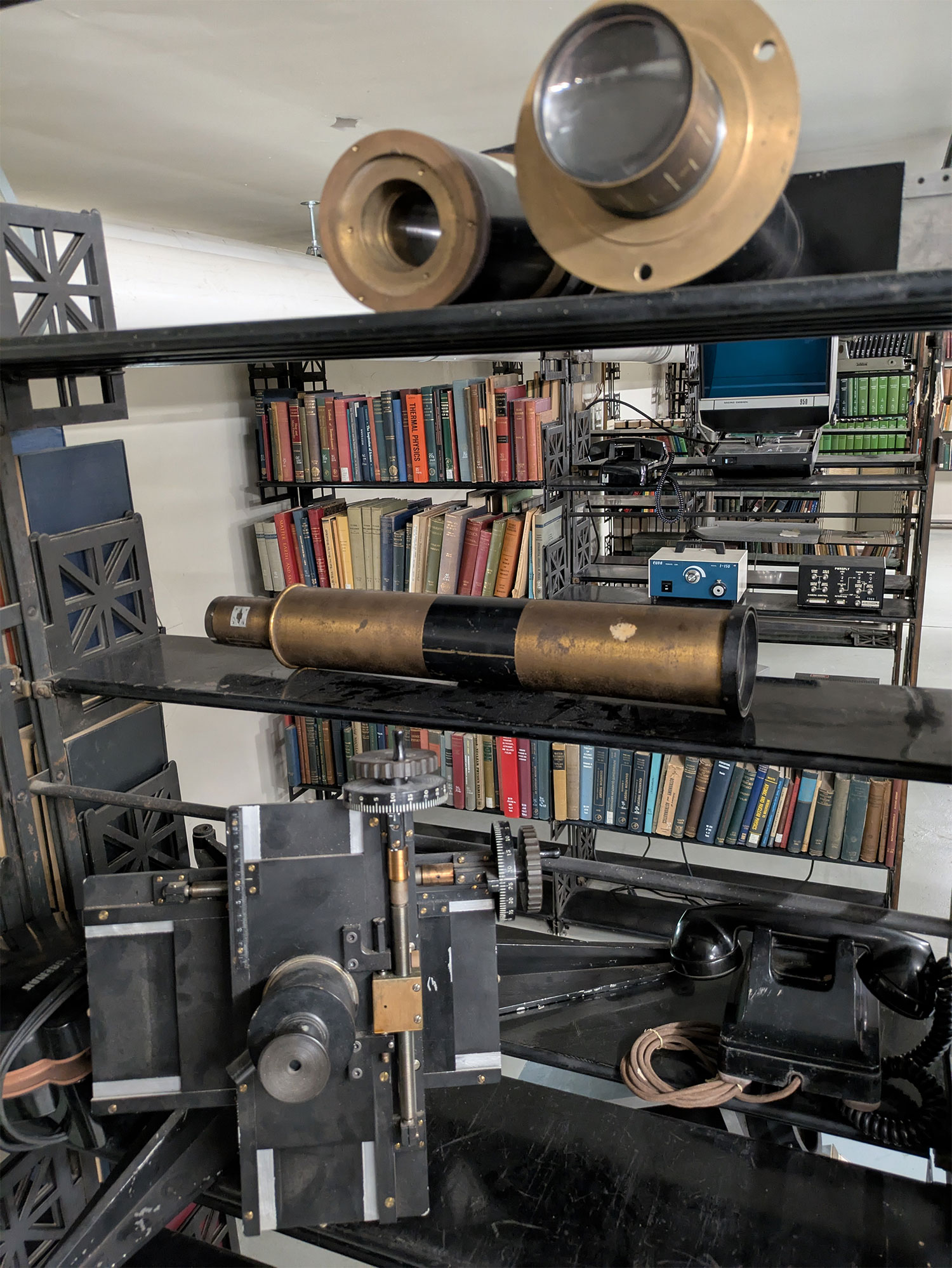
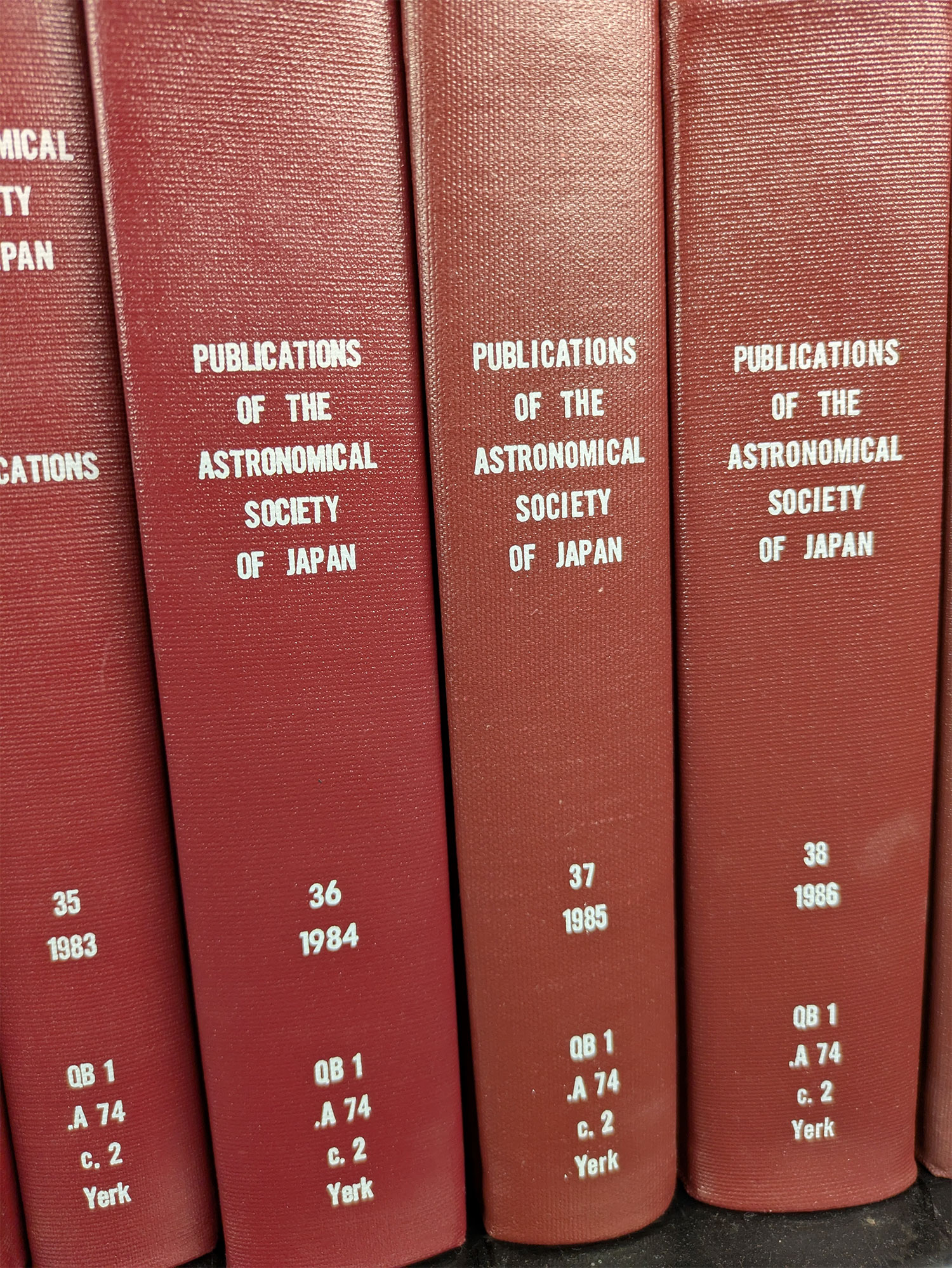
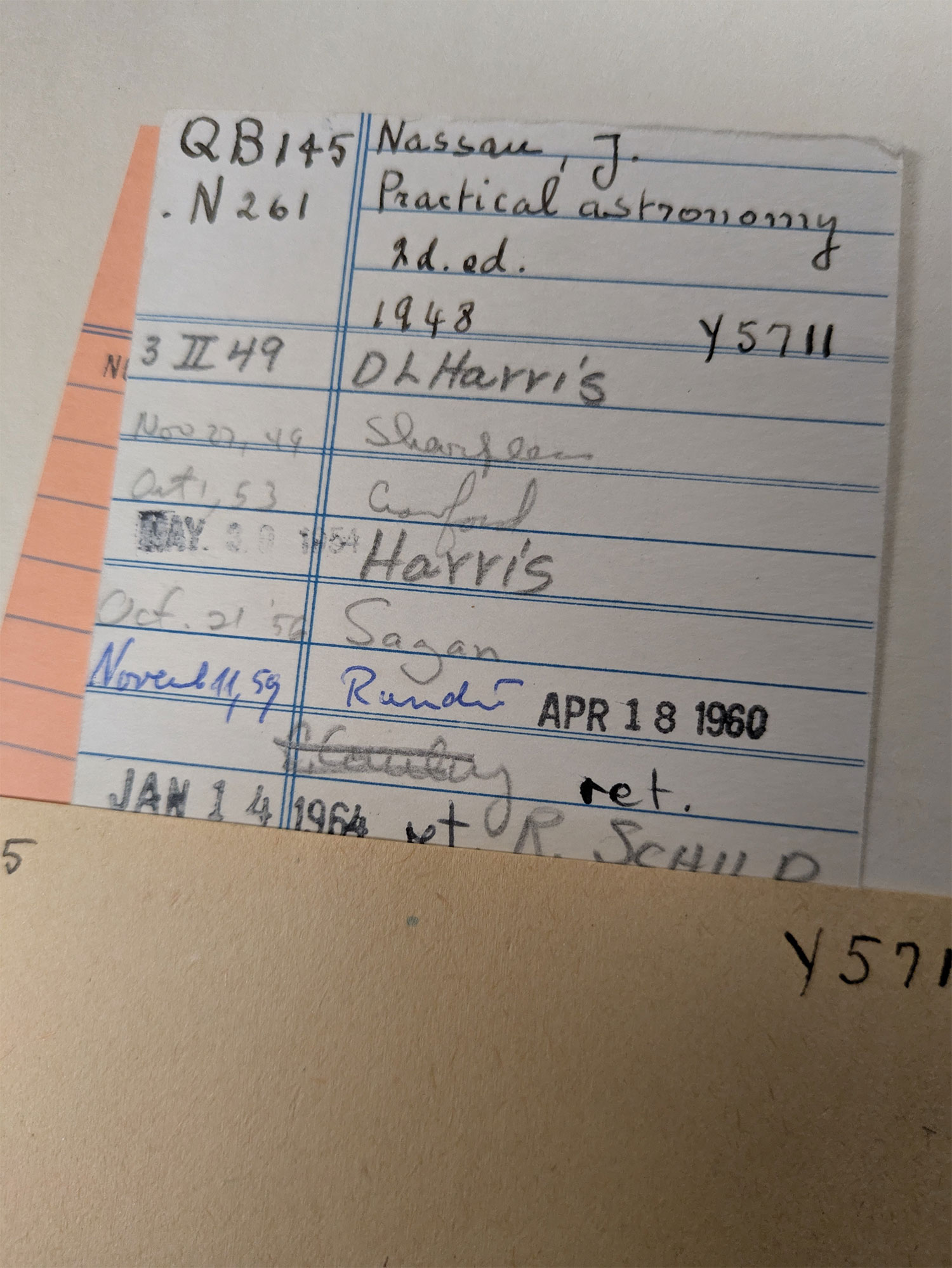
From there, we were ushered into “the dungeon”—a basement library filled with old computers, monitors, and science books that still boasted the cards students signed when checking them out. Our guide produced one specific book with a checkout card that happened to include a pretty famous autograph: Sagan, Oct. 21, ’56.
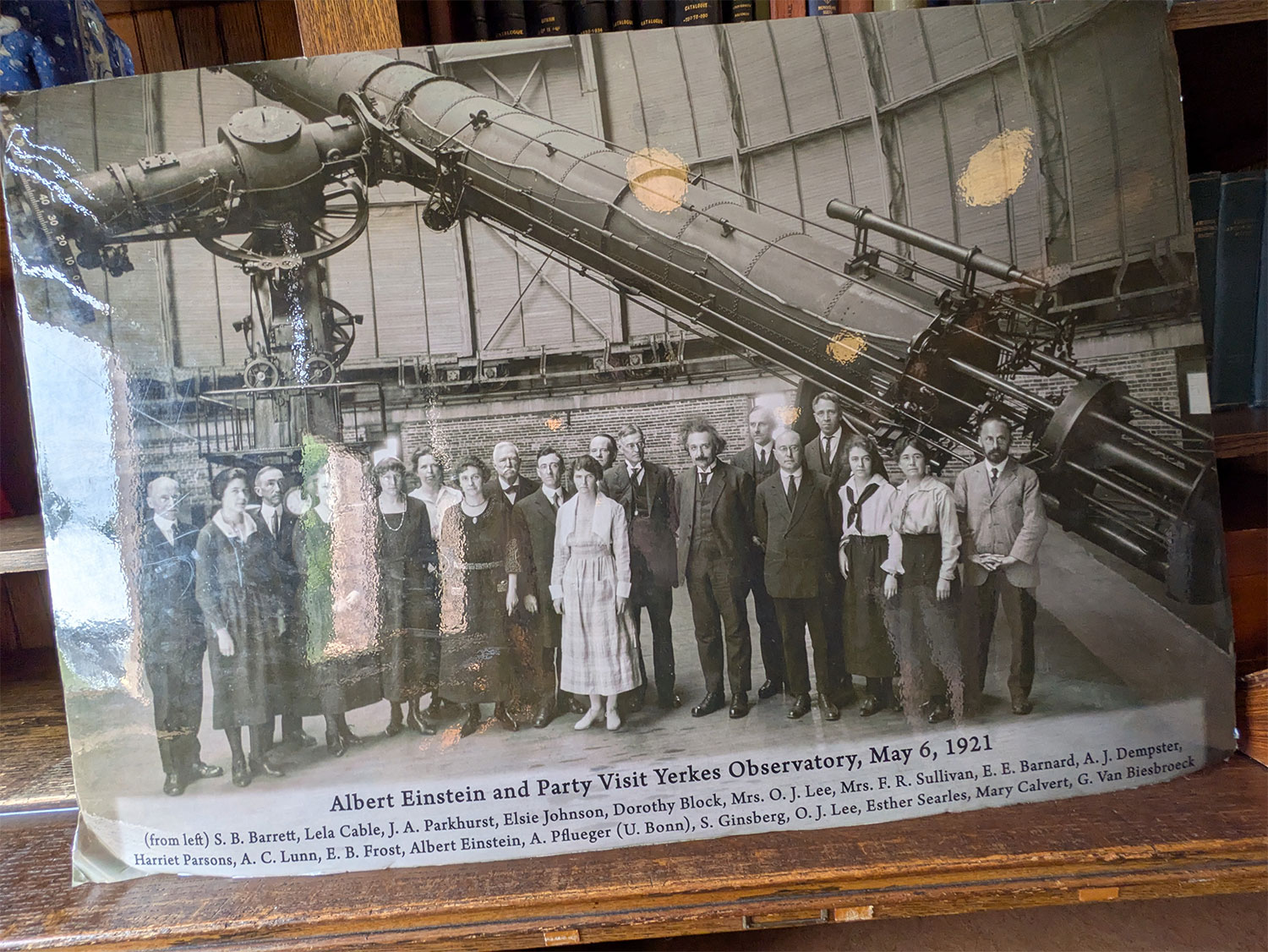
The tour ended in a library where our guide once again directed our attention to the room’s most prized exhibit: a photograph of Albert Einstein visiting the observatory in 1921, flanked by the primarily female staff of the Yerkes. This, our guide stressed, is a point of pride for the observatory. Back in the first half of the 20th century, there were few places where women were permitted to directly observe the night sky. Typically, most noted astronomers were men, and the women were left to administrative duties like compiling reports of the observations afterward. The Yerkes Observatory was one of the first academic institutions to push for equal time for women under the glass. This, according to our guide, was a much bigger deal than a brief pit stop by the man behind the Theory of Relativity.
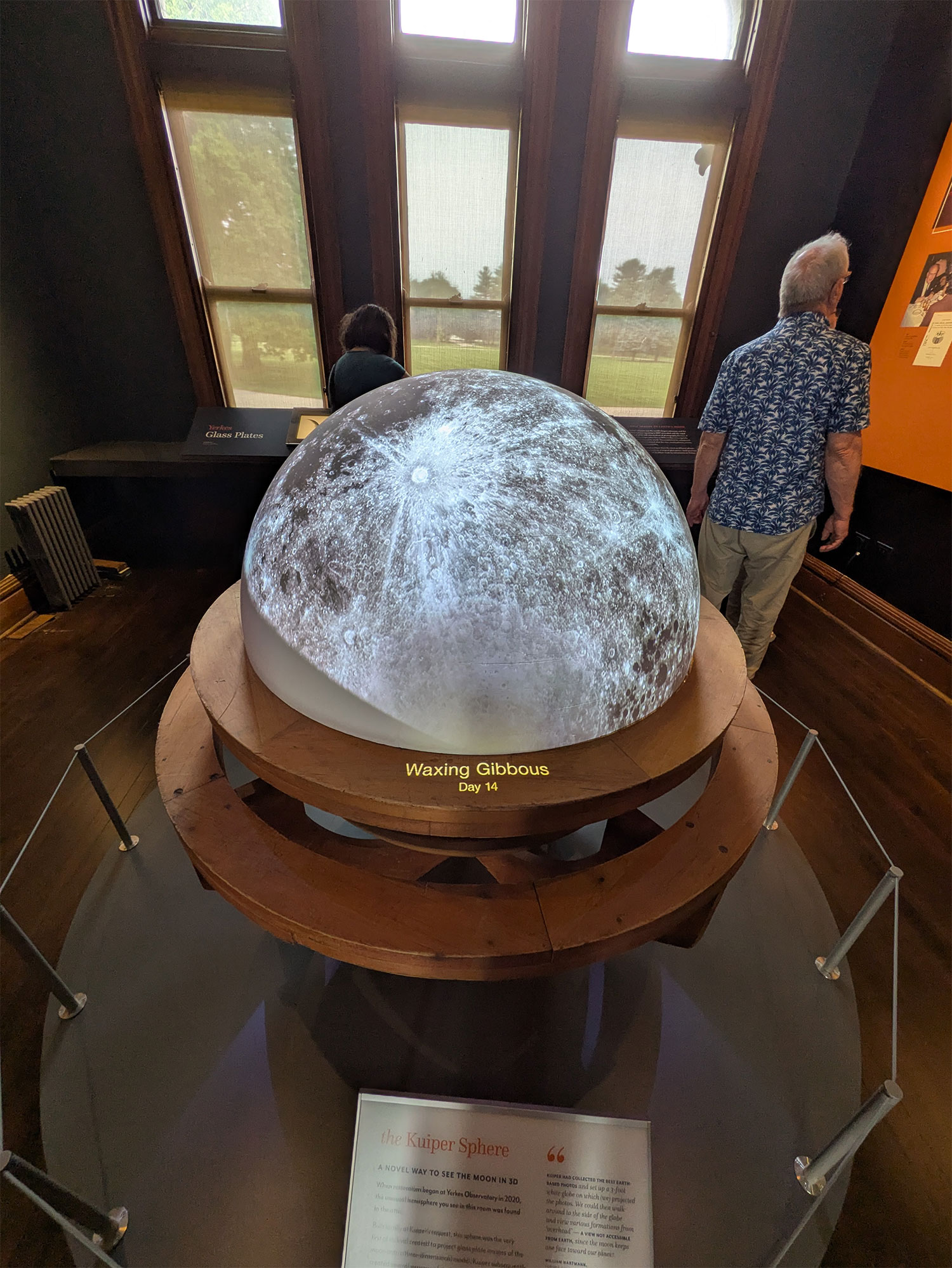
As our guide bid us adieu, we were left to explore just a bit more ephemera and one last exhibit: a room housing something called the Kuiper Sphere. Conceived by Gerard Kuiper, this blank globe was literally found in the attic and refurbished by the Yerkes’ staff, and now sits in the center of a room where the phases of the moon are projected onto its surface.
The room also boats some photo plates of the Earth’s largest natural satellite, and a wall poster describes the Yerkes’ role in a (thankfully) aborted plan by the U.S. Military to detonate a nuclear bomb on the moon’s surface(!). You know, for science.
The tour left us giddy and positively salivating for more. How lucky are we in southeastern Wisconsin to have this rich trove of astronomical history for us to mine? One doesn’t even need to have a vivid interest in astronomy to enjoy the “Space and Spaces” tour at the Yerkes Observatory—the architecture alone is worth the price of admission ($46 for adults, $24 for ages 10-18, $7 for kids 9 and under), and the story of the observatory’s origins and 128-year history makes for some truly entertaining listening. And whether or not you actually like looking through them, a big goddamn telescope is pretty impressive.
All that said, we’re definitely not done visiting the Yerkes. That “Exploring the Night Sky” tour is now firmly on our bucket list. Sure, the price sounds a bit steep at $140 for adults ($85 for kids 13-18), but how often does one get to peer through the world’s largest refractor? Polish that lens up nice and clean, Yerkes staff. We’ll be back very soon.
Want more Milwaukee Record? Subscribe to our free weekly newsletter and/or support us on Patreon.