
Among its numerous monikers, Milwaukee is known as “the city of neighborhoods” on account of the dozens upon dozens of different enclaves that each add to the city’s overall character and charm. You might not be aware of this, but in addition to the abundance of different neighborhoods that help fashion the city’s overarching personality, Milwaukee is also home to another county. Well, kind of.
Yes, a portion of Milwaukee doubles as being the predominate part of one of the world’s first micronations. In late 1979, a local declared his bedroom to be The Kingdom Of Talossa, an independent sovereign nation. Now more than 45 years after it was founded, Talossa’s territory has spread significantly, its population has increased exponentially, its culture has evolved considerably, and the kingdom has endured…at least as much as a place that’s not recognized by the United Nations or any official designating body can endure.
The full story of Talossa is far too long, complicated, and nuanced to adequately tell here. However, if you want to learn a little bit about the kingdom that’s contained within Milwaukee’s borders and use your newfound knowledge to kinda-sorta take an international trip without ever leaving the city, here are some especially interesting facts about Talossa.
It was founded by a teenager
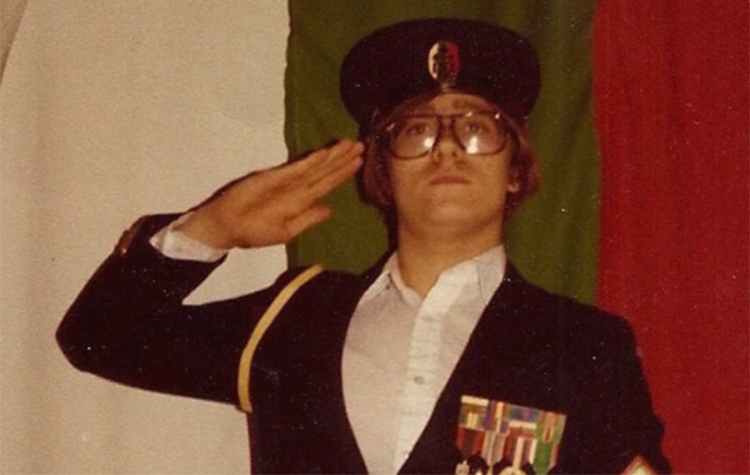
On December 26, 1979, a 14-year-old named Robert Ben Madison declared his bedroom on Milwaukee’s East Side to heretofore be known as “Talossa,” which is a Finnish word that translates to “inside the house.” It became one of the world’s first so-called “micronations,” which is a term Madison claims to have invented. Initially, Talossa’s population consisted of a handful of Madison’s friends and family members who decided to be members of the territory. When its website launched in the mid-’90s, Talossa earned coverage in national publications and, upon opening its citizenship to folks residing outside Madison’s self-determined borders, its population grew considerably.
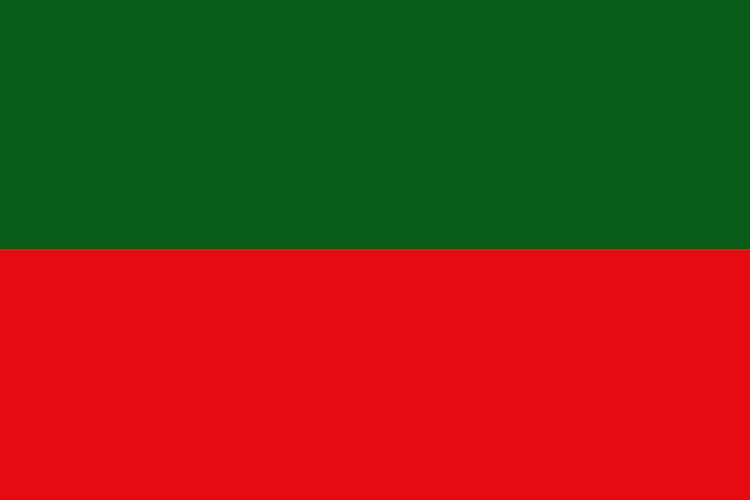
During its first few years of existence, Madison circulated a handwritten newspaper, designed the flag you see above, and put work into a variety of Talossan cultural advancements.
Talossa has its own language
One such cultural advancement Madison undertook was the creation of the Talossan language. The language—a largely French-based form of linguistics with an alphabet that falls within the parameters of the Latin writing system—is said to be one of the largest and most thorough “fictional languages” ever invented.
Talossa has its own arts, sports, and leisure activities
Talossan culture doesn’t stop at language. Like other larger and more legitimate territories, the micronation has its own literature (in the form of several history books, written by Madison and others), games (including poker tournaments, a form of LARPing called “Wargaming,” and a Talossan take on the board game Monopoly). There are close to 10 national holidays and about a dozen annual days of observance. Heck, it even has its own national anthem called “Stand Tall, Talossa.”
Talossa consists of provinces and other territories, both in Milwaukee and beyond
Much of the Talossan “realm” of claimed territories is contained with Milwaukee’s lower east side, which is known as the “Greater Talossan Area.” There are a total of seven provinces within this Greater Talossan Area, each of which has its own governments and laws, elected leaders, cultural activities, and subdivided regions called cantons.
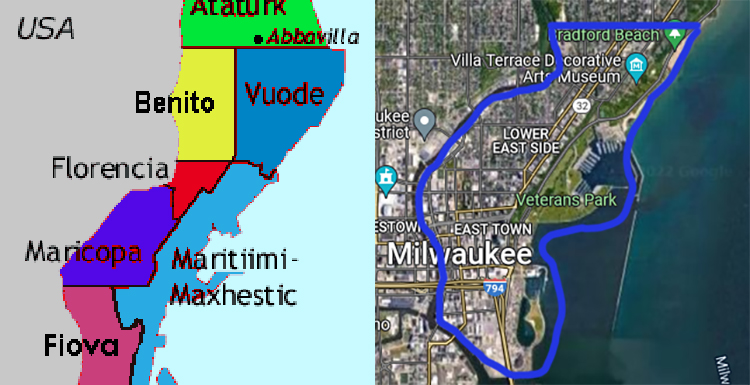
Additionally, there’s an eighth Talossan province called Cézembre that’s located on a small island off the coast of Saint-Malo, France. It was claimed by Madison (a.k.a “King Robert I”) when he visited the island in 1982. Finally, there’s an affiliated Talossan territory called Péngöpäts, which is located in a portion of Antarctica that’s unclaimed by any sovereign nation, that was recognized in spring of 1982 through the Treaty Of Shorewood.
You need not live in Milwaukee to be a Talossan citizen. In fact, most don’t.
The Talossan borders are clearly drawn, but matters of residency aren’t as cut and dry. Oddly enough, most of the approximately 50,000 people who live in the Greater Talossan Area aren’t recognized as Talossan citizens, but instead considered to be U.S. citizens who cannot participate in the miconation’s political process.
The vast majority of Talossa’s voting-eligible citizenry are “cybercits,” who are assigned citizenship in one of the provinces when they take measures to join the micronation. There are said to be Talossan cybercits scattered all over the world. Talossans who reside within the Greater Talossan Area, which accounts for a vast minority of the population, are now called “Old Growth Talossans.” At this point, there are approximately 150-175 active citizens of this not legally recognized sovereign micronation.
The micronation has outlasted its founder’s involvement
At its core, Talossa seems to be a mostly lighthearted means of bringing people from far-flung places together as predominately virtual citizens of one imagined, not openly accepted nation. Still, as not serious as this group—which considers Taco Bell to be its national cuisine—is, it’s had moments of controversy and internal conflict. In early 1987, King Robert I was actually ousted from leadership, briefly being replaced by short-lived rulers Robert II and Florence I before reclaiming the throne in February 1988. In 2005, Robert I left the kingdom and the nation he started in his bedroom more than a quarter century prior. Since then, Talossa has been ruled by Louis (2005-2006), John I (2006-2024), and current leader Txec.
Honestly, we’ve really just scratched the surface here. If you’d like to learn more about this 46-year-old micronation that exists within Milwaukee, we suggest going to Talossa’s official website and/or its Wiki page.