
In MKE Music Rewind we revisit notable Milwaukee music that was released before Milwaukee Record became a thing in April 2014. In this installment: Sd Laika’s 2014 LP That’s Harikari.
In 2014, British electronic music pioneer Richard D. James, a.k.a. Aphex Twin, dropped his long-awaited sixth album Syro. In the whirlwind of press and interviews surrounding that album’s release, James was asked by German music site Groove “Which relatively new musicians have you been listening to or enjoying recently?” James named a few websites that he used to discover new music, but only named one artist: “There’s actually one thing that is pretty large: It’s some kid called Sd Laika.”
You’re probably asking, who is Sd Laika? He might just be one of our city’s most unsung artists. Outside of Milwaukee, and even outside of the United States, he’s a household name in the world of electronic music; especially by some of its biggest musical acts. Artists like Björk, Lee Gamble, and Aphex Twin have all sung the praises of this mysterious Milwaukee musician.
Sd Laika was the alias of Milwaukee native Peter Runge, who first emerged in 2012 with his debut EP Unknown Vectors, released by the UK label Lost Codes. His iconoclastic style sat uncomfortably in the EDM mold of the era, which was over-saturated with the en-vogue styles of dubstep and vaporwave, and had an influence that still has a rippling effect through today’s bedroom producers.
Sd Laika’s music was abstract and abrasive. It wasn’t geared for the dance floor or inflected with internet-influenced-postmodern-multi-hyphenated irony; it was neither self-conscious nor self-aware. This was something new that aligned itself in the same spirit of boundary-breaking artists like Autechre or more extreme acts like Einstürzende Neubaten. It was ugly, it was mangled, and it immediately set itself apart from what was common in the early 2010s.
After his initial EP, Sd Laika signed to New York-based Tri Angle Records and released his now celebrated sole album That’s Harikari on April 29, 2014. Harikari presented sounds and production even more out-of-step with the current climate: glitchy distorted beats, dark hums and buzzes, and unfashionably lo-fi production. This bizarre music, paired with the record’s iconic cover art featuring a still from the obscure short film Ori (1964) by Terayama Shûji, made Harikari an absolute anomaly next to other EDM releases from that year by Big Freedia, Caribou, and Skrillex.
There are moments on the album that feel like the drone of a damaged copier, accented with only the faintest head-bob-able rhythm. Others are all squeaks and scratches, grating over some far away melody echoing distantly in the background. It’s majestic in its murkiness but it also raises so many questions: How was this made? Are these drum machines? Mutilated samples? What is this music?
Upon That’s Harikari’s release, it received universal acclaim from top-tier publications around the world like Pitchfork, Resident Advisor, The New York Times, The Quietus, and Fact Magazine. Reading these reviews from 2014, one gets a clear sense of how alien Sd Laika’s music was to the general public, and how maddening it was for reviewers attempting to define the indefinable.
“Scraping parts from every filthy corner of the club and retooling them as some of the most visceral and heart-stopping miniatures we’ve ever tried and failed to classify.” – Fact Magazine, 50 Best Albums of 2014
“Taking the already alien sounds of grime music as a starting off point and abrasively twisting them into something even more unknowable, Laika had developed a sound that defied any easy categorization.” – Press materials from Tri Angle
“…the kind of glitched-out muck that leaves a permanent stain on everything in a hearable radius and makes one thankful that you can’t actually smell music. It’s gruesomely tactile, dank stuff, the kind of keyboard gut-ripping that primarily resembles grime in the ‘Crime scene clean-up’ sense of the word.” – Pitchfork
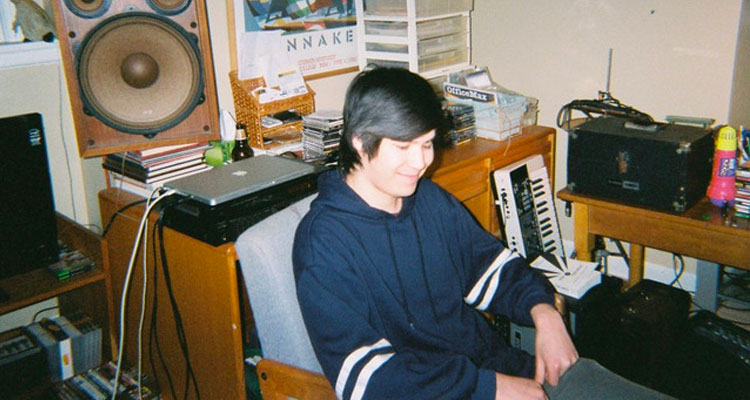
While the music world’s top critics were lauding his efforts, Runge’s presence online was nonexistent and he didn’t perform live. Even now, there is only a single press photo that circulates online where you can actually see his face, smiling in what one can only guess is his bedroom studio. Since much of the imagery linked to Sd Laika was borrowed, one wonders if the photo is even of Runge himself. Much like other clandestine artists of the time, like UK artist Burial, there was only the music for the critics or fans to draw any information from.
In the years following Harikari, Sd Laika popped up only intermittently. He released a handful of singles in 2015 and then remained quiet. Meanwhile, his peers were including his music in DJ sets and playlists around the globe. In 2017, Aphex Twin featured Runge’s music in his headlining DJ set at Parque da Cidade do Porto in Portugal. The following year Björk included not one but three Sd Laika songs in her Mixmag playlist included in her cover story for the magazine. In 2019, Sd Laika released his last single, the nine-minute “Latent Fish,” one of the few Laika tracks that seemed to even hint at acknowledging a dancefloor. And then, he disappeared.
It wasn’t until 2024 that the silence was broken when it was reported that Peter Runge had passed away. His family shared a tribute with Mixmag stating the artist had died the year before, in 2023: “Peter was an immensely talented and original musician. He was also a super funny, smart, and kind-hearted person. Our family loves and misses him. We’re grateful to everyone in the music community who enjoyed and supported the art that meant so much to him.” Many other international publications and sites posted similar eulogies for this Milwaukee artist, while there were little to no local articles written about Runge’s death or even about his music while he was alive.
Today marks 12 years since That’s Harikari was released into the world, and its scattered rhythms write an interesting chapter in the annals of Milwaukee music history. Alongside other now-classic local records like the Violent Femmes’ debut album or Die Kreuzen’s October File, it’s a product of its time while also existing out of time. When listening to the album now, it seems less offensive and it has a lower barrier of entry into its irregular world. But just like the Femmes or Die Kreuzen records, we have that record to thank for the influence it has had on our ears and our tastes. It’s because of That’s Harikari that 12 years later we can untangle those dark, twisted sounds.
Want more Milwaukee Record? Subscribe to our free weekly newsletter and/or support us on Patreon.
RELATED ARTICLES