
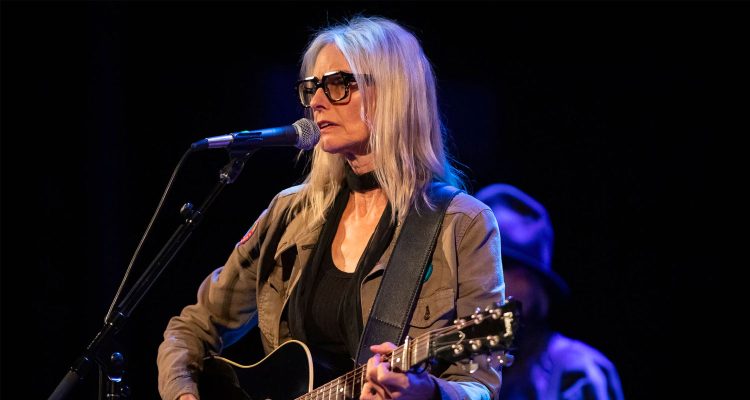
Fresh off her well-received set at this past weekend’s revived Eaux Claires Festival at Carson Park in Eau Claire, Aimee Mann hit the stage at The Pabst Theater on Monday night in great spirits, proclaiming “it’s one of my favorite places to play.” Based on her subsequent performance the sentiment was in earnest, and the enthusiastic crowd undoubtedly appreciated her and her band’s beautiful performance. Especially as Milwaukee was just one of six shows on this very brief tour, which features Mann playing the entirety of her seminal 2000 album Bachelor No. 2 Or, The Last Remains Of The Dodo.
Bachelor No. 2 was Mann’s third solo album after departing ‘Til Tuesday in 1990, and her rise to fame with the hit “Voices Carry.” Bachelor No. 2 is widely regarded as perhaps the strongest work of her career and among the greatest singer-songwriter albums of its time. It features her character-driven, lyrical vignettes about human flaws and broken relationships over signature pop melodies. Nick Hornby of The New Yorker praised her “bleak and bracing cynicism about our ability to connect with fellow humans” and her “sinuous, Burt Bacharach-like melodies,” while Pitchfork heralded Bachelor No. 2 as a “contemporary classic.”
With such haughty praise, a brief synopsis of the album’s genesis is worth noting, as Mann did throughout Monday night’s performance, as she charmingly introduced many of the songs with anecdotes about the people and circumstances that inspired them. In 1999, Mann’s label refused to release Bachelor No. 2, feeling it had no commercial potential, i.e., no hits. In response, Mann and her manager formed their own label, SuperEgo Records. Using the money earned through royalties from her work on the Magnolia soundtrack, Mann bought the Bachelor No. 2 masters from her label. Riding high on the positive praise and attention she garnered from her work on Magnolia, and in particular her song “Save Me,” Mann initially sold 25,000 copies of Bachelor No. 2 via mail order from her website, and after securing a distribution deal, Bachelor No. 2 went on to sell more than 270,000 copies. Given its history and critical and commercial success, seeing the LP performed live, start to finish, promised to be a one-of-a-kind experience. And that promise was fulfilled.
Supporting Mann for this auspicious performance was an amazing four piece band of “pro’s pros.” John Sands, who has worked with Mann for decades in the studio and on tour dating back to their Boston days, was on drums and in the pocket the whole night, reminiscent of Pete Thomas of the Attractions/Imposters. On keys and vocals was Jamie Edwards, who has also played with Mann over the years, and who was rock steady with precise harmonies and accompaniment. On bass was Kimon Kirk, also a Boston native and a solo artist in his own right, who opened the night with a pleasant six-song set, before settling in with the band, providing excellent rhythm and harmonies. Rounding out the group on guitar was Michael Lockwood, who was the guitarist on Bachelor No. 2 and had not played live in eight years. On the LP, Lockwood’s guitar is not so prominent, but live he was the driving force and anchor to this excellent band, especially in his sparkly gold (or were they silver?) shoes. Together with Mann’s amazing vocals and guitar, they performed the album flawlessly, which is just the treatment a “contemporary classic” deserved. No new interpretations were necessary.
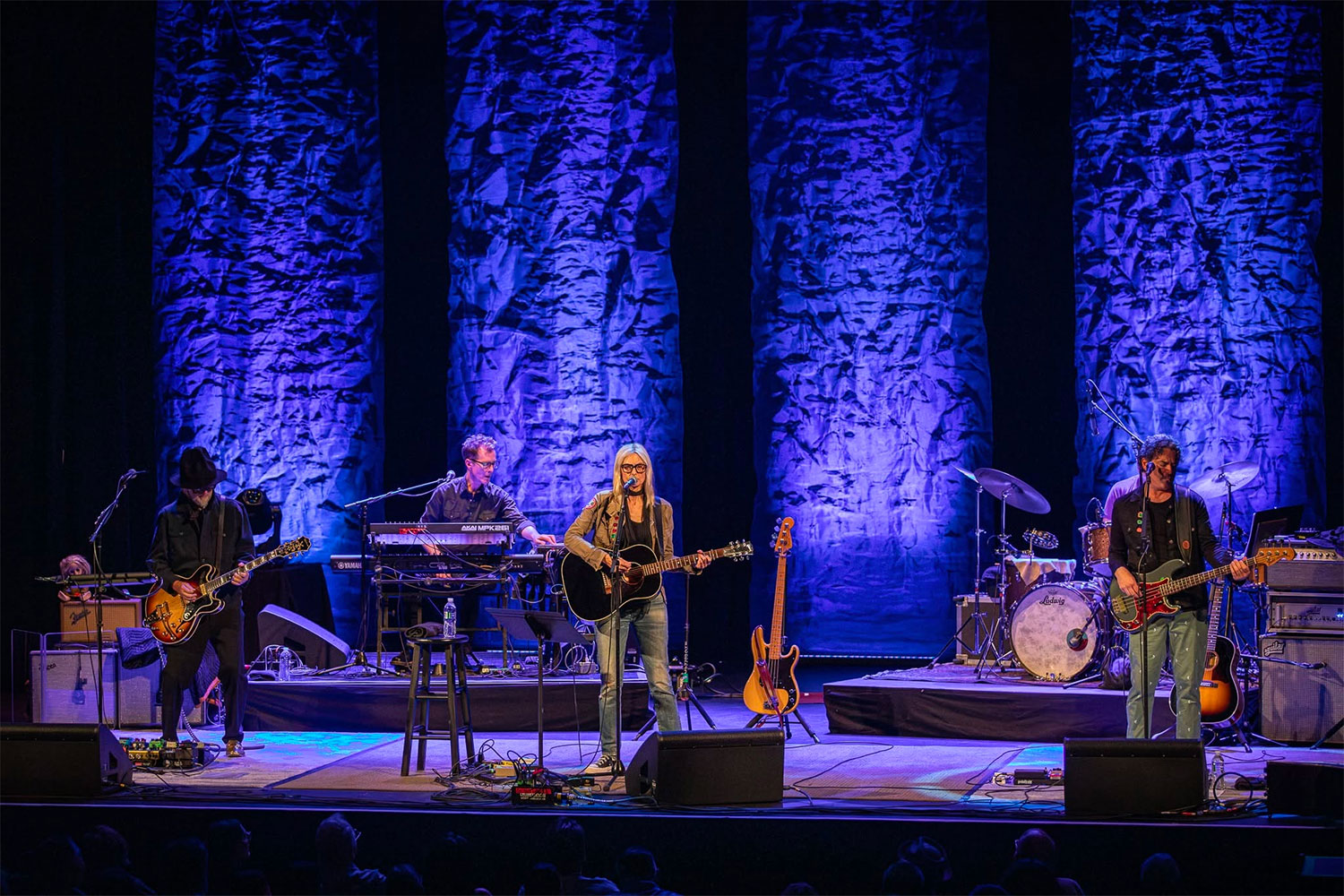
As the first song on the album, “How Am I Different” was obviously the first song of the night and therefore did not get the introduction many of the songs received, but it kicked the night off superbly with the outstanding vocals and musicianship. But Mann quickly engaged the audience with stories about the songs. For example, “Nothing Is Good Enough,” which explores the impossible standard of music industry executives demanding a hit, found Mann recounting a tale of telling the suits that finding and promoting a hit was their job, and should not be an artist’s forced artistic compromise:
Critics at their worst could never criticize
The way that you do
No, there’s no one else, I find,
To undermine or dash a hope
Quite like you
And you do it so casually, tooCause nothing is good enough
For people like you
Who have to have someone take the fall
And something to sabotage
Determined to lose it all
One of the more amusing anecdotes Mann shared was the prelude to “Calling It Quits.” She recounted how a record label executive insisted the band do an early morning radio performance, even though they were playing a gig the night before, which was their 30th gig in 30 days, and the following day was their only day off. In response to Mann’s resistance, the label guy ridiculously said, “Lisa Loeb would do it,” which was precisely the wrong thing to say:
He’s a serious Mister
Shake his hand and he’ll twist your arm
With monopoly money
We’ll be buying the funny farmSo I’ll do flips,
And get paid in chips
From a diamond as big as the Ritz
Then I’m calling it quits
Regrettably, Mann never told the audience if she ended up doing the early morning radio performance, but she did regret that Lisa Loeb got pulled into the whole kerfuffle, “Lisa Loeb was just an innocent bystander,” she said.
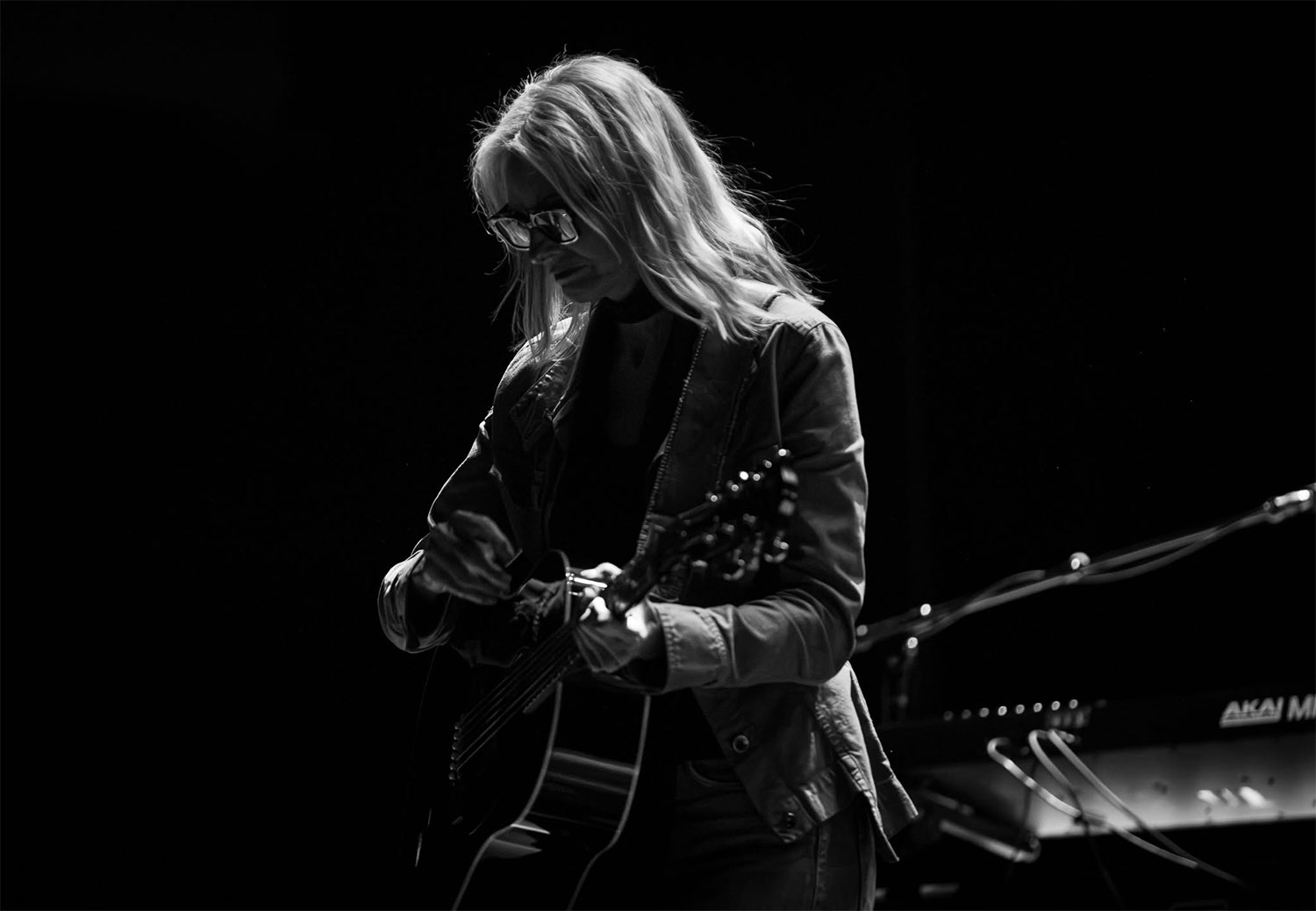
While amusing and engaging throughout the evening, Mann became emotional when introducing “Just Like Anyone,” a song about her late friend Jeff Buckley, stating she could not talk about the inspiration for that song because it would make her cry, and “I can’t sing when I cry.” Similarly, in her introduction to “Ghost World,” which was influenced by Daniel Clowes’ acclaimed graphic novel of the same name, Mann recounted her own desire to “get the fuck out of town”:
Finals blew, I barely knew
My graduation speech
And with college out of reach
If I don’t find a job
It’s down to dad and Myrtle BeachSo I’m bailing this town
Or tearing it down
Or probably more like hanging around
Hanging around
And so went the night: engaging snippets, followed by flawless performances of songs it seemed the whole audience knew the lyrics to, even though they may have just learned for the first time what the songs were really all about. It truly was an immaculate set, which had the audience out of their seats throughout, and certainly at the end of the evening. Forty years after rising to prominence with “Voices Carry,” Mann continues to commend the stage in both her vocal range and stage presence, while cultivating her literate lyrics about dark subjects and fascinating characters. While Bachelor No. 2 may be regarded as the pinnacle of her artistry, it is hardly the only feather in her cap. And certainly anyone in Monday night’s audience will be eager for her return, to hear her play any selections from the other nine solo records in her exceptional catalog.

SETLIST
How Am I Different
Nothing Is Good Enough
Red Vines
The Fall Of The World’s Own Optimist
Satellite
Ghost World
Calling Quits
Driving Sideways
Just Like Anyone
Susan
It Takes All Kinds
Deathly (taken out of order from the LP as Mann did not want to end with “It Takes All Kinds”)
ENCORE
One (Harry Nilsson cover from the Magnolia soundtrack)
Long Shot (from the LP I’m With Stupid)
Want more Milwaukee Record? Subscribe to our free weekly newsletter and/or support us on Patreon.