
Last week, in the face of surging cases of measles in the United States, the City of Milwaukee Health Department (MHD) issued a press release about ramping up measles prevention and preparedness. “Despite low vaccination rates, Wisconsin remains the only state in the Upper Midwest with zero reported measles cases so far in 2025, according to CDC data,” the MHD release said. “With the surrounding states reporting cases, area health officials agree: it is not a matter of if measles reaches Wisconsin, it’s when.”
Welp, “when” is “now.” Over the weekend, Wisconsin did indeed confirm several cases of measles—nine of them, all in Oconto County.
“All of the cases were exposed to a common source during out-of-state travel,” the Wisconsin Department of Health Services (DHS) said on Saturday. “At this time no public points of exposure have been identified and the risk to the community remains low.”
Measles? Measles? Yep, measles. Hooray for 2025.
“Residents are encouraged to check their Measles, Mumps, and Rubella (MMR) vaccine status through the Wisconsin Immunization Registry and get vaccinated if needed,” read last week’s release. “MHD offers free measles vaccinations at its health centers regardless of health insurance status.”
“As a father and as mayor, I take this threat seriously,” Milwaukee Mayor Cavalier Johnson said. “We’ve seen how quickly diseases can spread when vaccination rates fall behind. I’m proud that Milwaukee is stepping up early with clear messaging and free access to protection.”
“We are urging every Milwaukee resident to take measles seriously, and that starts with getting vaccinated. The MMR vaccine is safe, effective, and the reason we’ve kept diseases like measles at bay for decades,” said Milwaukee Commissioner of Health Mike Totoraitis, PhD. “Public health is a responsibility we all share. Choosing vaccination protects not just yourself, but the entire community.”
“The MMR vaccine is safe, effective, and essential for protecting kids and our community,” said Dr. Mike Gutzeit, President of Pediatrics at Children’s Wisconsin. “Serious side effects are rare, and most kids experience nothing more than a sore arm or mild fever. The risk from measles itself is far greater. When families choose not to vaccinate, they’re not just putting their own children at risk, but also newborns and people with weakened immune systems. Measles was nearly eliminated in the U.S., but now we’re seeing hundreds of cases and hospitalizations again. We can’t afford to go backward.”
Here’s more info from last week’s press release:
Measles is a highly contagious airborne virus that can remain in the air for up to two hours after an infected person leaves the area. It spreads through respiratory droplets from coughing or sneezing and by touching contaminated surfaces.
According to the Wisconsin Immunization Registry (WIR), 75% of 6-year-olds in Milwaukee have received both recommended doses of the Measles, Mumps, and Rubella (MMR) vaccine. Among 18-year-olds in Milwaukee, that number increases to 88%.
Statewide, Wisconsin ranks among the three lowest states in the country for kindergarten measles vaccination rates, with 84.8% of kindergarteners fully vaccinated, according to CDC data. These rates fall well below the 93–95% coverage needed for herd immunity.
One dose of the MMR vaccine provides 93% protection against measles; two doses provide 97% protection.
What to Know About Measles
Transmission:
• Close contact with an infected person
• Touching contaminated surfaces (doorknobs, handrails, etc.)
• Respiratory droplets from coughing or sneezing
• Virus can linger in the air up to 2 hours and spread through shared HVAC systems
Symptoms (typically appear 7–14 days after exposure):
• High fever (often >104°F)
• Runny nose
• Cough
• Red, watery eyes
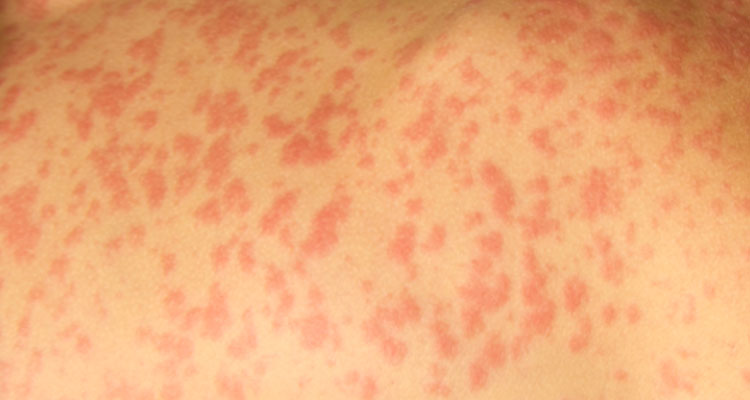
• Rash beginning at the hairline and spreading downward 3–5 days after initial symptoms
Health Risks:
• Dangerous for young children, pregnant individuals, and those with weakened immune systems
• ~1 in 5 unvaccinated people with measles require hospitalization
• Exposed individuals may need to quarantine for up to 3 weeks
What to Do
• Check your vaccination status. Visit WIR to confirm your MMR records
• Get vaccinated if you’re unprotected. The MMR vaccine is available at MHD health clinics, doctor’s offices, and local pharmacies. MHD provides free MMR vaccines regardless of insurance
• Clinics and pharmacies recommend calling ahead to make sure vaccine is available
Want more Milwaukee Record? Subscribe to our free weekly newsletter and/or support us on Patreon.