
“It’s easier to stay at home on your couch. But I will say, for your readers, we have couches!”
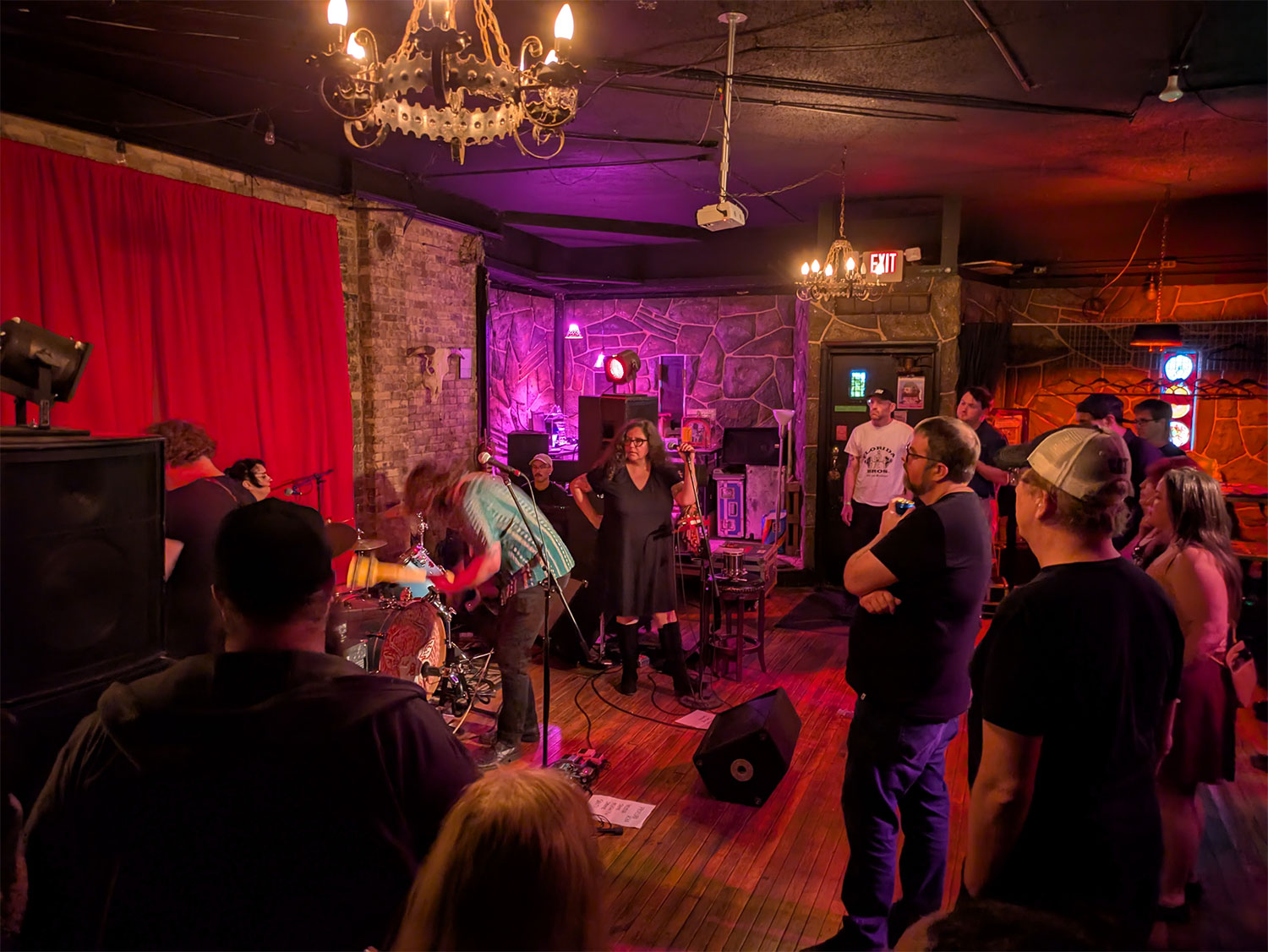
We’re hanging out with Dave Pacifico, Brian Hospital, and Andy Worzella, the dudes behind MKE Ultra (1535 W. Mitchell St.), a new smaller-scale, intimate music venue just blocks away from where the empty Modjeska Theater still stands. We’re talking about how much harder it can be as older, 40-plus scene vets to get motivated to leave the house to check out live music. And while Pacifico cracks wise about their couches as a selling point, he’s playing to this space’s strength. The word we keep coming back to is “cozy”—it is cozy in MKE Ultra.
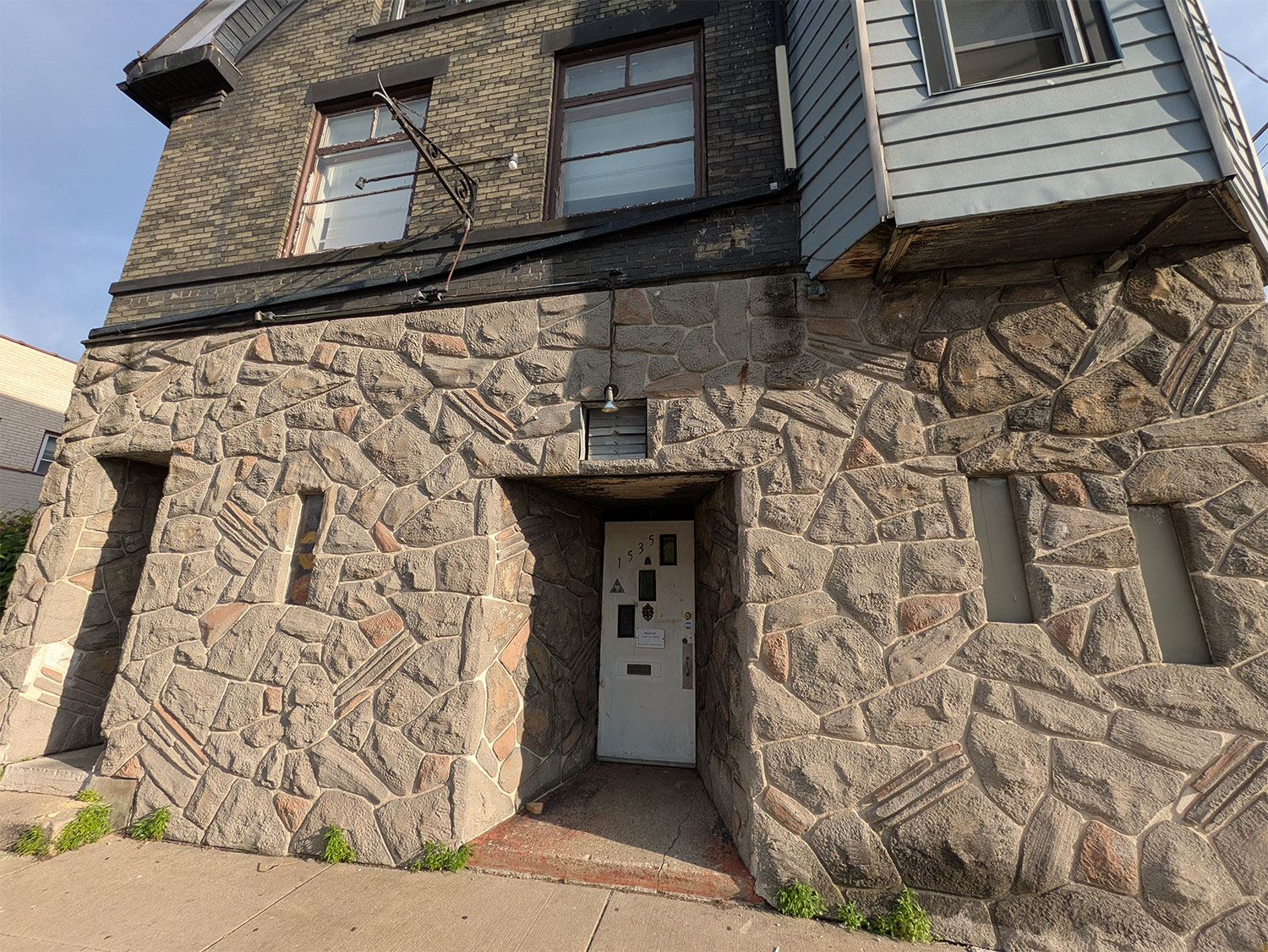
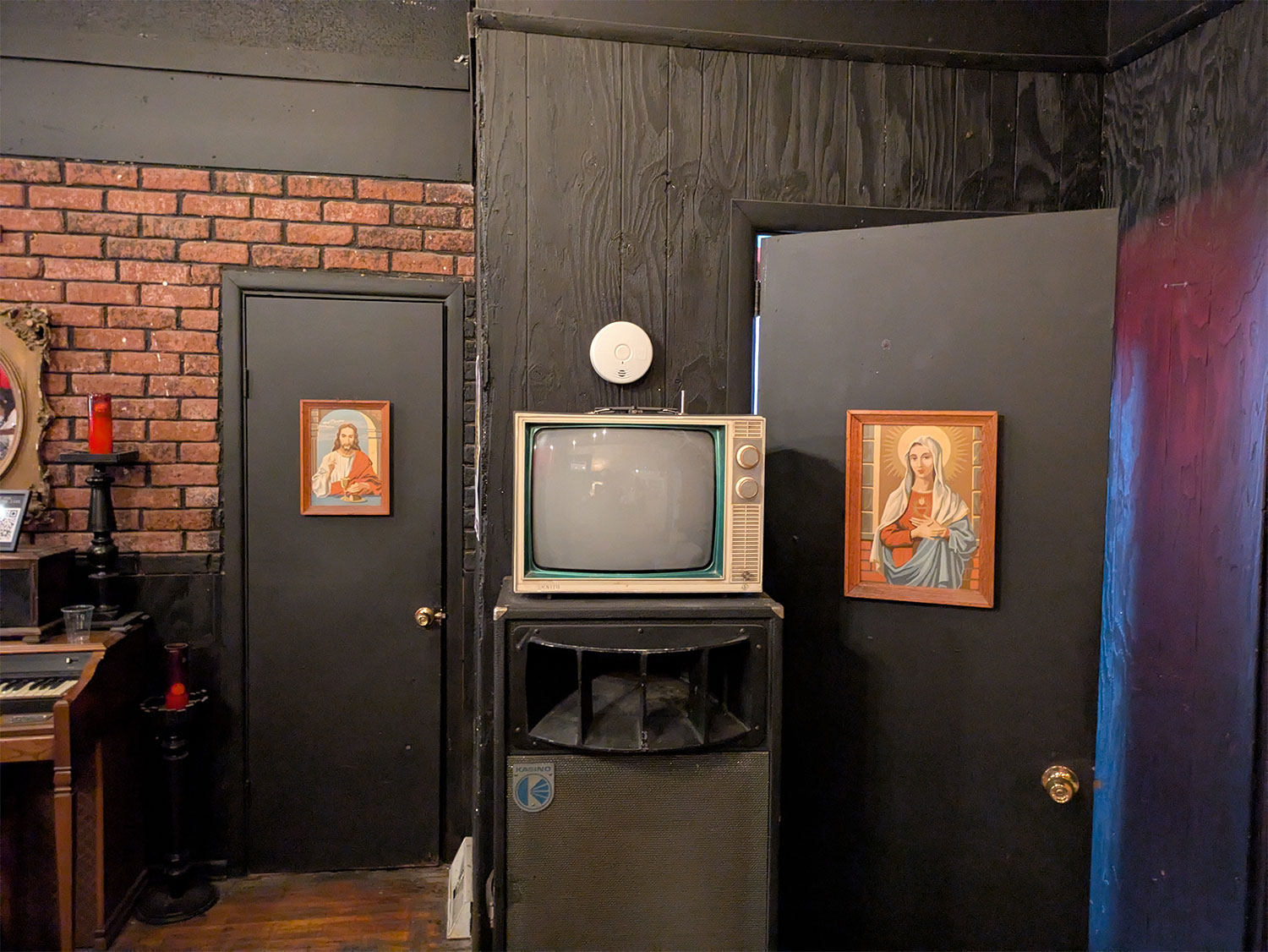
Depending on where you look in the dimly lit 49-person-capacity space, you may see classic Cream City brick, gothic-looking chandeliers, a hardwood floor, dark stone wall patterns, and a not-inconspicuous guillotine over by the merch booth. It’s equal parts supper club, German beer hall, and dungeon.
As a space for shows? For those who remember them, think Borg Ward meets Circle A, but, well…cozier. And if you don’t remember those beloved, tiny venues, just know that MKE Ultra is your new destination for those oddball shows that may only draw 20-30 people but, frankly, are the lifeblood of a vibrant, diverse, and hopefully weird-ass music scene.
“Some of the trepidation of [applying for MKE Ultra’s live entertainment license] had to do with…’What are you guys doing in there?’ And we were like, ‘We don’t know!'” jokes Hospital. “On the public entertainment premises thing, we just checked off all the boxes, like, ‘Theater, yeah! Dancing, yeah! Puppets, yeah! Magic shows!’ And then we realized, oh, we were supposed to keep it narrow.”
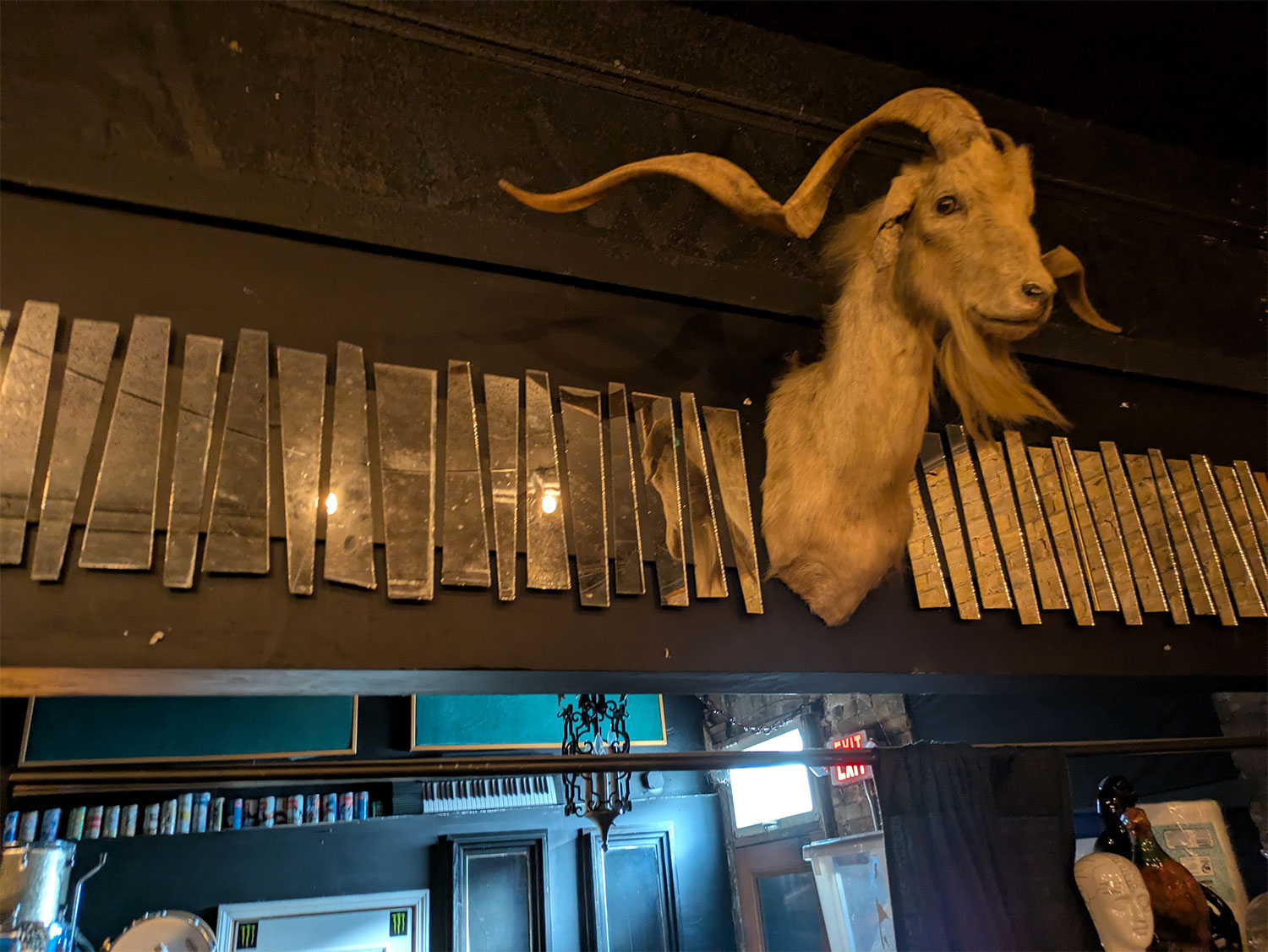
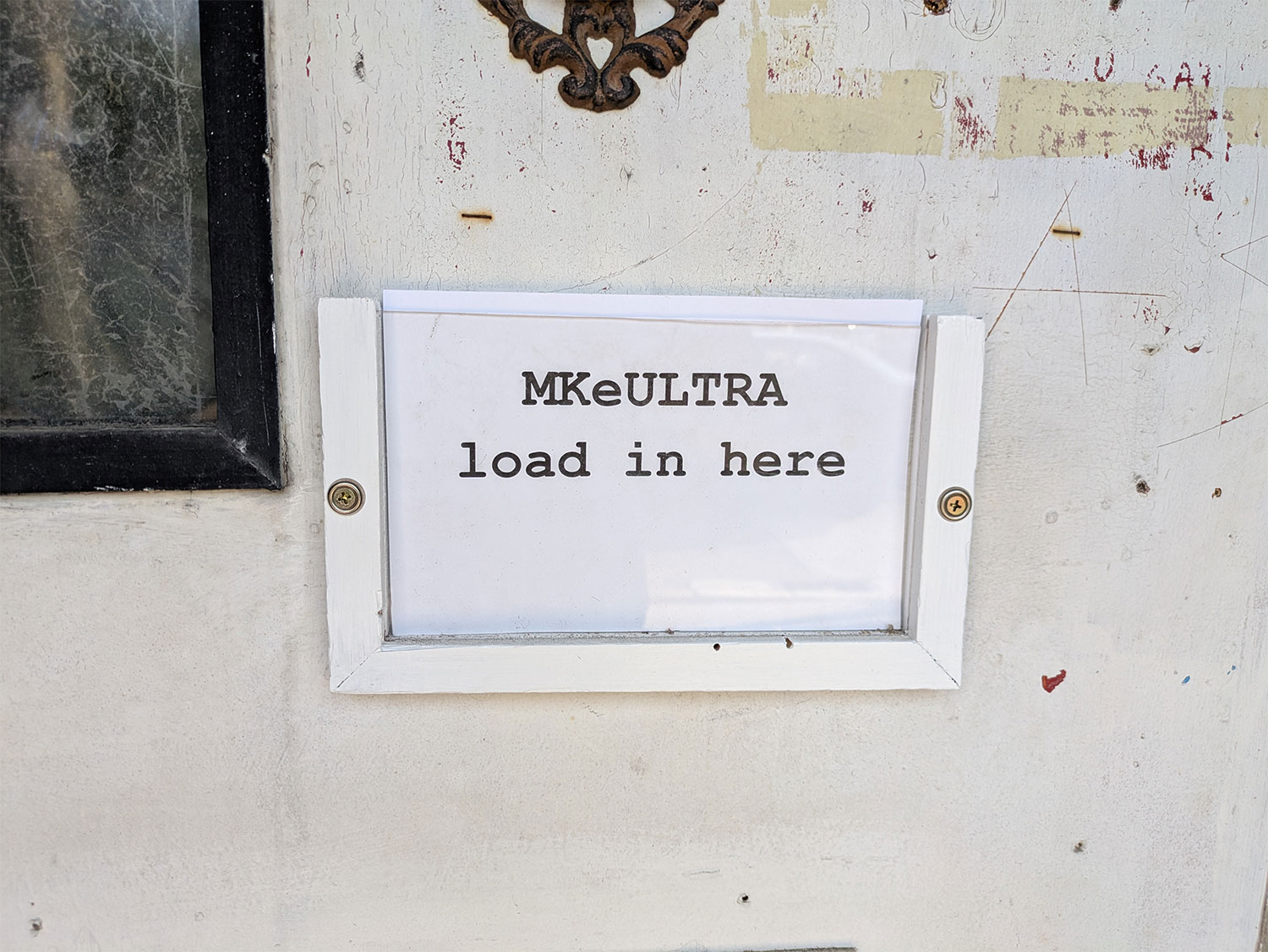
When arriving at the space, it’s almost hard to believe you’re looking at a legitimate, licensed music venue. The building clearly used to be a corner bar at one point in its existence, but those days are long past. There’s no outside signage, save for a humble white piece of paper that says “MkeULTRA load in here.”
The guys say the previous tenants were a motorcycle gang that used the space as their clubhouse. And the interior gives off the lived-in vibe of a practice space/studio more than a music venue or bar, because, well, that’s been its use for the last few years.
“We could come here once a week and have band practice, which seems like a waste of the space,” Hospital says. “And whenever someone would come down for whatever reason, they’d be like, ‘Oh, this is really cool! You guys should have shows here or something!'”
Before long, they were brainstorming and asking themselves what it would look like if they did have shows there, and legitimately so. It kicked off months of research and learning on the fly that eventually resulted in a licensing process that was lengthy, but offered a surprising amount of support for the venture.
“A lot of the steps do seem like they want you to fail,” Hospital says. “When we were trying to get the licensing, we saw the history of the place and it looked like either the motorcycle gang or something tried to get the place licensed up, and they just gave up on it.”
Pacifico continues: “The alderman was a little bit skeptical of us at first, and I had a long conversation with him. And he said to me, ‘I told those guys before you no, that we don’t need more bars just getting people drunk and spilling out in the streets and causing fights.’ And then when we clarified our plans—we had to download something called a ‘Plan of Operations,’ because he asked us for that—that was a healthy undertaking, because it helped us think about and define what we’re doing. And one of the key elements that helped change the attitude toward our licenses and what we’re doing was when we clarified that we are primarily to be a music venue that has accessory alcohol sales, as one would expect, and in particular that we would not be open every day and every night for people to breeze in and drink, but we’re gonna be open for events. That really seemed to dramatically change the reception of the project. I have to say I was kinda surprised after that happened how the alderman was pretty supportive, and I was actually pretty impressed. This guy doesn’t know us or have any requirement to help us.”
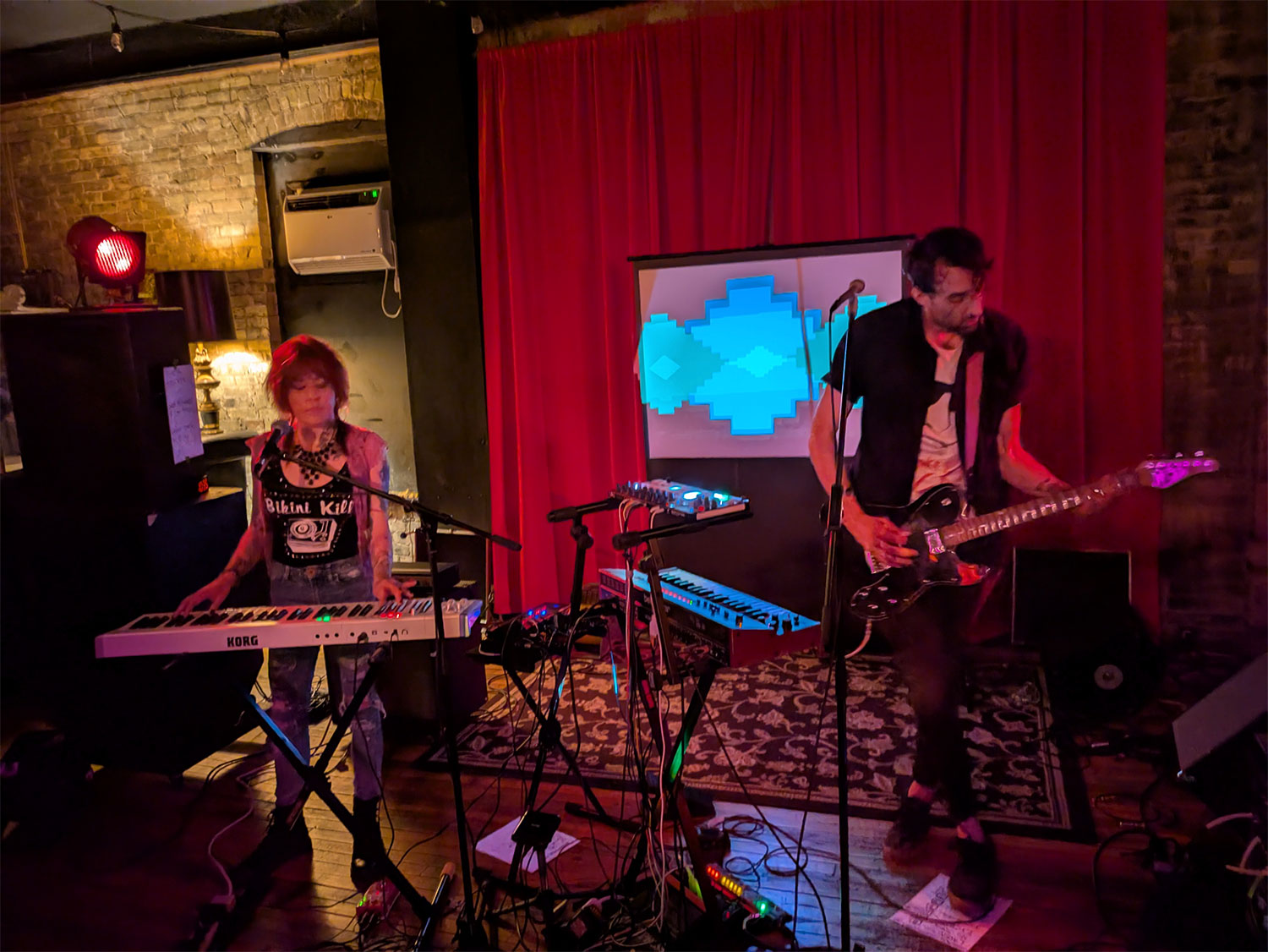
Lavish Waste
MKE Ultra held its first show in mid-April. Since then, it’s been all organic word-of-mouth getting the news out about the space. And there’s a lot of good word to spread: The PA is quality, with Brian or Andy delivering crystal-clear vocals through the monitors and mains. A storage space between the bar and the studio’s control room doubles as a makeshift but comfortable green room with a couch and a pair of crockpots where vegan beans and rice are always kept warm and free for band members and paid attendees alike. The side entrance (complete with ticket booth!) opens out to a fenced in patio/yard with plenty of space to hang out between bands.
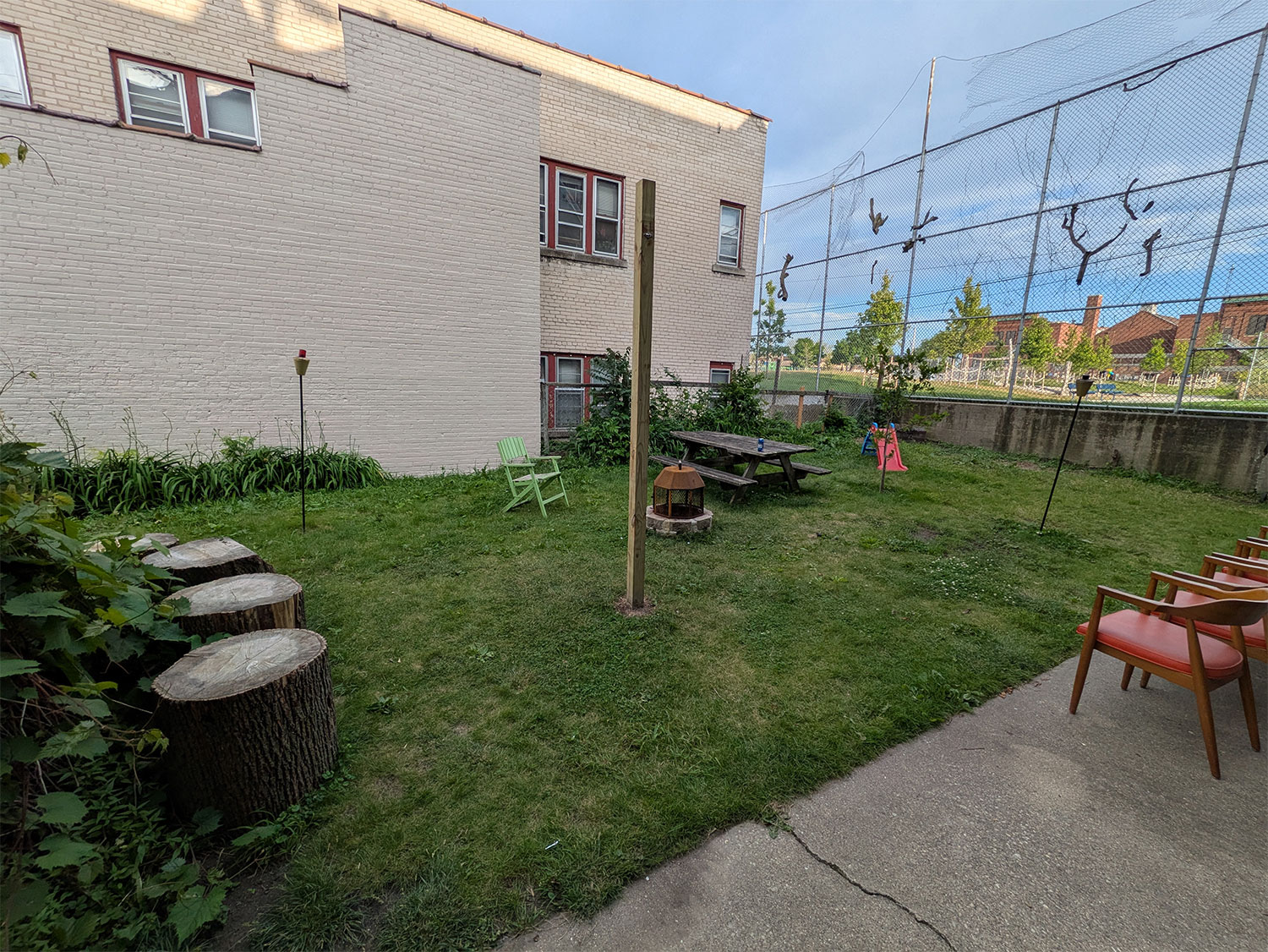
The bathrooms are clean and have locks on the doors (a low bar to clear, but notable for a place one or two rungs above a DIY house show). And thanks to its entertainment license, MKE Ultra has a modest arrangement of beer, cider, and THC shots and seltzers, with N/A options like hop refreshers and sodas for the non-drinkers. And so far, the vibes have been all good.
“There was a Monday night show that was memorable because I remember seeing sort of a younger crowd.” Pacifico says. “There were a couple of people that just seemed so incredibly joyful for the sort of noise that was going on. I was like, man, to be able to create a space where people can come and just like, cut loose, and show that there’s still hope for the young people? I dunno, that show was pretty memorable for that reason.”
As for future plans, the goal is to see how the guys can build for the long-term, and what kind of fun events they can make happen. With the venue located outside of the typical hip neighborhoods of Riverwest and Bay View, Dave, Brian, and Andy recognize there’s a slight accessibility challenge, depending on how willing Milwaukee music fans are to stray from the beaten path. But word-of-mouth is snowballing, and they say that the inquiries for date holds have slowly but steadily increased in the 10 weeks or so they’ve been open.
“Young people are more willing to come down here than older people, you know what I mean?” Hospital says. “And I get it. I’m an older person, and I imagine there’s a lot of…well, I gotta go all the way over there, and I wanna be in bed by 10. Which is why one of our goals is to have shows done on the early side. Because we’re old people, and we get it.” Shows typically start at 7 or 8 p.m. and have a maximum of three bands.
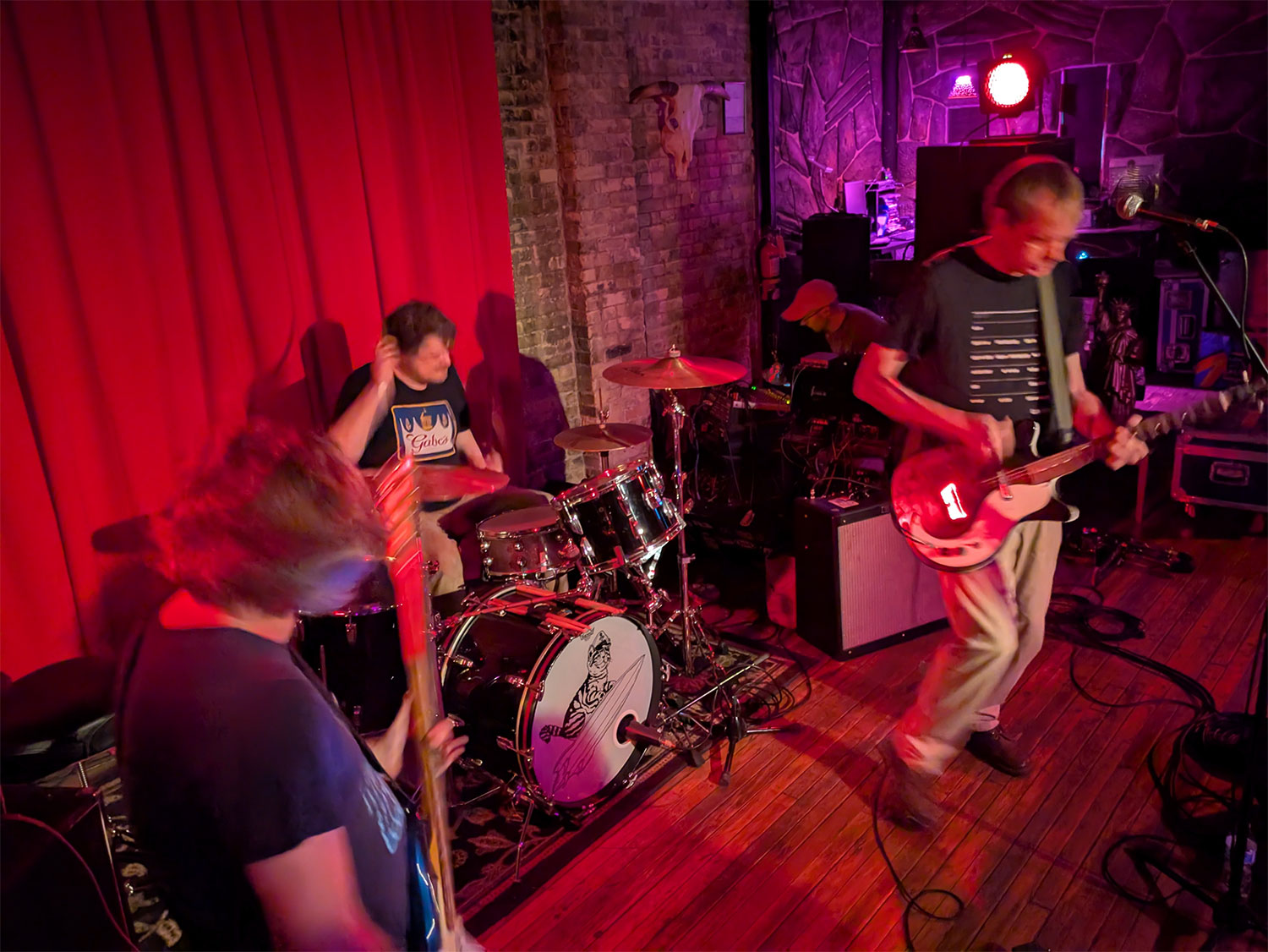
Primitive Broadcast Service
Back in the ’90s and early 2000s, music lovers made Mitchell Street a regular destination to see bands like Jon Spencer Blues Explosion, Faith No More, or Dismemberment Plan headline the long-dormant Modjeska. Clearly, with a 49-person capacity, MKE Ultra isn’t angling for those kinds of bills, but with what is sure to soon be a wide variety of the original and daring, Mitchell Street is about to get a lot weirder and cooler once again—not to say that it’s not cool already.
“This is a cool neighborhood!” Pacifico says. “It’s a largely Latino neighborhood, it’s a lot of fun, there’s a lot of good food around here. I look forward to coming down here and buying tacos from the local taco trucks, of which there are many. It’s kind of a cool place, it’s a little bit different, and I hope people see that the neighborhood is some kind of a draw.”
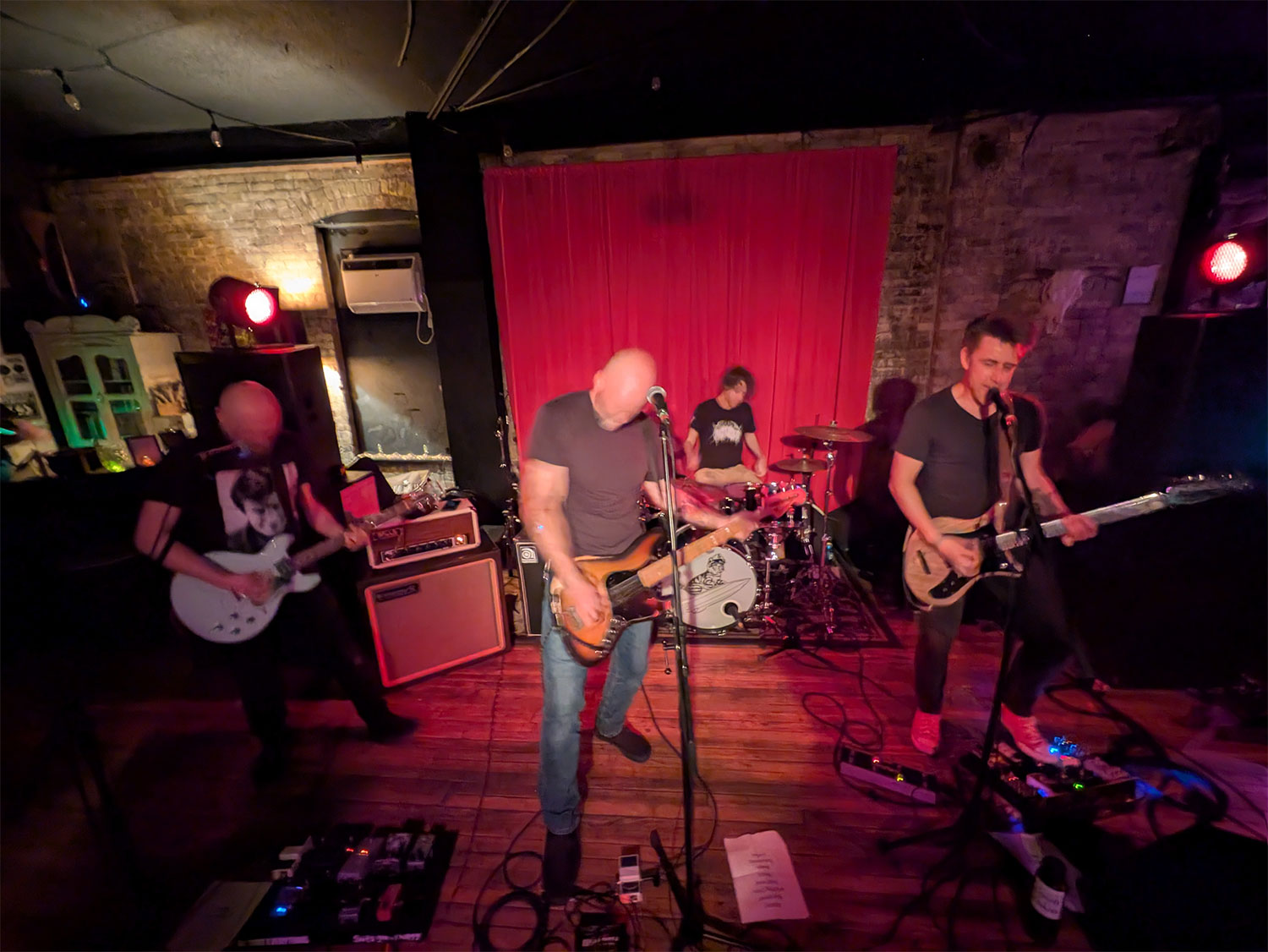
Weaklung
Want more Milwaukee Record? Subscribe to our free weekly newsletter and/or support us on Patreon.