
“I could get rich in the junkyard if I really wanted to because I know a lot about the junkyard business from working at Record Head.”
These are words spoken by Milwaukee musician Jay Tiller in 1985 during an interview for WMVT Channel 36. The bizarre yet entertaining video, which transitions between live performances of Tiller’s band Couch Flambeau and interview segments filmed at Record Head, paints a very different picture than what we’re used to seeing today of one of Milwaukee’s oldest entertainment retail shops. Behind Tiller and Couch Flambeau bassist Neil Socol are multiple rows of guitars and basses. Every now and then, strange decorations like a weird doll head flash onscreen. Other employees or friends are eventually introduced by Tiller, all wearing matching leather jackets while smoking cigarettes and drinking beer on the job—all seemingly in on messing with the poor journalists working this strange beat.
And while the camera never really gives us a good look at the entire layout of the store, there are three definite facts that can be discerned from these interview segments:
1. There is a lot of random stuff inside of that store
2. All of that stuff is crammed into a small space
3. This was a really fun place to not just shop at, but hang out in
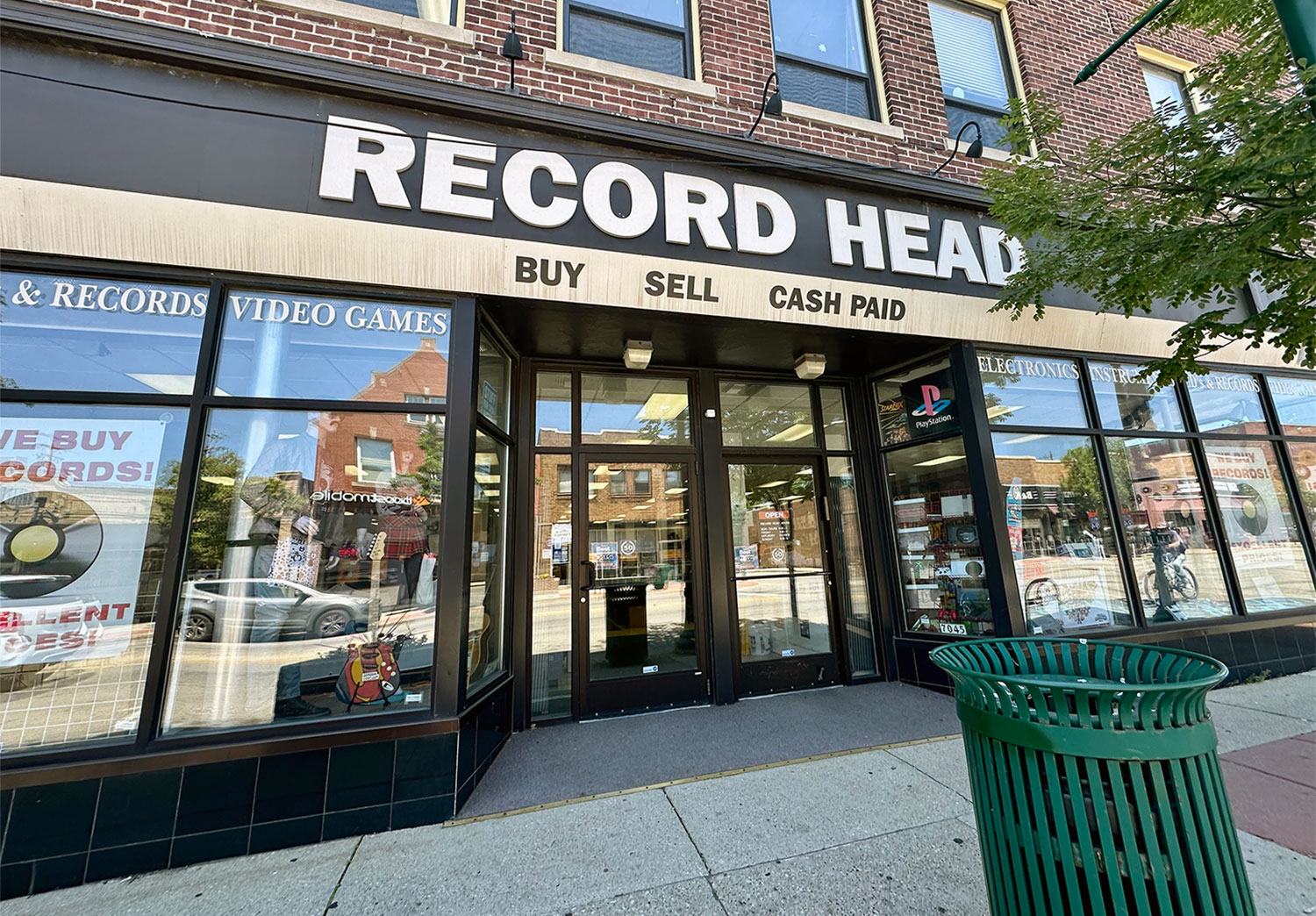
I’ve heard a lot about Record Head (7045 W. Greenfield Ave.; 414-250-7990) from people who have been in the Milwaukee music scene for much longer than I. My idea of what Record Head is is probably similar to most people who were born in the ’90s or later: it’s a great spot to buy vinyl, stereo equipment, and retro video games with a small selection of musical instruments. But I started hearing these strange stories about the place: “Someone used to brew beer in the basement.” “You used to be able to trade guns there.” “The FBI raided that place once.”
My curiosity piqued when I found out that the late Steve Albini purchased a guitar pedal from Tiller at Record Head: the InterFax Harmonic Percolator. That pedal, which has become revered by gear nerds for sounds heard in Albini’s projects Shellac and Rapeman, sells for hundreds of dollars today. According to Albini in the book Stompbox, it was purchased from Tiller for $50 back then.
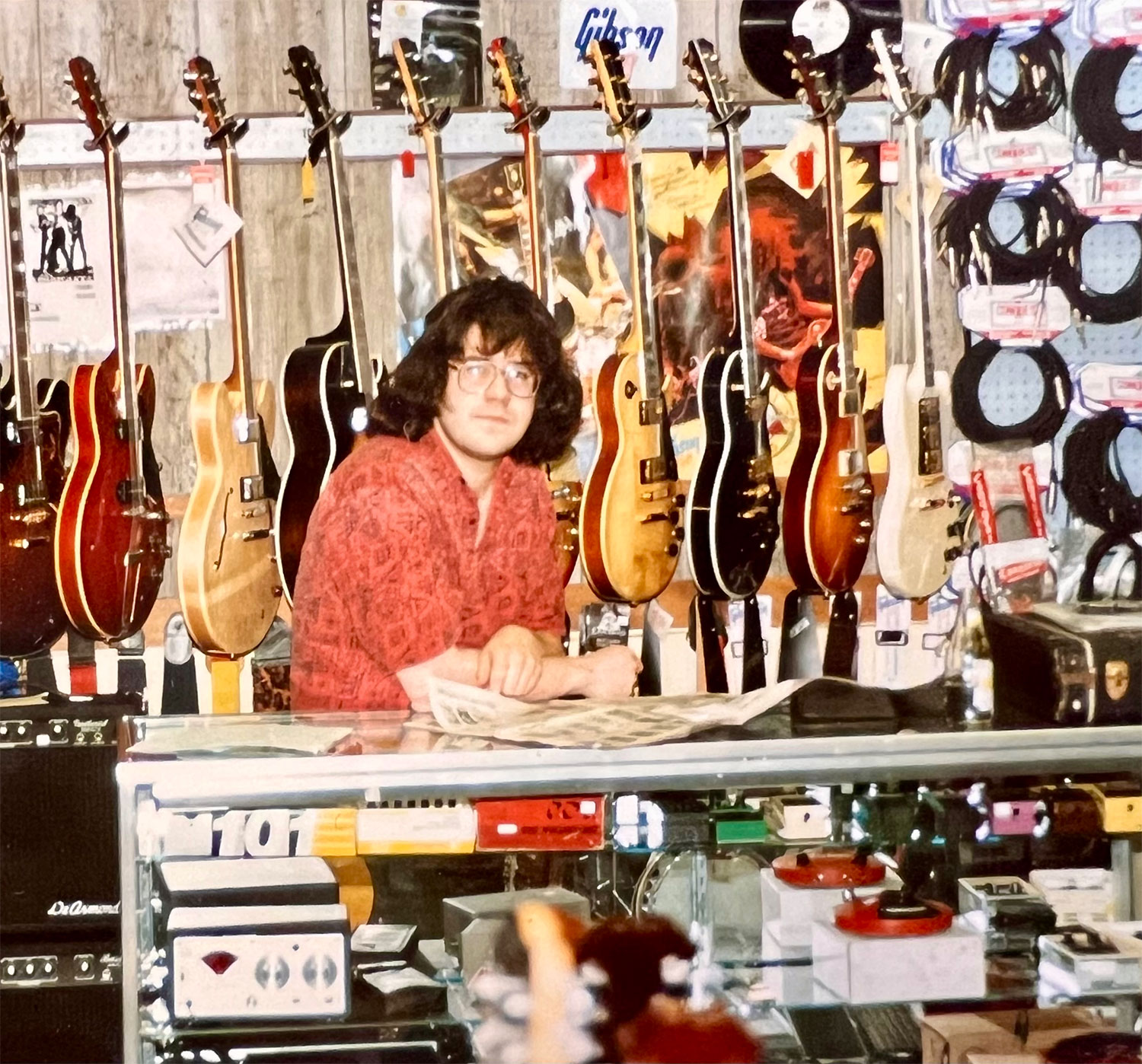
Photo courtesy of Jay Tiller
That story created this sort of mysticism in my mind about Record Head. I figured there had to be some truth to the weird rumors I kept hearing, so I decided to learn more about the store. How has it stayed in business for so long? Were you really able to buy used guns from a record shop? How was any of this legal? To help answer these questions, I spoke with three ex-employees who worked at Record Heard throughout various years of the store’s life, as well as owner Scott Heifetz.
It all started in 1972 with Record Head’s first location at the intersection of N. 74th Street and W. Hampton Avenue. The storefront was opened by childhood friends Heifetz and Tim Sadowsky, who noticed there was a lack of both record shops and head shops at the time.
“When we started, there was only one record store on Brady Street [1812 Overture] and we wanted to emulate that,” says Heifetz. “Also at that time, the only pipe store was on Brady Street and was called Joint Venture, so we thought ‘let’s put the two together.'”
With formulating the name for their shop, Heifetz and Sadowksy quite literally “put the two together”: Record (the shop will sell records) Head (the shop will sell head products). The original logo featured Jimi Hendrix’s face inside the grooves of a record adorned with a label shaped like a marijuana leaf. You couldn’t really get more on the nose than that.
“It was like 400 square feet, just a hole in the wall,” says Heifetz.
Mike Cohen, who shopped at and hung out at that original location, recalls how tiny it was.
“You couldn’t get more than twenty people in there, it would be way too crowded,” he says.
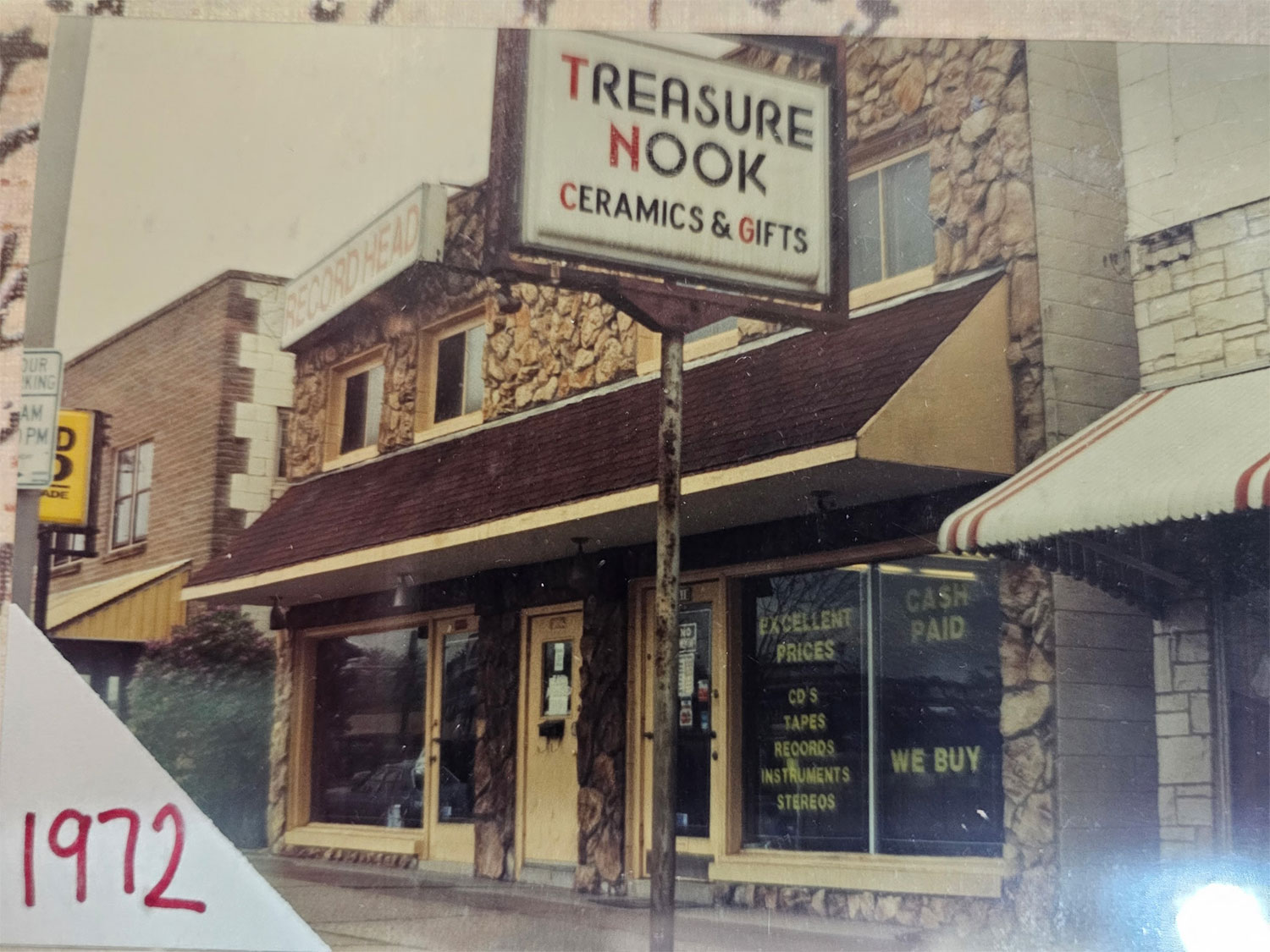
Photo courtesy of Scott Heifetz
In its infancy, the store exclusively sold brand new records and head products. Cohen recalls hanging out at the shop and telling Heifetz which records they should stock. Before long, he was offered a job.
“Everybody was a friend of somebody who worked there,” says Cohen. “One of my friends worked there, his brother worked there, and one of the owner’s sisters worked there. We were all people who grew up in the same neighborhood.”
Eventually, Heifetz and Sadowsky decided to expand and buy a second location. Another Record Head storefront was opened at the intersections of S. 68th Street, Beloit Road, and W. Lincoln Avenue.
“It was the same format as Hampton but was more like 1,200 square feet,” says Heifetz. “Again, there was no other competition in the area, and that’s why we did that.”
Before long, Record Head began buying and selling used records. It brought folks like Tiller, who started shopping at Record Head in his late teenage years, to the store constantly.
“I was always going there looking for old Beatles records,” says Tiller. “I just wound up hanging out there so much that they were like, ‘Hey, do you want to work here?'”
Once or twice a year, the shop would host an event on the upper floor of The Rave (known as just the Eagles Club back then), where they would sell and buy large quantities of records.
“Those became great events for a lot of people. People made a lot of money,” says Cohen. “It was fun just chatting it up with people. Nobody was trying to cheat anybody.”
The used record business was highly successful at the shop, which inspired Record Head to try another avenue of used product: instruments.
“We were the only ones (at the time) who had a license for second-hand instruments,” says Heifetz. “We were the only ones doing any type of buying and we had some doozy guitars.”
One such guitar was a Travis Bean that Tiller purchased for himself and then painted green.
“It wasn’t Seafoam Green, it was like a Seasick Green,” says Tiller.
Tiller went on to sell that guitar to Duane Denison of Jesus Lizard for $700, a fraction of what it would have been worth today.
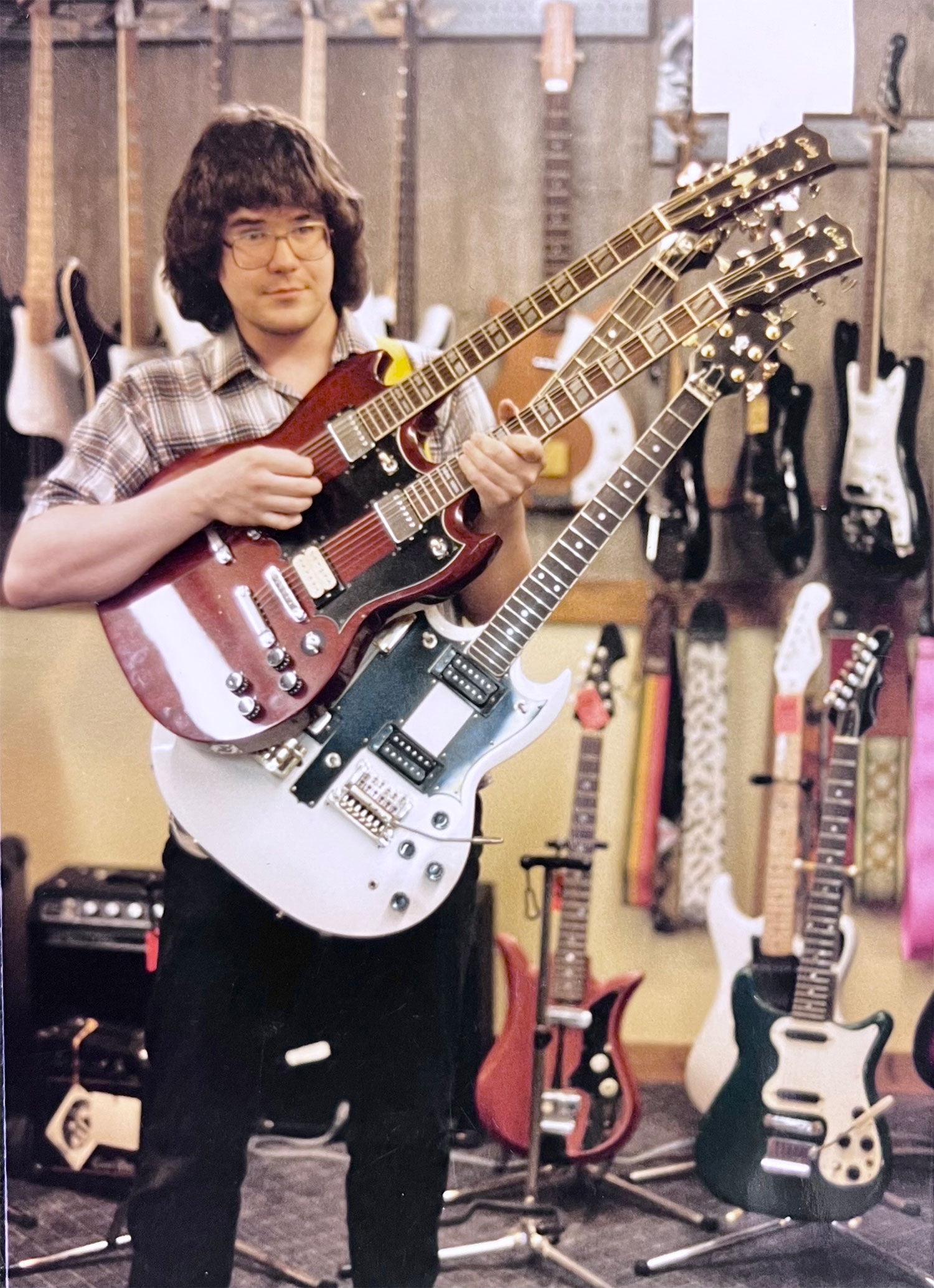
Photo courtesy of Jay Tiller
Record Head kept adding new avenues of revenue; stereo receivers, TVs, and cameras were just a few of the items customers could now purchase from the store. At one point, you could purchase camping gear from Record Head. It was as if whoever was working thought the store could make a dollar on something a customer was selling, it wasn’t off the table.
“Legend has it that a man came in with a glass eye once,” says Tiller. “I can’t remember if we bought it or not.”
But in 1980, West Allis passed a local ordinance banning the sale of drug paraphernalia within city limits, and it became illegal for the store to sell one of its namesake products. The ordinance listed “everyday items” such as metal, wooden, acrylic, glass, stone, plastic, or ceramic pipes as well as water bongs and rolling papers as “drug paraphernalia,” and it made it a municipal crime to openly display these items or sell them within 1,000 feet of a school.
So what do you do when the city says you can no longer sell one of your main products? Well, if you’re Record Head, you start buying and selling guns.
“It just happened by accident but one thing led to the next and that was a really good market because there was no competition,” Heifetz says. “Even today I don’t think there are many shops buying used guns.”
The buying and selling of firearms started out as a great market for the store.
“It made up for the loss of income the drug paraphernalia was getting the shop, I’m sure,” says Tiller. “The employees all bought guns. I bought my first .44 Magnum at Record Head and I still have it.”
But not every employee was into this crazy idea.
“[The guns] were against my grain. It was a survival thing [for the shop],” says Cohen. “Even cops would come in and buy guns. It was a weird scene.”
Just as strangely as Record Head’s gun phase came, it ended. Heifetz attributes it to several attempted break-ins that happened.
“Somebody went through the roof and they miscalculated and broke into the neighbor’s building,” says Heifetz. “[Selling guns] just started to become distasteful.”
In 1981, Record Head challenged West Allis’ drug paraphernalia ordinance as being facially unconstitutional. Record Head’s legal team argued that the ordinance violated the United States Constitution because it was “void for vagueness,” meaning the law was unclear in defining to regular citizens exactly what is legal and illegal. Because pipes can also be used to smoke tobacco, Record Head argued that the ordinance gave the West Allis police department the power to decide a shop owner’s intent. In 1982, Record Head won the lawsuit, setting a precedent for head shops moving forward, establishing the law that municipalities cannot simply ban pipes outright.
It’s a mystery how Record Head managed to stay out of hot water through its gun phase and legal battle. But what would eventually catch the shop some heat was the product you’d least expect: records.
“As a weird 13-year-old kid, I was obsessed with Led Zeppelin bootlegs,” says Chris Schulist, WMSE DJ and co-owner of Vanguard and Wiggle Room. “I remember someone telling me that the place to get Zeppelin bootlegs was to ask at Record Head.”
At the time, vinyl collectors were obsessed with bootleg records that offered unreleased tracks and live versions of songs that couldn’t be found on a band’s official discography. A famous example of this is Great White Wonder, a 1969 Bob Dylan bootleg that featured unreleased recordings and is considered the first ever rock bootleg.
According to Schulist, Record Head held a stash of bootlegs behind the counter.
“Back then, you had to say something to the effect of, ‘I’m interested in rare recordings of Led Zeppelin,’ and they’d bring out a box to flip through,” he says. “But when I said, ‘Do you guys sell Led Zeppelin bootlegs,’ the guy [at the counter] made a point of saying really loudly, ‘No! We don’t sell bootlegs! Bootlegs are illegal! Sorry kid!'”
While Schulist left empty handed that day, he eventually went back and purchased the Led Zeppelin bootleg Boston Tea Party for $15, which, according to Schulist, was “twice the cost of a new LP back then.”
It might sound extreme treating a 13-year-old kid like he’s wearing a wire, but a few years before Schulist bought his first bootleg from Record Head, the FBI had crashed the party at both storefronts.
“They put yellow tape around everything like there was a murder,” says Cohen. “UPS was trying to make a delivery to our store and we had to turn them away.”
It was 1984, and Record Head was THE spot to get bootleg records in town. It started when Heifetz noticed classified ads in the back of Rolling Stone magazine selling rare “live recordings.”
“We started contacting them and then we became known for it,” says Heifetz. “We had most of everything that was available.”
Record Head built up a relationship with these bootleg distributors, and eventually the store’s racks were filled.
“We would take names and phone numbers of customers and place orders,” says Heifetz. “Some of these orders were pretty big. We’d have semi trucks pulling up.”
But Heifetz had this underlying feeling that it wouldn’t last.
“We were always kind of afraid of what might come to be,” he says.
The FBI confiscated every bootleg record from both locations. They asked for contact names of distributors, but a lot of those relationships were built through conversations at a phone booth, so there wasn’t really a trace left behind.
“If I had to estimate, it was maybe $10,000 [more than $30,000 today] worth of merchandise,” says Heifetz. “A lot of people were really bummed out, that’s for sure. We had people coming in every week for that stuff, and now those records are worth a lot of money.”
Through the ’90s and early 2000s, Record Head kept metamorphosing with the times. Heitzman purchased a building on S. 72nd Street and W. Greenfield Avenue and moved the W. Lincoln Avenue and Beloit oad location there. Eventually, the small Hampton location—the original spot—was closed. In 2001, the store moved yet again to its current address at 7045 W. Greenfield Ave.
Video games and CDs became the sought-after media of the time. Vinyl records were no longer the craze they once were. The name Record Head started to lose its meaning, and Heifetz contemplated changing the store’s name to CD Head.
“I was like, ‘Why would you change the name? It’s your brand!'” says Tiller. “And [Heifetz] was like, ‘Well, CDs are coming out and we don’t want to be called Victrola Head.'”
We know now that records would eventually make a big comeback, bringing an appropriateness back to the Record Head name, so luckily Heifetz didn’t follow through with that idea. But in the meantime, CDs and video games were the craze, and that brought in a new generation of Record Head lovers.
Bill Sanders, who worked at Record Head from 2009 until 2023, fell in love with the store during trips with his dad.
“Record Head had this infamous basement sale where they sold vinyl, CDs and tapes for next to nothing,” says Sanders. “I realized that when I went to FuncoLand, I could only buy one video game, whereas if I went to Record Head with my dad [for the basement sales], I could buy more video games with the same amount of money.”
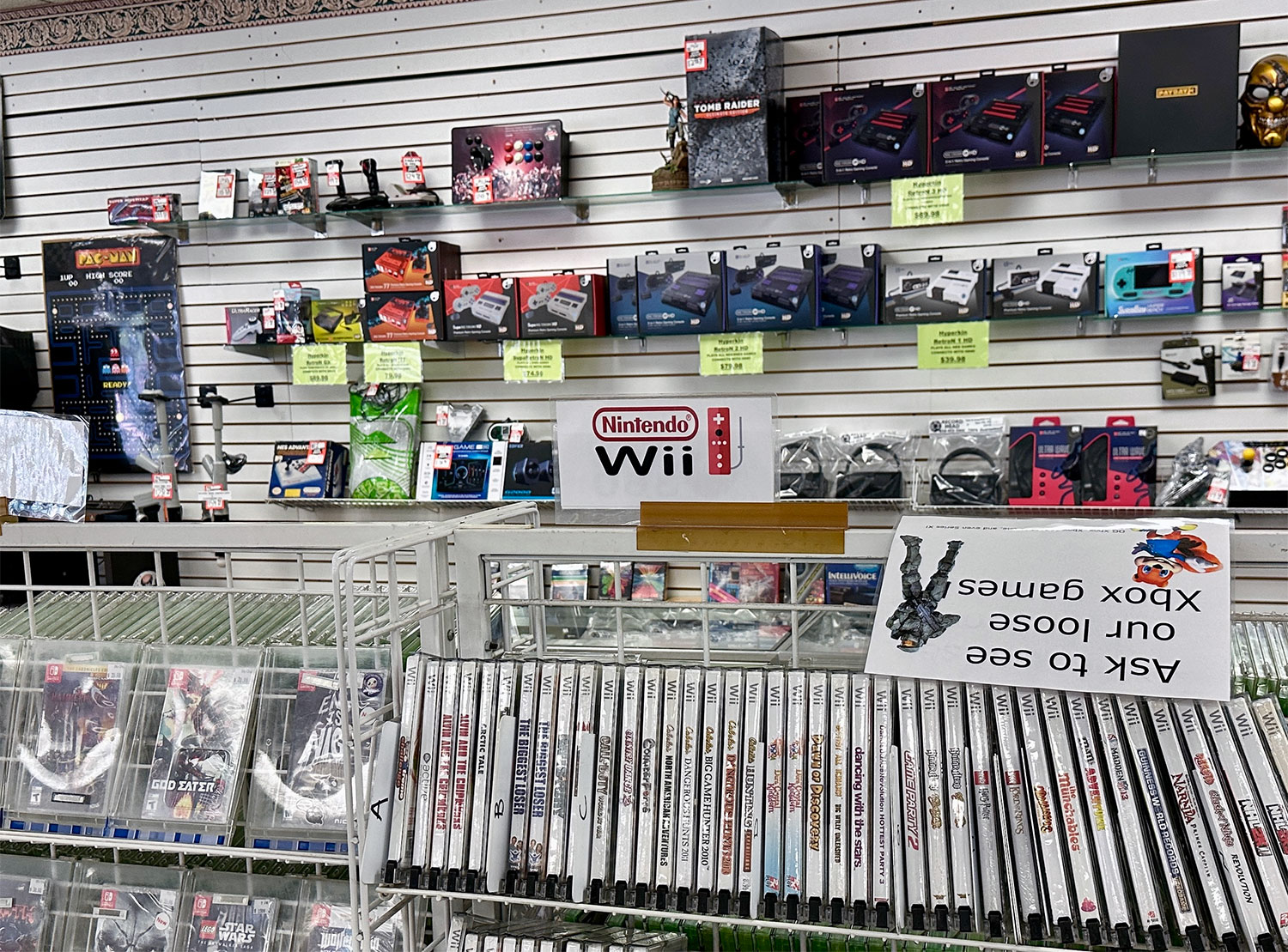
Record Head in 2026
In his teenage years, Sanders got more into instruments and music media, and bought his first guitar from Record Head. Like Tiller and Cohen before him, Sanders eventually found himself working behind the counter.
“When I started working there, they had maybe one or two bins of records,” says Sanders.
The store still sold some head products, but Sanders, who worked his way up to store manager, made the executive decision to stop selling them entirely.
“We were getting into selling flat screen TVs and computers and higher-end electronics and it just felt kind of silly to sell someone a 70-inch TV alongside a bong,” Sanders says. “It just didn’t fit the direction that the store was going.”
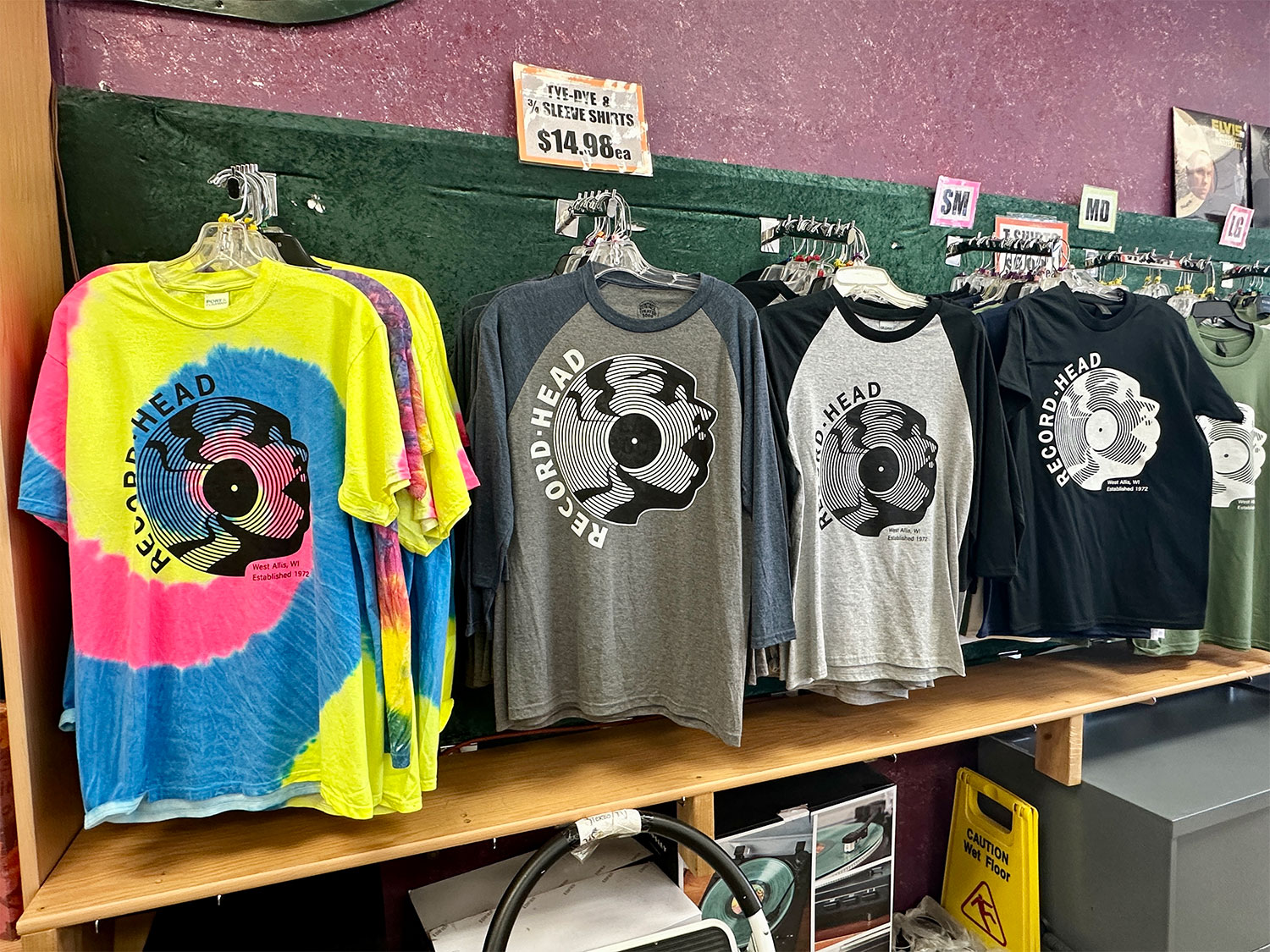
Record Head in 2026
While the store was changing direction, the vibe was still the same.
“It’s this job where you essentially get to hang out with your friends and be surrounded with the things you like,” Sanders says.
And the store was still attracting an odd cast of characters.
“We joked that Record Head was a chaos portal,” Sanders says. “When you openly advertise that you’ll give people money, you deal with the craziest subsets of humanity—both the niche record collectors and the criminals.”
Sanders recalls a time when he was given a civilian gallantry award from West Allis.
“A guy tried selling a stolen laptop computer, and it’s very obvious when someone sells a computer that isn’t theirs,” he says.
So Sanders logged into the computer and contacted the owner asking if they were aware that someone was selling their laptop.
“They were like, ‘Nope!'” says Sanders. “So we alerted the police and they came to the store.”
Once the thief realized what was happening, he punched one of the officers in the face in an attempt to escape. Sanders’ reflexes kicked in, and he restrained the guy. You see, owner Heifetz had been bringing in a Jiu-Jitsu instructor to the shop for team exercises before operating hours. Thanks to this odd ritual, Sanders knew how to quickly restrain the criminal and hold him until police could arrest him.
“It was never-ending the amount of ridiculous things that occurred inside that building,” says Sanders.
Much like it always had, Record Head continued adapting with the times. In 2013, the store was awarded by Amazon for being the largest independent media seller on the site.
“Record Head is always tapped into the pulse of things,” says Sanders. “They were selling on Amazon and eBay when those websites were first existing.”
But even though Record Head was thriving in its new direction, Sanders wanted to bring the shop back to one of its roots: records.
“I’m someone who has dealt with music and vinyl my entire life,” says Sanders. “I finally convinced [Heitzman] to start stocking new vinyl again [in 2020] and it turned into this wildly successful thing.”
A 2023 article by Spectrum News states that at that time, Record Head was selling more vinyl than it ever had before. It’s a true testament to the resilience of Record Head—a shop that refuses to die, no matter what trends the media industry heads toward.
“I went to Record Head as a kid,” says Sanders. “I have a kid now and I’m going to take him there. It’s this institution that people look to when they hear about an independent record store. It’s held up by the community.”
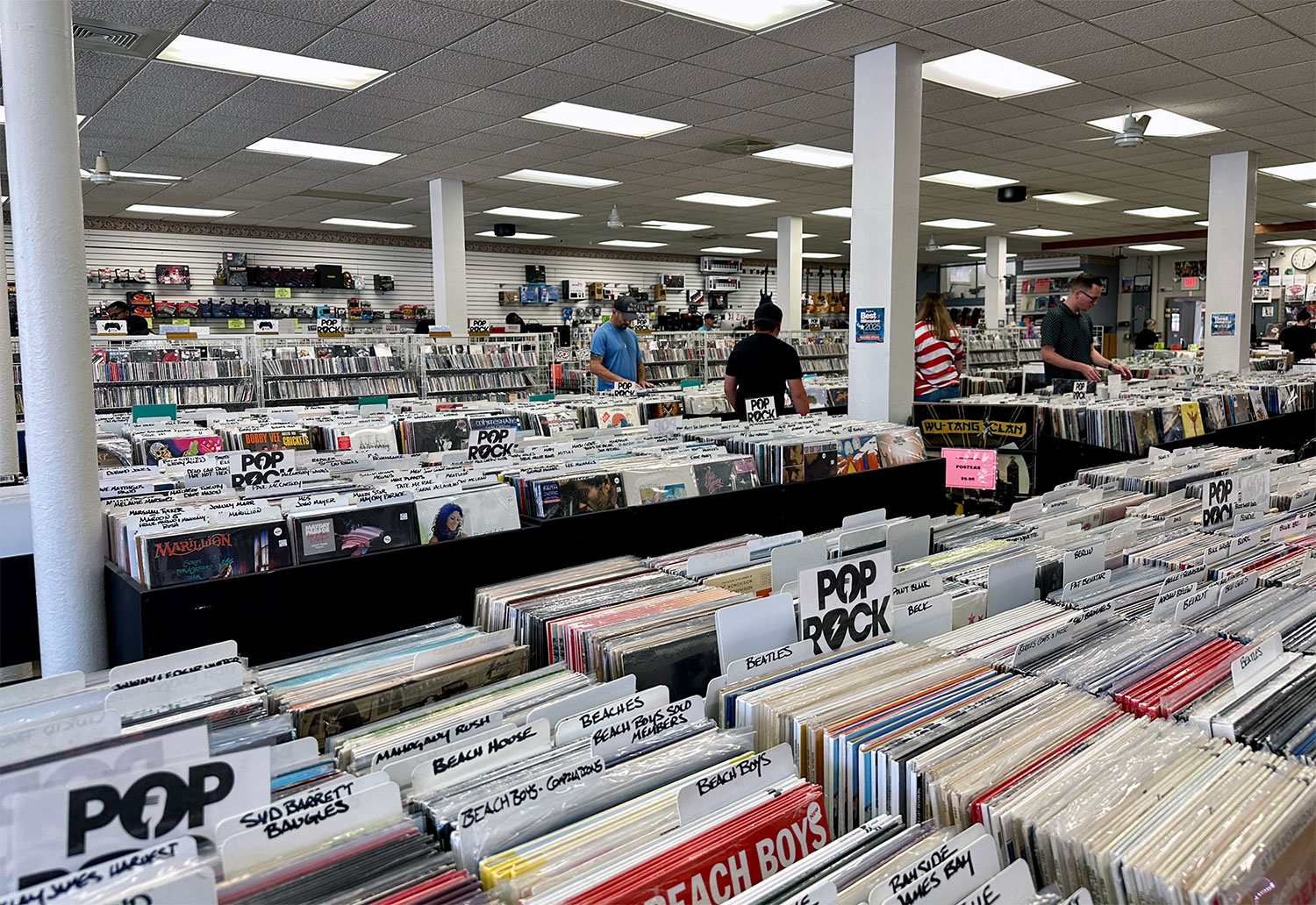
Record Head in 2026
Record Head has survived for more than 50 years now. It has endured a city ordinance that attempted to block a source of revenue for the shop, an FBI raid that confiscated much of the store’s merchandise, the massive worldwide shift towards digital media, and so much more. It survived when beloved Milwaukee shops like The Exclusive Company and almost all Mega Media Xchange locations did not.
“It is a survivor. It always has been. It’s like a phoenix rising from the ashes,” says Cohen. “It’s been like that for years. There’s not too many businesses in entertainment retail that can hang out for as long as Record Head has.”
Talking to people who have worked and shopped there, it’s clear how Record Head has managed to last this long: community.
Heifetz had a knack for hiring the right people. People who were passionate. People who were just there hanging out.
“I have a lot of really good employees that are very knowledgeable, and a few who have been with me for thirty years or longer,” says Heifetz.
Early on, Record Head became a Milwaukee hub for musicians, record collectors, weirdos, and everyone in between, and it continues to be that today. People had ideas, and the store wasn’t afraid to listen to those ideas and take risks. And it’s heartwarming to hear how passionate people who haven’t worked there in decades still are about Record Head.
“If I were a screenwriter, it would have been a great movie,” says Cohen about his time there. “In fact, it sort of was a movie.”
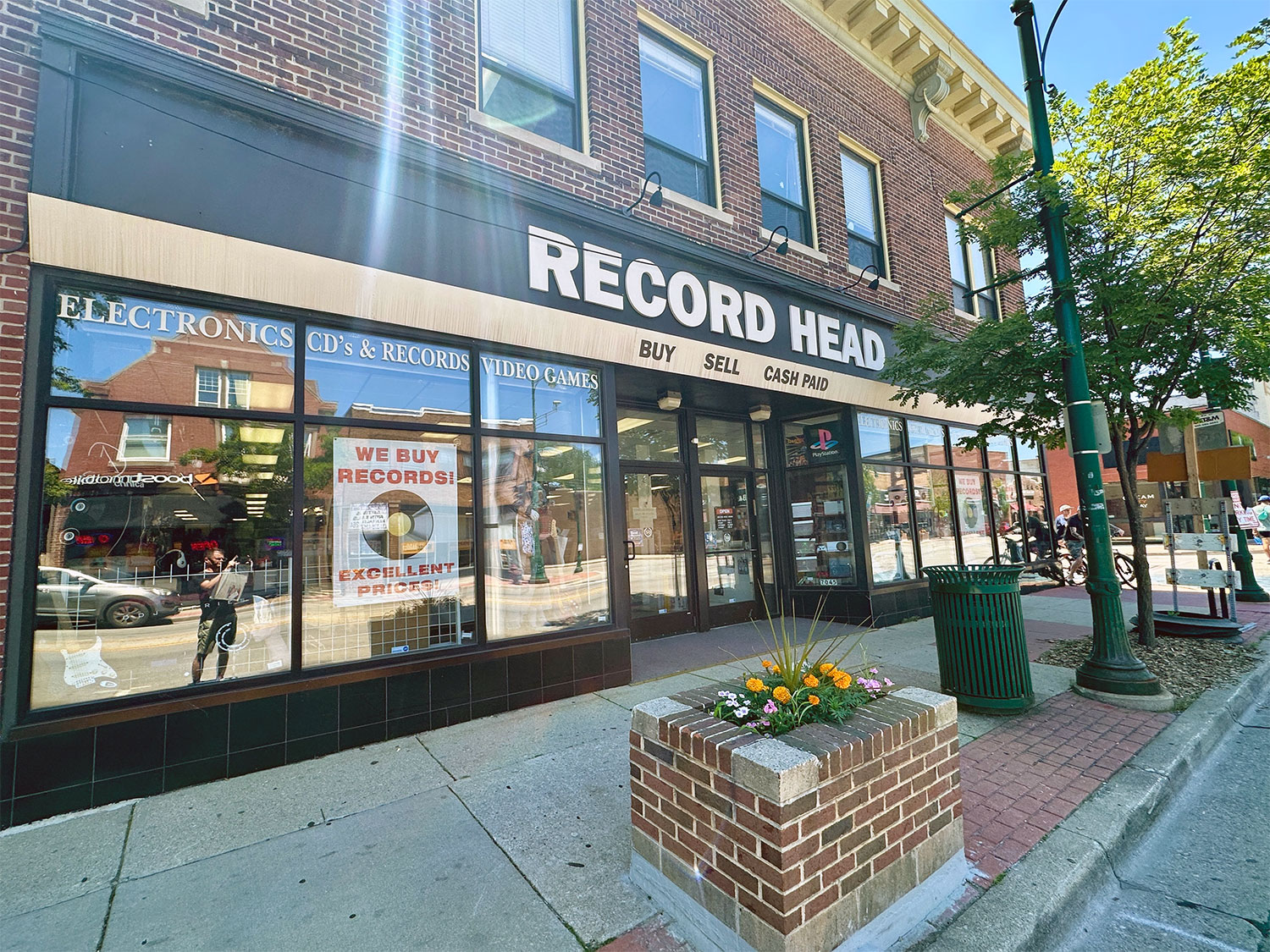
Record Head in 2026
Want more Milwaukee Record? Subscribe to our free weekly newsletter and/or support us on Patreon.