
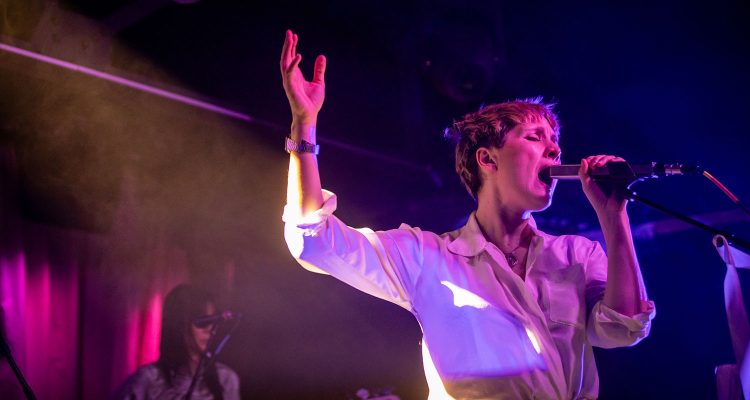
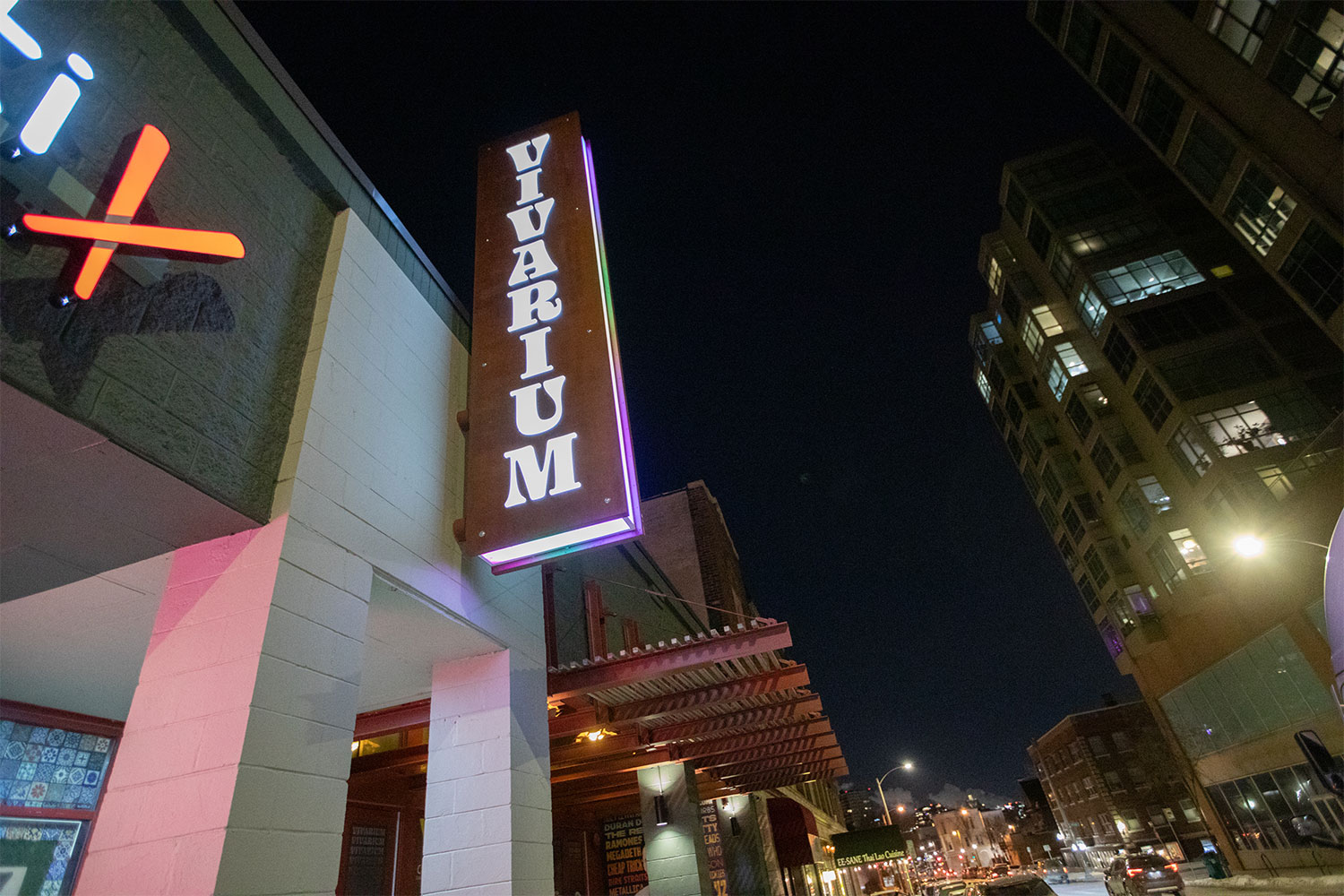
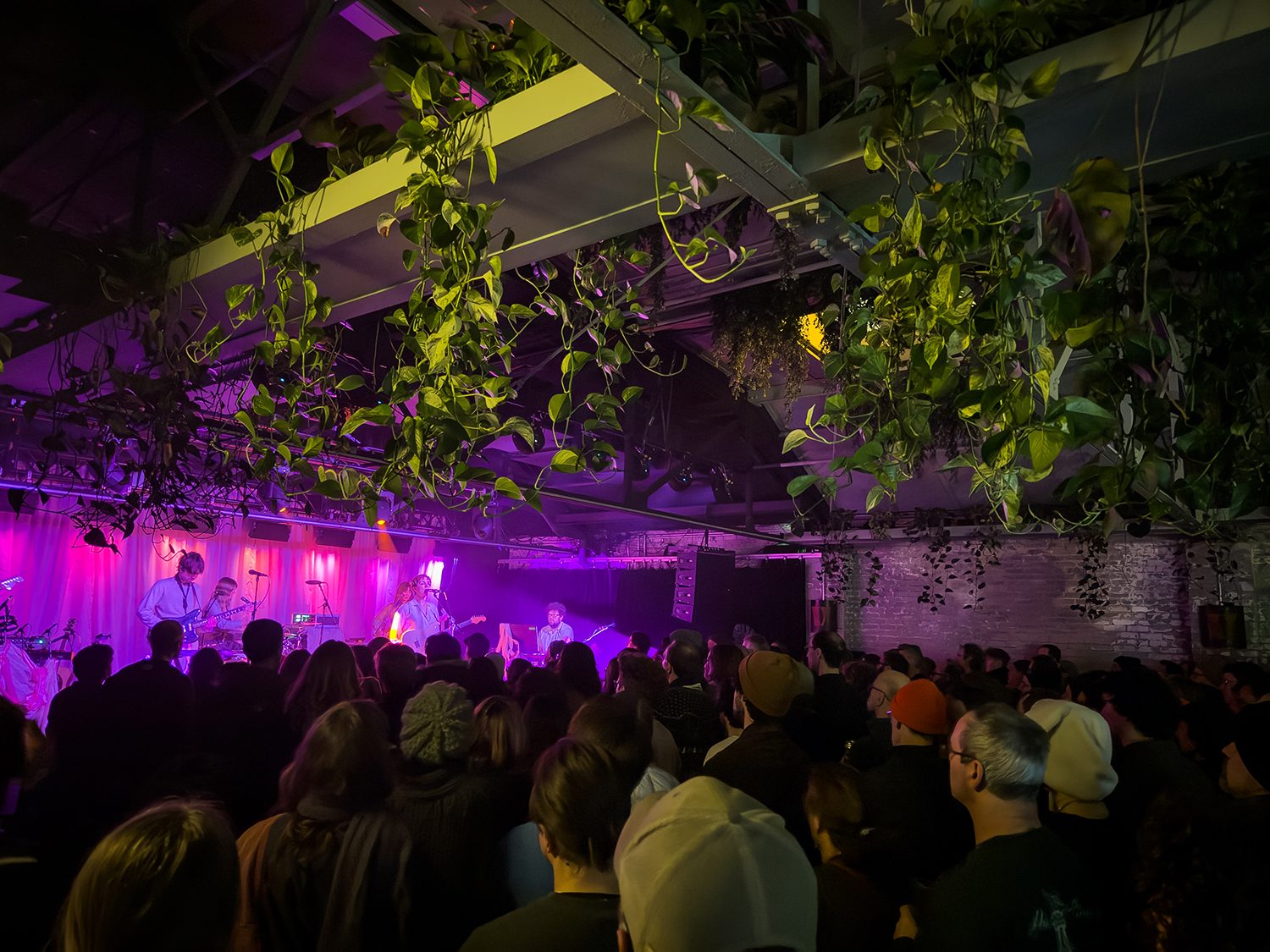
On Friday night, in dangerously sub-zero temperatures, renowned Welsh performer, recording artist, and producer Cate Le Bon made her way to the Vivarium for her first-ever Milwaukee appearance. If you know Le Bon’s work, you may have felt a bit of surprise (and more than a little relief) at such an intimate venue choice for an artist of her stature and obvious achievement. It was hard not to wonder how the artist who wrote 2013’s transcendently anthemic (and indisputably classic-pop-song-if-ever-there-was-one) “Are You With Me Now,” followed by a string of critically lauded and wildly inventive albums—each totally unique in its palate of sound and style—wouldn’t opt to fill up Turner Hall, or The Pabst?
But if you think simply filling large venues is where Cate Le Bon’s attention is, you haven’t really been listening. In addition to the sprawling achievement of her own eclectic catalogue, recent years have found Le Bon solidifying her place as a preeminent producer/artist in the art-song tradition of John Cale (with whom she collaborated on a track on her new album). She has produced contemporary luminaries such as Devendra Banhart, St. Vincent, and Wilco, as well as younger artists at the vanguard of pop song deconstruction, like Horsegirl and Dry Cleaning.
Comparisons to iconic figures can be particularly annoying, but it is hard to resist thinking: if Le Bon isn’t now the “heir apparent” to the mantle of Brian Eno’s artist/producer as aesthetic philosopher, who is? With all these accolades for her work in the studio, how would this tour’s performances translate the ethereal arrangements of her new album into something with an appropriate sense of import and immediacy, something demanding of an unwieldy live audience’s damaged attention spans?
Considering these lofty questions made one grateful to experience Le Bon’s music in such a relatively cozy venue, with the performers being more than specks on a giant stage. Once the material began to be performed, it became clear just how intentional and appropriate such an intimate setting was.
From the first tumbling notes of opening performer Frances Chang’s set, one recognized a kindred spirit to Le Bon’s own aesthetic inclinations. Both are often minimalist in implementation, yet maximalist in their celebration of diverse sonic textures. Chang, a New York-based artist whose playful sense of composition and unexpected repurposing of conventional instrumentation, like Le Bon, seems aimed in the direction of a genre-less art of continual invention, and in some senses, novelty. Chang has jokingly referred to her own sound as a genre one might call “slacker prog,” filled with abrupt rhythmic shifts, time-changes, and bells and whistles of all variety.
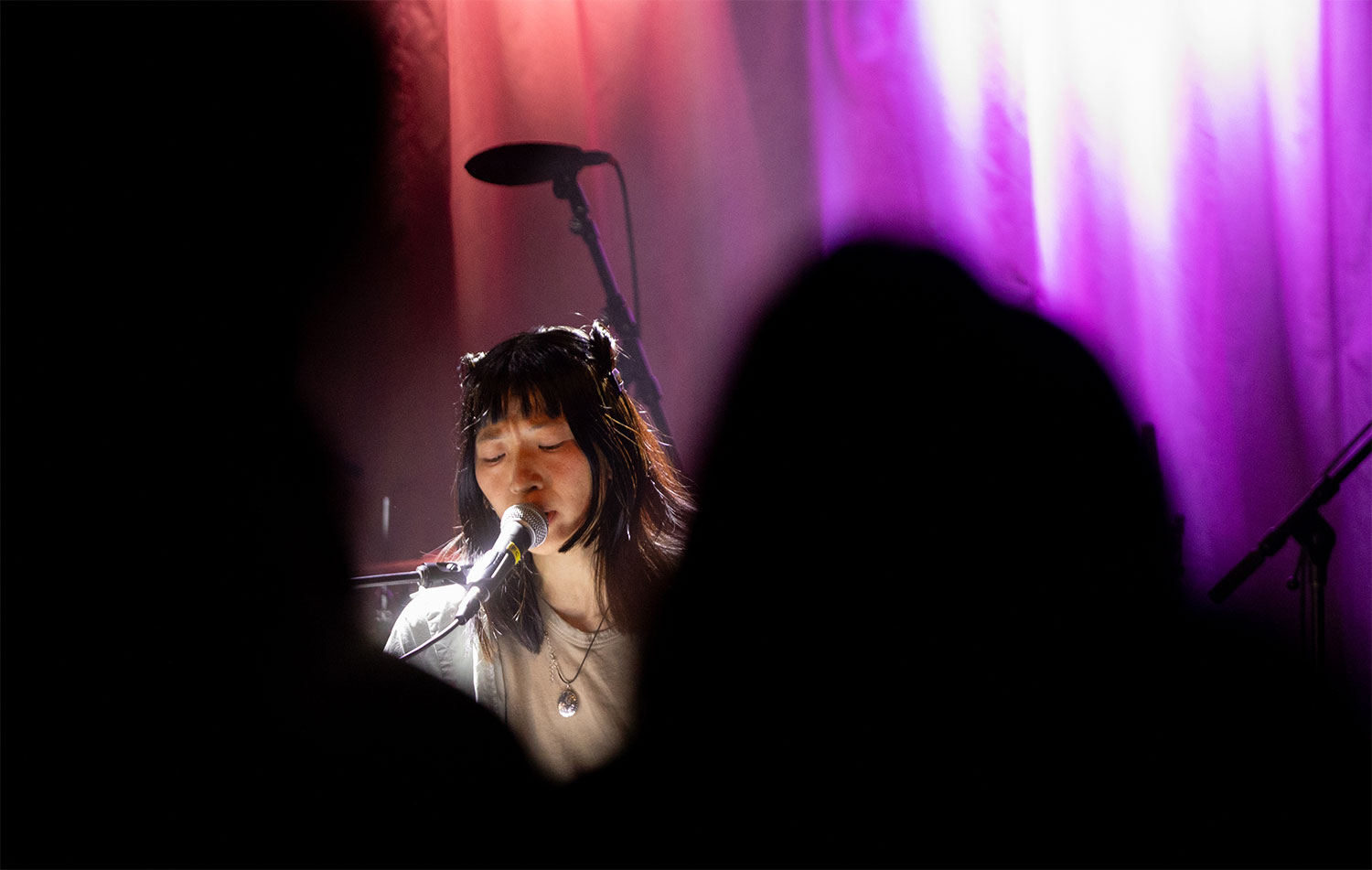
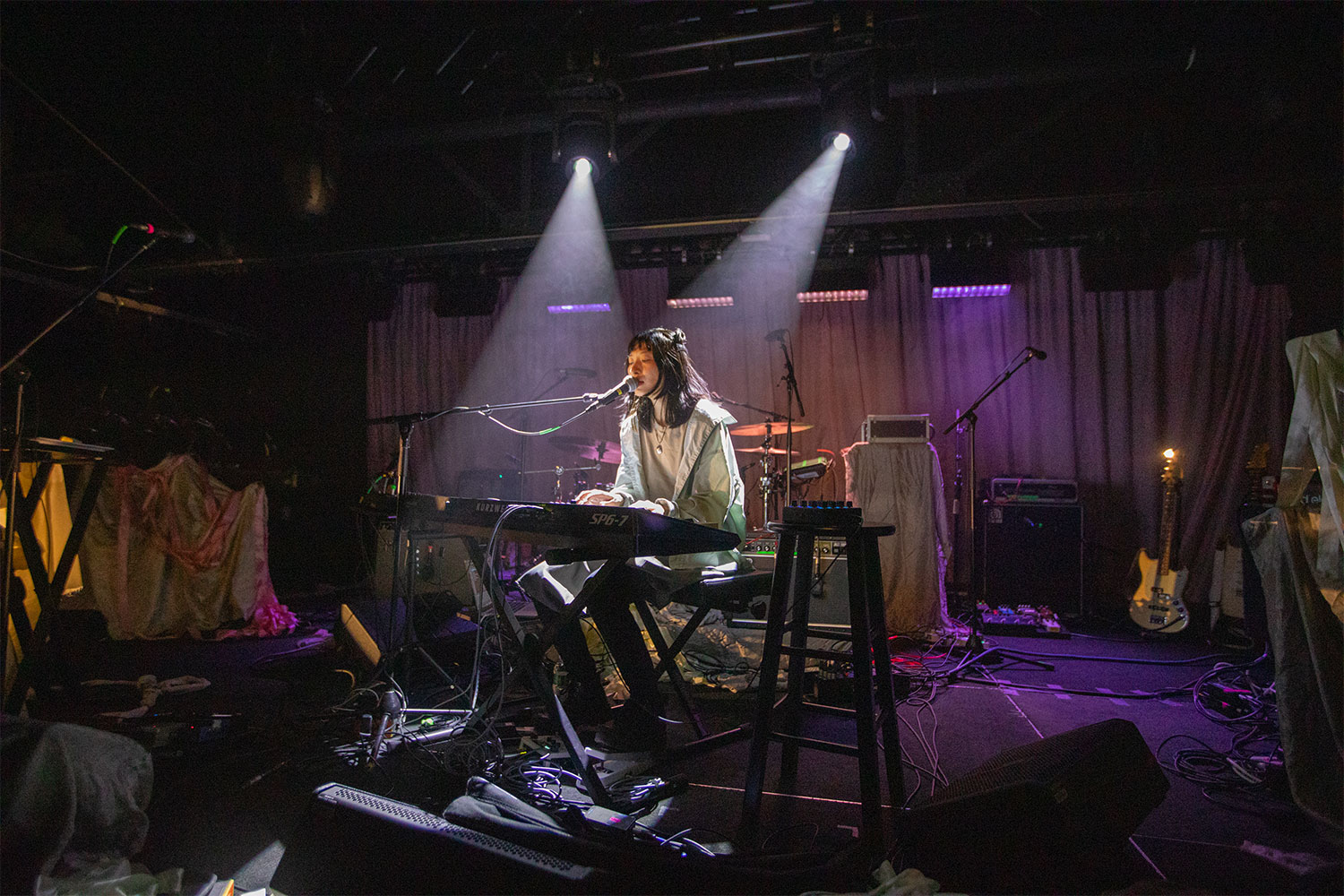
Chang performed largely new material alone, with nothing but a keyboard, a laptop, and some pedals. Centered in the stage and surrounded by Le Bon’s waiting instruments, her plaintive voice held together the songs’ constantly shifting ground, occasionally revealing flashes of sly irony, wrapped in an occasional cascade of strings, and punctuated with a junk drawer of various programmed beats. Her music offered a refreshing realization of virtuosity without clutter, and complexity without convolution. They are also, simply, full of beautiful melodies and funny phrases.
After Chang’s set (as well as once before), the growing crowd’s chatter was briefly interrupted by an announcement from the house manager: “Cate has requested that we all leave our phones alone, and just experience the show here and now: in the present and without distraction. We won’t kick you out, or reprimand you for having your phone out, but we will silently judge you!”
“Good luck with that,” a big sullen guy near me muttered.

Much of Le Bon’s music asks something of you as a listener. Or rather, it rewards your attention. It often hangs its subtle subversions on a broad panoply of pop idioms, and she certainly is a master of “the hook.” But these hooks always feel somehow inverted, off-kilter, or slightly repurposed within the mechanics of the song—more of a Rube Goldberg contraption with uncanny precision than a well-oiled conveyor belt delivering pre-packaged emotions. It can be catchy, but never quite in the ways one is conditioned to find songs catchy.
Le Bon doesn’t attempt to embody different genres from album to album, she isn’t a “chameleon” in the same bracket as David Bowie. Neither does she mash up classic genres, or update them with obligatory demos of the latest tech. She’s not retro, nor tied to ideas about what’s contemporary.
Instead, one might say Le Bon is increasingly interested in exploring the spaces between genre. With her range and reference, from British folk to minimalist synth, including everything outside and in between, and punctuated by a unique gift for lilting and unusual melodies, one can be sure her explorations will continue into uncharted regions.
On her new album, Michelangelo Dying, this restless journey has led to a new biome, and dug its roots in deep, at a sedimentary level. Its sound often suggests a carriage ride through a forest of translucent flora, bright sparks of melody set against a dark night of the soul, almost sculptural in their approach to texture and tone. This record also has a more cohesive style than perhaps Le Bon’s other recent albums do. All this made one eager to see how she would approach the material as a performer.
The mid-sized crowd began to shuffle forwards, and it occurred to me Le Bon was heading next to Minneapolis, which with each passing day had become ensconced deeper in a violently escalating federal agent occupation, where in the last week protesters and onlookers had been seriously injured, vulnerable communities targeted and terrorized, its objectors abducted and brazenly executed. It must be difficult to perform one’s work in many situations, but how exactly does one valorize popular entertainment, in all its many flavors, no matter how unique or innovative, in the urgency of a time like now?
I mused about popular traditions, or, more specifically, about how many traditions within pop music (including many refractions of its global influence) have over time been subjected to market forces, or stripped of their localized character to serve “genre” as a demographic, or to invoke shared nostalgia as a substitute for invention and political import. How many songs serve as placeholders for emotions and sentiments instead of embodying or exploring them? How many pop songs aren’t just a dated attitude, just a brand?
Without abandoning my palpable excitement for the show, I indulged this contrarian negativity for a moment, playing devil’s advocate with myself: What if much pop music, while often lodged at our emotional cores, perhaps especially at its most innovative, wasn’t also simply a form of escapism? Yes, of course, an often valuable and glorious escapism, but at the end of the day, just an escape? Are we fiddling along while Rome burns?
Right then, as if in response to this momentary internal crisis of faith, the venue’s background music faded to silence, and the houselights dimmed to an empty stage.
A recording of Le Bon’s lone voice, a capella, began singing “Women Of The World Take Over.” Or was this Le Bon herself, reciting from behind the stage curtains? Delivered in a plain but imperative tone, the straightforward call to arms, written by beloved Scottish poet and humorist Ivor Cutler, and recorded with Linda Hurst in the ’80s, served as a tradition-defining bookend, and a clarion call for the night’s set:
Men have had their shot
And look at where we’ve gotWomen of the world, take over
Because if you don’t, the world will come to an end
And we haven’t got long
The audience was silent. After the words were left to hang in the air a moment, resonating almost as a playful challenge, Le Bon and her musicians immediately emerged from offstage, all clad in white, and promptly launched into the lush, slow burn of Michelangelo Dying’s opening track “Jerome,” with its oxidized guitar jangle giving way to a purifying flame of synth and sax swells.
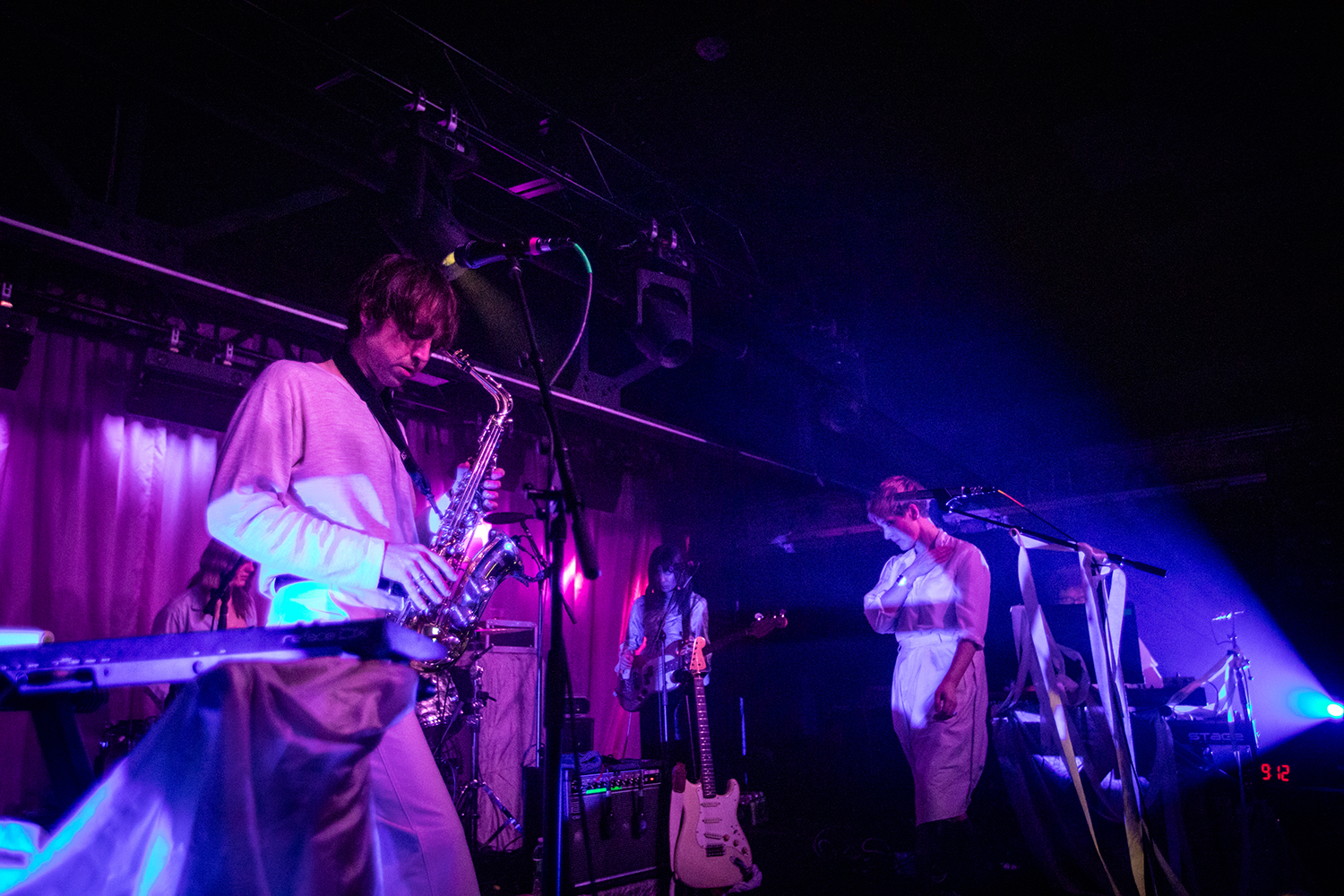
The set proceeded in its low and steady simmer into the hypnotic pulse of “Love Unrehearsed,” also from the new album. Under washes of dewy Cocteau Twins guitar, the delicate melody’s alternating evocations of tender longing and painful abjection quickly made it clear just how carefully structured Le Bon’s art is, how these performances could bring her music to life in dimensions that her celebrated studio wizardry couldn’t. On the stage the new songs were real, breathing, and pulsating organisms, not specimens under glass.
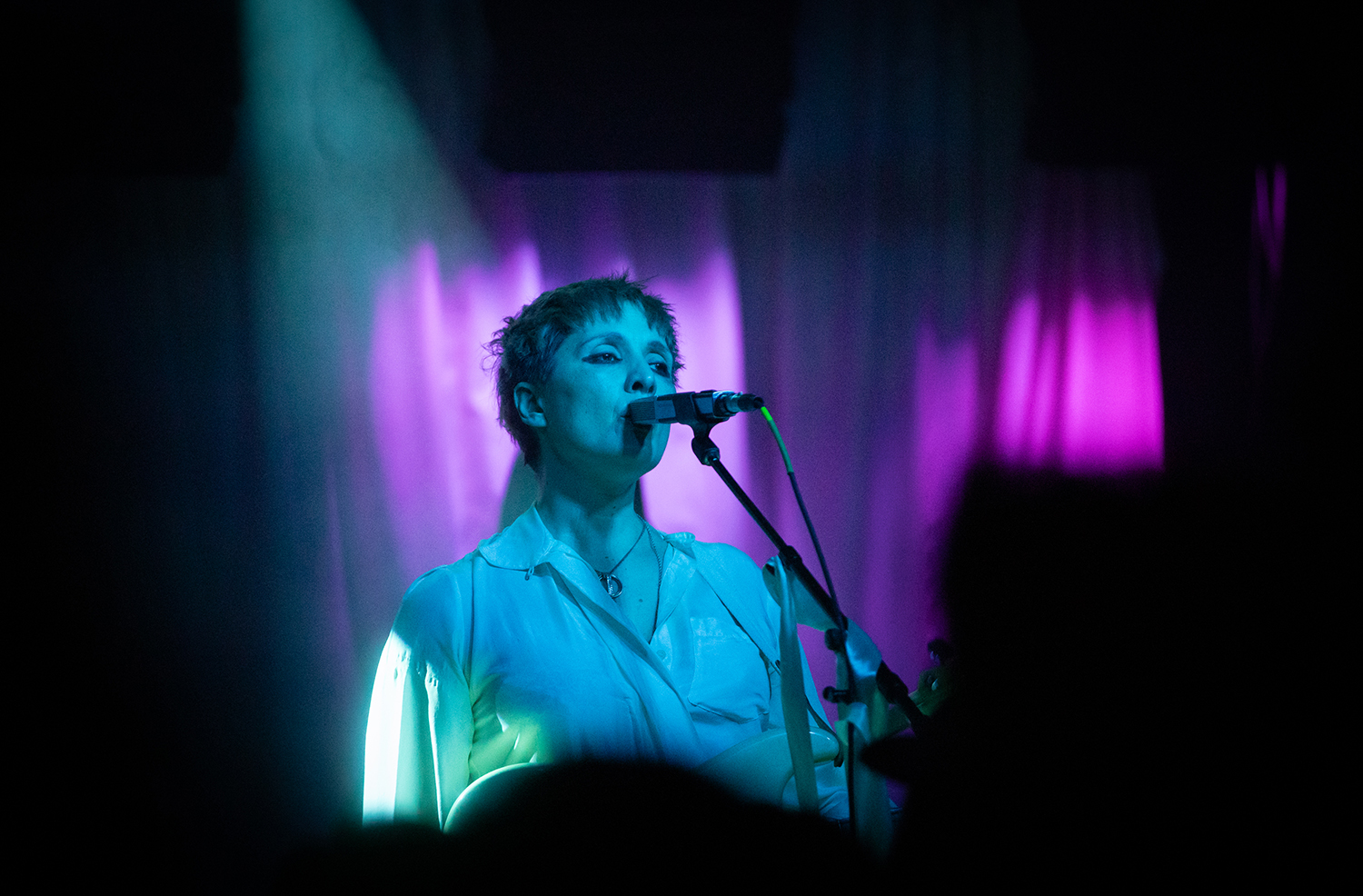
The roughly hour-long set was comprised mostly of songs from Michelangelo Dying—Le Bon’s first record since 2022’s Pompeii, several of whose propulsive songs also punctuated the set—along with a few from 2019’s flawless Reward serving as percussive, up-tempo peaks to the craggy valleys, sweltering bogs, and icy caverns of Michelangelo Dying’s dense, layered sound.
Many of these songs felt more muscular, more dynamic than one ever envisioned them from their recordings. With its sprightly vocals and straight-through-traffic strut, “Moderation” felt almost like an early Pretenders single, while the airy and existential melancholy of “Daylight Matters,” from Reward, showcased Le Bon as a commanding and singular vocalist.
Throughout, the new material particularly seemed to benefit from these live dynamics, with “About Now” encapsulating viscerally the surging feeling of a landscape coming awake, meadows undulating, trembling buds beginning to open after a heavy storm.
A triumphant peak was reached as Le Bon came to “Home To You,” from Reward. Delivered with subtle variations and sudden lifts of phrasing, I felt a lump in my throat, or maybe a collective lump in all of our throats rise, as the song reached the climactic haunting vocal and marimba counterpoint ending: “Last time, for all time / Last time, for all time.”
I scanned the audience. Not one single phone in sight.
The musicians included two percussionists, both playing a mix of electronic drum pads with traditional kit pieces, a bass player, a saxophone player with various effects, a keyboard player who occasionally played sax, and a percussionist who occasionally played guitar.
It was nice to see Le Bon also don her guitar for a few songs, showcasing her idiosyncratic, often extremely rhythmic playing, as in “Mother’s Mother’s Magazines,” where it danced with wide leaps across long stretches of frantic, sax-punctuated break-downs.
The swapping of instruments amongst the musicians, and their various effects and unusual modulations, reminded one of the interchangeable role instrumentation can play in Le Bon’s compositions, how the musical phrase itself, its character and tone, is the central guiding element, not the “natural” or typically assigned role of any given instrument.
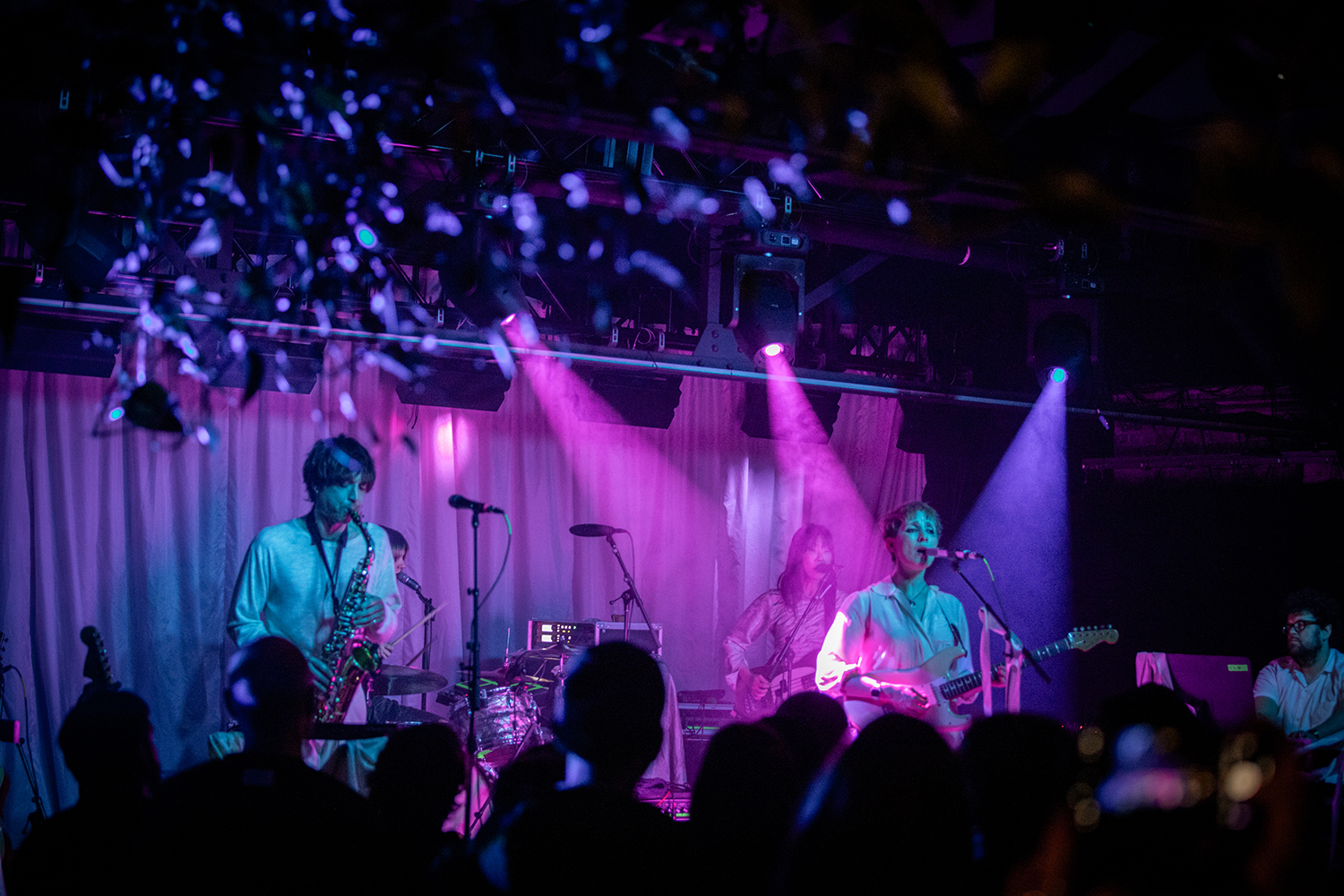
This is where a distinction could be made between Le Bon and many of her peers: She doesn’t think in terms of instrument or genre, she thinks in terms of musical ideas. Each note, each explicitly disjointed phrase, each counterpoint marimba or effect-ladened sax swell, was deliberately placed, flickering with the flame of intention and precision. There was no reaching.
This aesthetic carries over into Le Bon’s performance style, sometimes characterized as “stoic”—which doesn’t seem quite right to say. Le Bon inhabits her material, at times eyes closed, swaying side to side like a hypnotists’ watch. But more-so, she trusts the compositions themselves, never seeming “lost” inside them, but poised at their massive helm, steering and commanding them, like a Prospero or Oz, having emerged from behind the curtain to bring their creations to life.
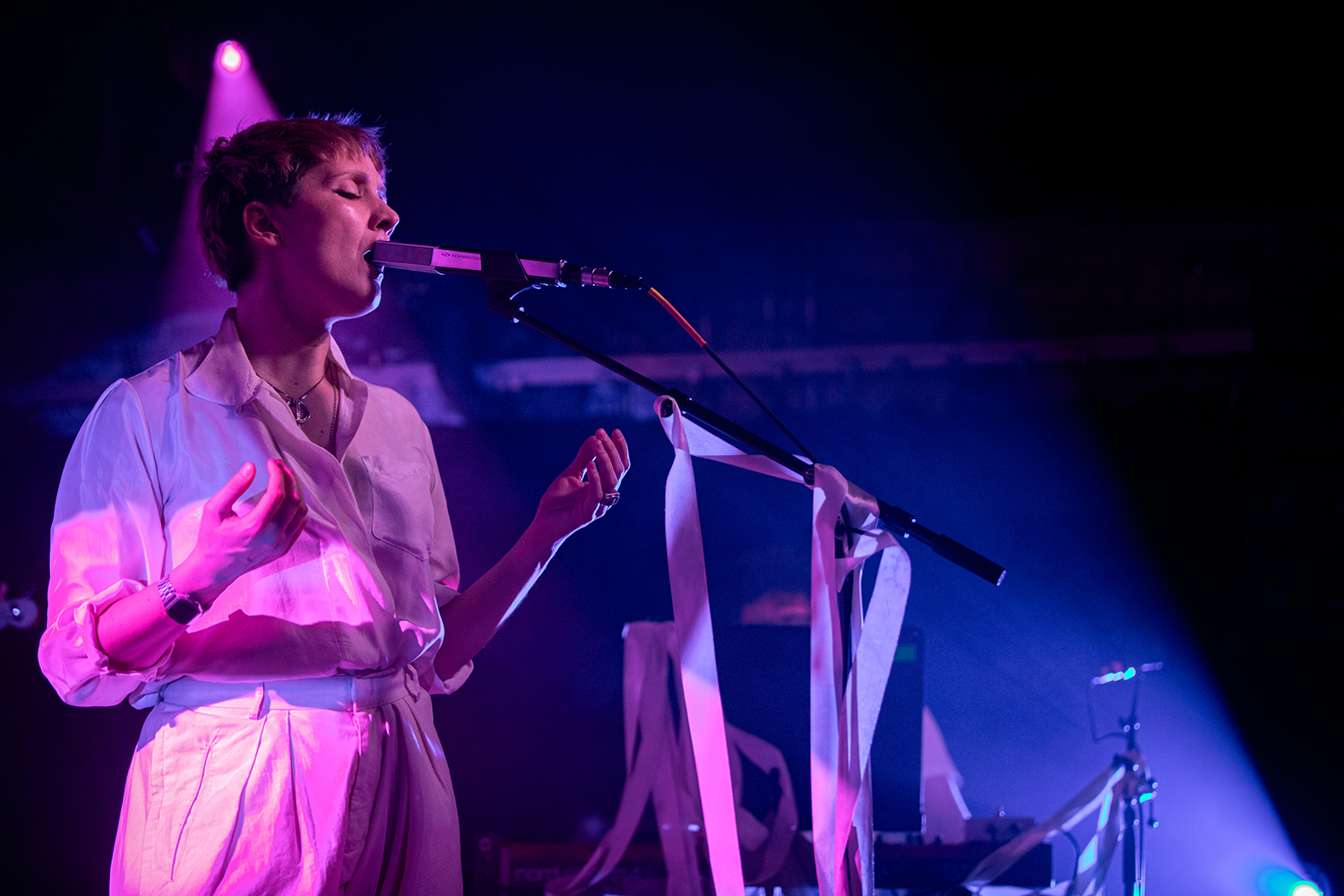
There was little of the histrionics common to many performers: there were no over-held notes, no dramatic contortionism, or overwrought scat singing that pop performers often resort to when they are bored with their material, or vainly believe they need to show their audience how to feel about their music.
There was no crowd work, and very little banter. The compositions spoke for themselves, and the musical ideas and textures they are made of were the stars of the show. The restraint and rhythmic precision of the band only served as a counterweight to the set’s transformative mesmerism.
As the set rolled through inspired versions of singles from the new record, it became apparent that Le Bon doesn’t do something else often expected of pop performers: a random shuffle of “the hits.”
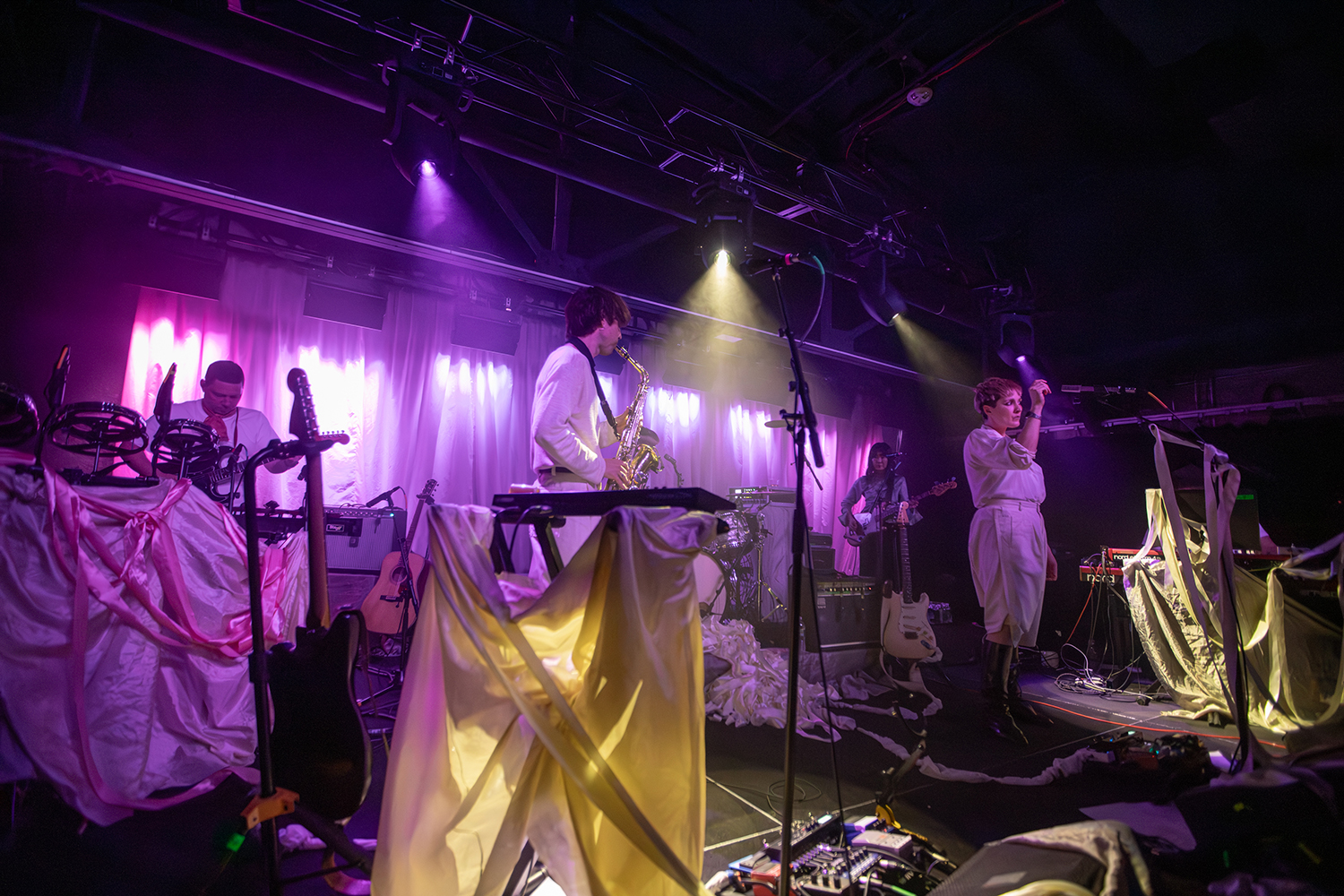
After a curd nod, and a brief exit, and as if to illustrate this point, the band returned for an encore featuring Reward’s sparse opening track “Miami” (a song not played on this leg of Le Bon’s tour yet, not a single, and not by any standard an obvious choice), returning the set to its opening gesture of focused attention, and imbuing the entire evening with an aura of both elegiac sacredness and affirmational resolve.
As the audience hung suspended on its final note, Le Bon and her crew tore into “Harbour” for the last song, another burst-of-daylight off Pompeii, played with triumphant swagger, summarizing the enigmatic emotional logic that Le Bon’s music operates by: “What you said was nice / When you said my heart broke a century.”
No wall of arms holding up phones. No selfies with the performers in the background. The audience stood in complete and immersed attention.
As an artist whose career has quickly become synonymous with music as a recorded art, it was invigorating and inspiring to see these songs, which certainly all feel “built,” layer by layer, burst to life in front of an audience, and open like a hot-house bloom, even surrounded by icy darkness.
Cate Le Bon’s set was a salve for despair, not just for the song’s emotionally evocative power, precise execution, or the attention that their various parts’ meticulous interplay rewards, but for the sense of possibility they offer, as inner worlds made material, actualized, and possibility that the whole world, as perhaps all of history, might serve as material to rearrange and decenter, that we need that, not as an escape, but as a refuge, as an inner warmth, as fuel for the flame of continual transformation, especially on such a very cold night.
Pop music isn’t always necessarily sacred, nor even necessary, but maybe it could remind us that our attention is. Because, after all, as the old song that opened the set says, we haven’t got long.
Want more Milwaukee Record? Subscribe to our free weekly newsletter and/or support us on Patreon.