
Changing of the Feathers is a quarterly series detailing the ebb and flow of Milwaukee’s seasonal bird life.
When The City Comes To Life
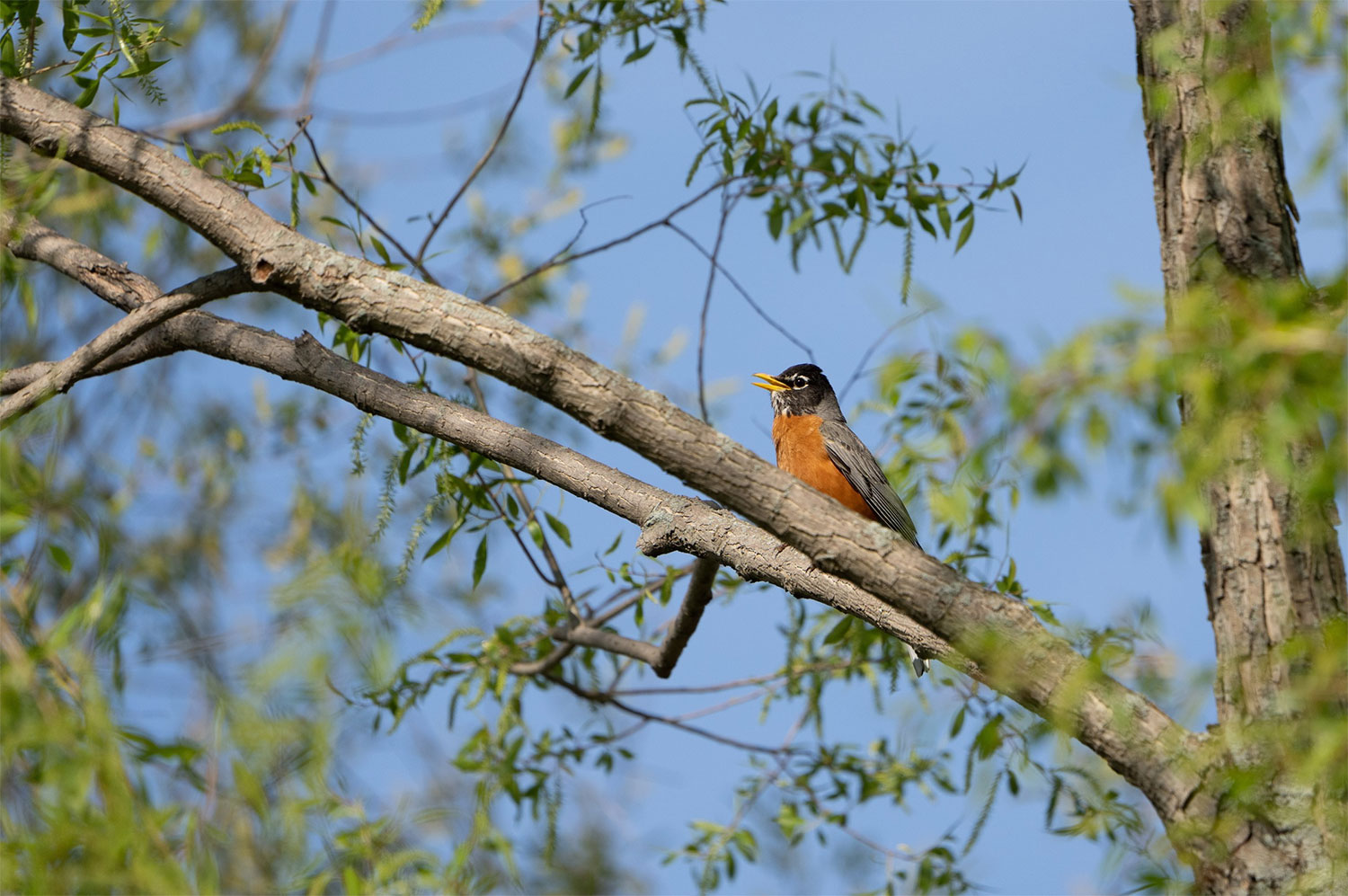
Nothing beats that first warm walk of the year. Lungs free from frigid air. Limbs loose from overstuffed coats. Winter’s silence is replaced by birdsong. A choir of chickadees and robins greets the dewy breeze with cheer, and a cooing undernote courtesy of the Mourning Dove. Of course, the chickadees and robins and doves are with us year-round in Wisconsin, but like us humans, they seemingly awake from the winter as the temps rise. The fall of winter’s bitter reign is cheered on by all of its subjects, but most of all the birds. If you listen closely, you can hear their lyrics. They sing, “long live the spring.”
For many birdwatchers, the turn of the season begins at first sight of the male Red-winged Blackbird. Renowned for its red-and-yellow shoulder patch and confrontational approach to humanity’s creeping curiosity, male blackbirds return to Wisconsin to establish a territory before their female counterparts arrive for mating. Their conk-a-lee song and high-pitched robotic chirps are often mimicked by invasive (though captivating in their own right) European Starlings, but they’re a bird that’s hard to miss as they weave in and out of the just-waking cattails. These cattails will eventually become a cozy, hidden summer home, but in mid-March, they provide little shelter during a cold snap. Spring is here, but spring hasn’t yet sprung, so all the blackbird bodyguards can do is hold tight and wait for the warmth of spring and that of their female partners.
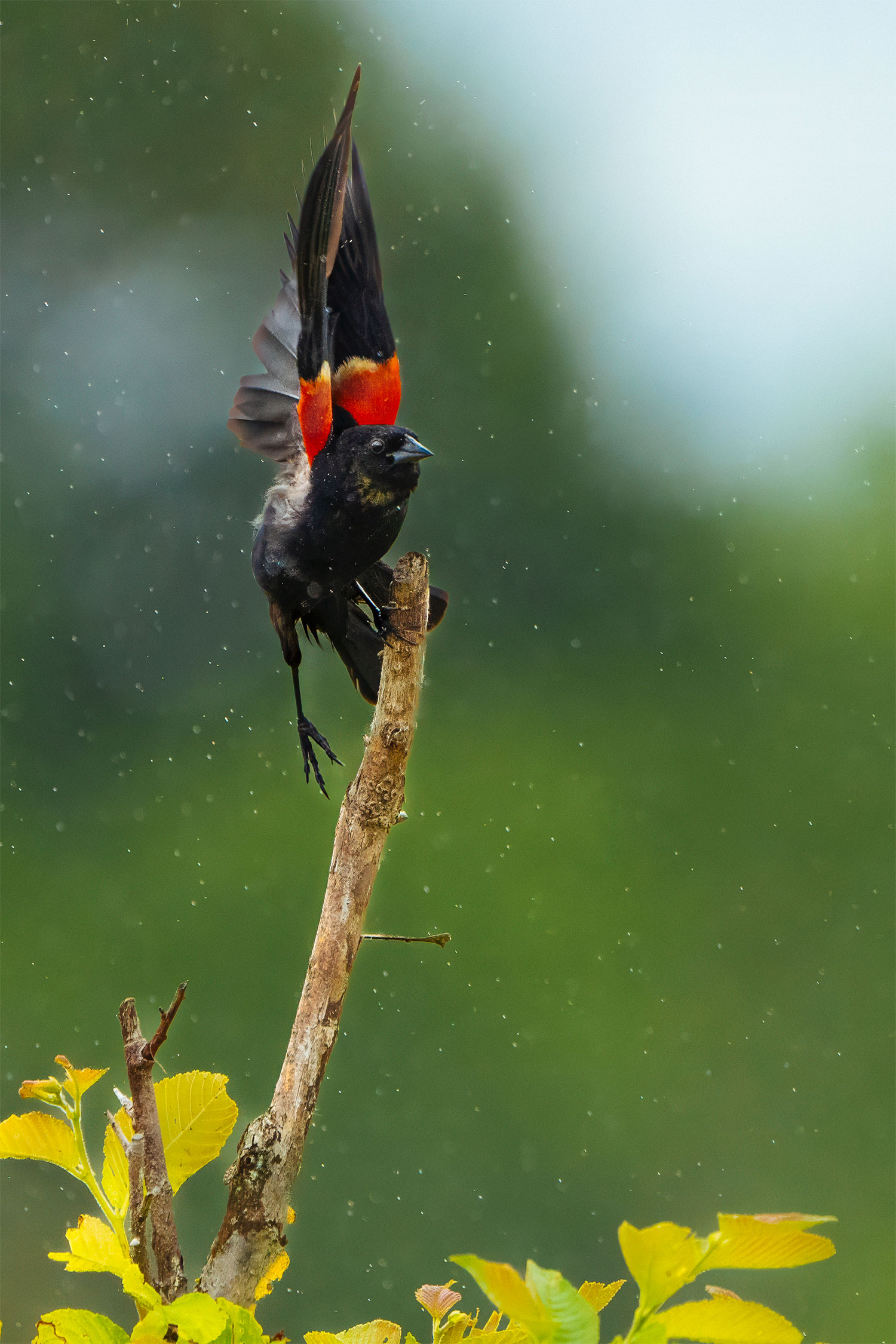
Male Red-winged Blackbird
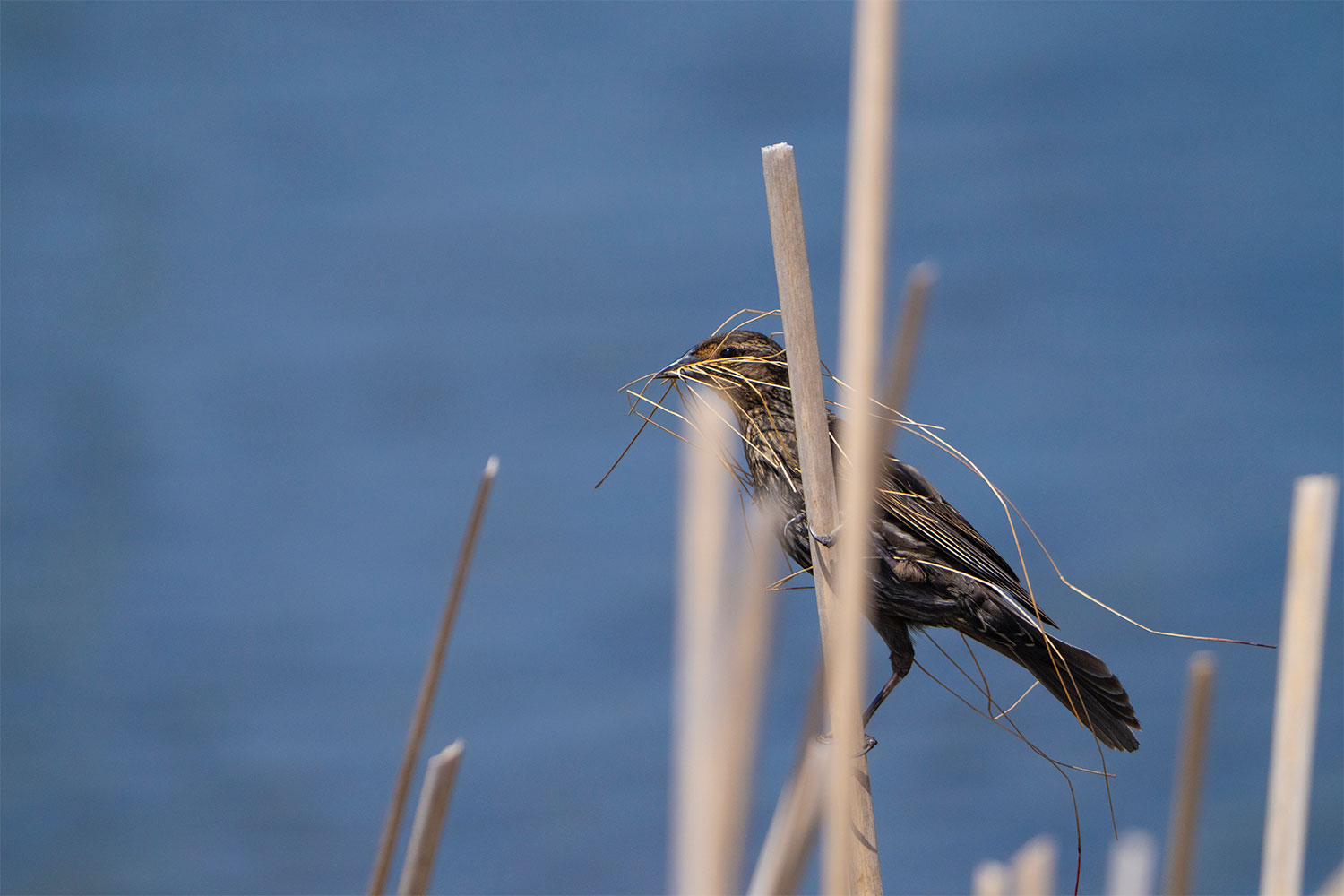
Female Red-winged Blackbird holding nesting material
With the passing of Irish rainbows and fanciful bunnies comes the arrival of the year’s full chorus. Frogs remerge, their croaks add a droning base to the afternoon. In the trees, squirrels chatter, though it’s different from their winter drama. Instead of fighting amongst each other for the last cached nut, they begin claiming trees and weaving nests. Cranes, geese, and various waterfowl blaze the sky with trumpets, while tiny peeps and chits ensure each day’s song is different from the rest. Northern Flickers and other local birds begin their mating and nesting rituals. In early spring evenings, you’ll be greeted by a peculiar sound if you embark on a walk at your local nature preserve. Long-beaked American Woodcocks meep before they hurl themselves into the sky. Love is in the air, so to speak, and that love doesn’t hurt, it meeps.
Rarified Air
By mid-April, the sky is abuzz. Wisconsin cloudspace, an avian superhighway. Last year’s peak: 14.4 million birds overhead the night of May 8. Some, like the Chipping Sparrow, House Wren, and Yellow-rumped Warbler, will stay for the summer, while others grace us with a quick visit before moving on to feast on Canada’s bugs (I’ve heard the maple syrup makes their bugs sweeter than ours, but I wouldn’t quote that as fact). Blue Jays, who exhibit a devil-may-care attitude towards migration (sometimes they do, sometimes they don’t, and they go wherever they please), begin dominating feeders as their full force returns to bully the oak tree inhabitants. While most birds prefer redeye travel, jays keep port open during the day.
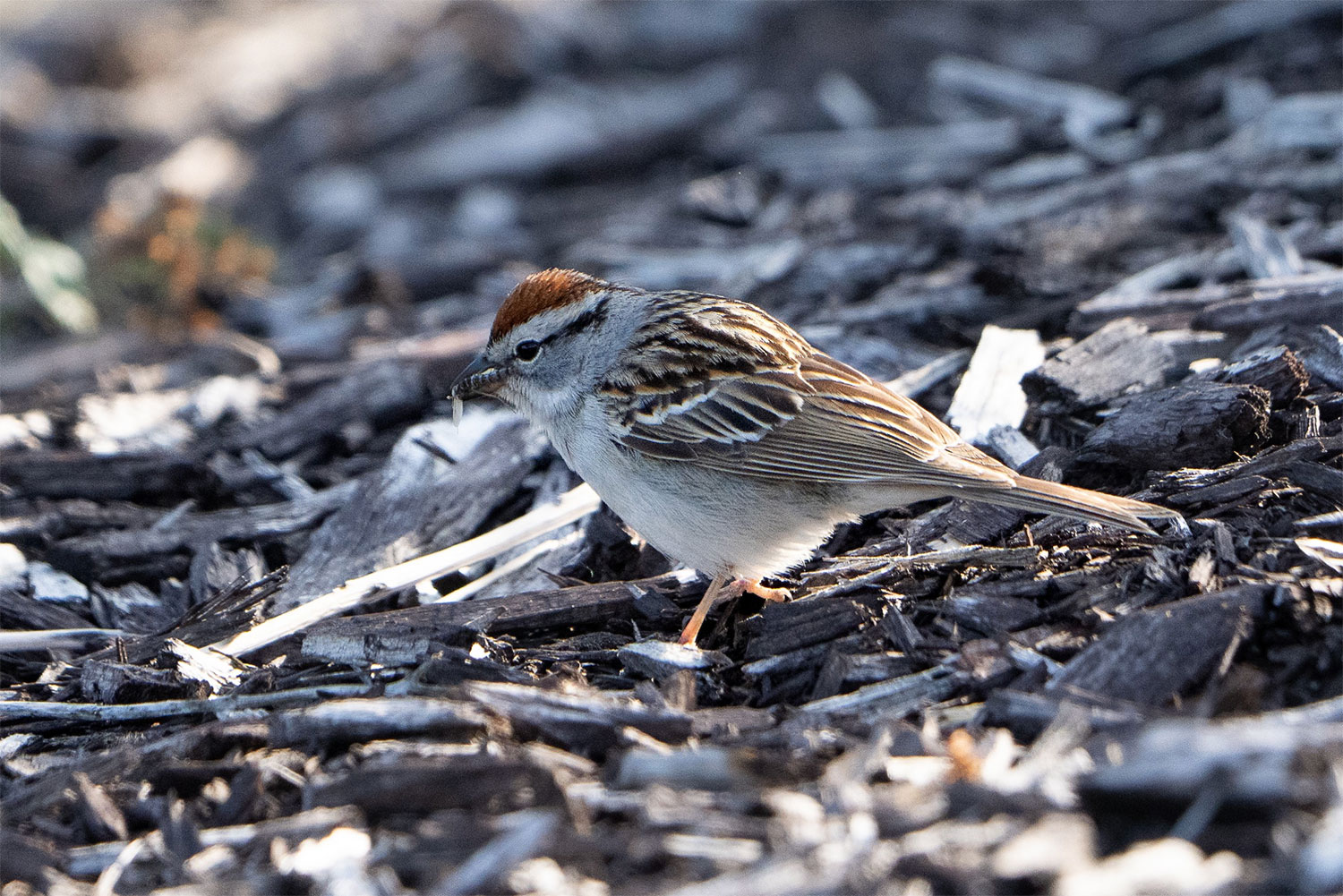
Chipping Sparrow with insect
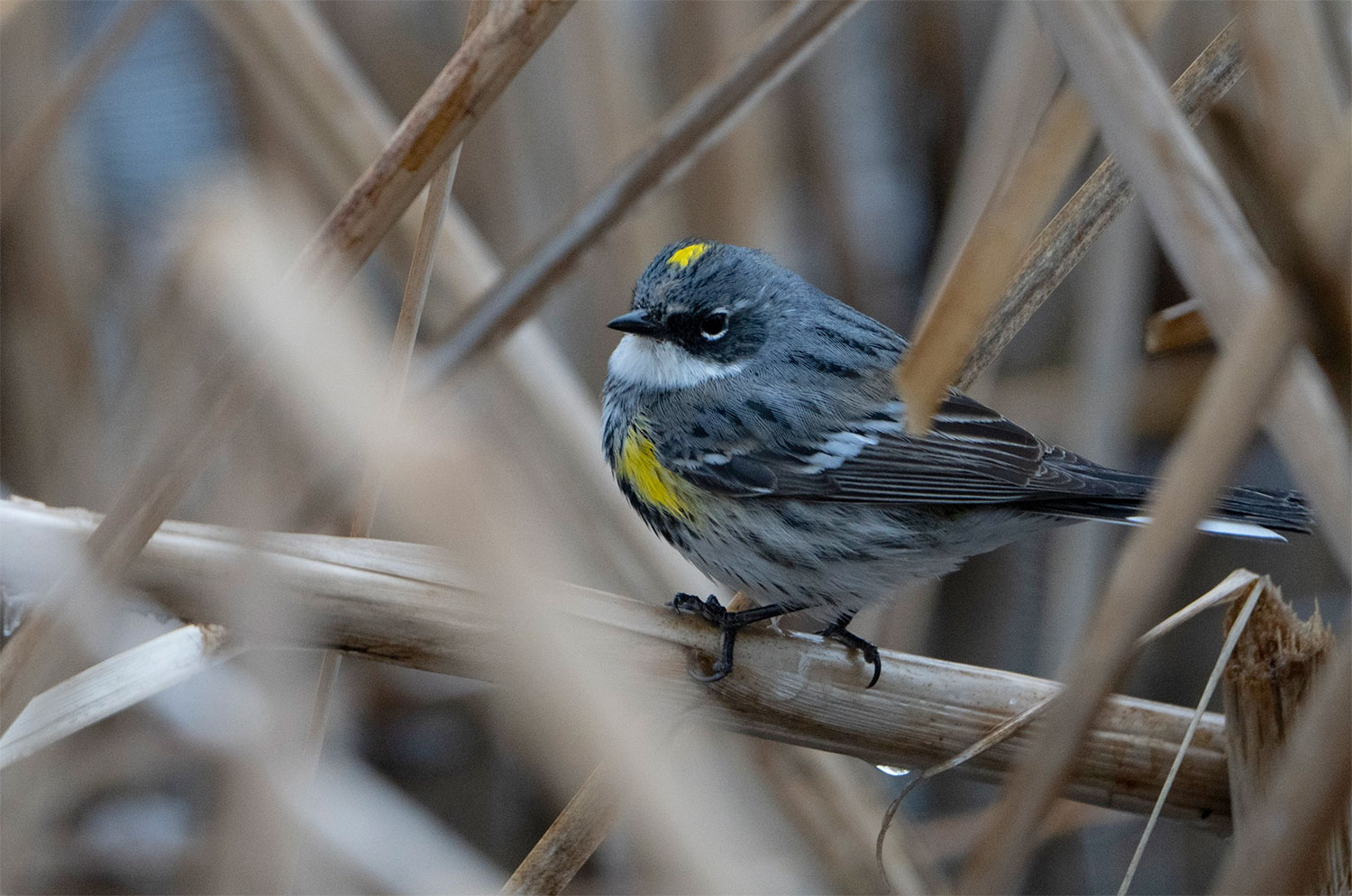
Yellow-rumped Warbler
Birds that give us a short season’s greetings do so in waves that I affectionately call the “warbler waves.” Named, of course, for the roughly 35 species of warblers that spring vacation here before heading to their summer homes upstate. Of course, some species, like the aforementioned Yellow-rumped Warbler, will stay put, but most take our cheese and leave. The mid-April batch includes the yellow-faced Pine Warbler, burgundy-capped Palm Warbler, and salt-n-pepper-haired Common Yellowthroat.
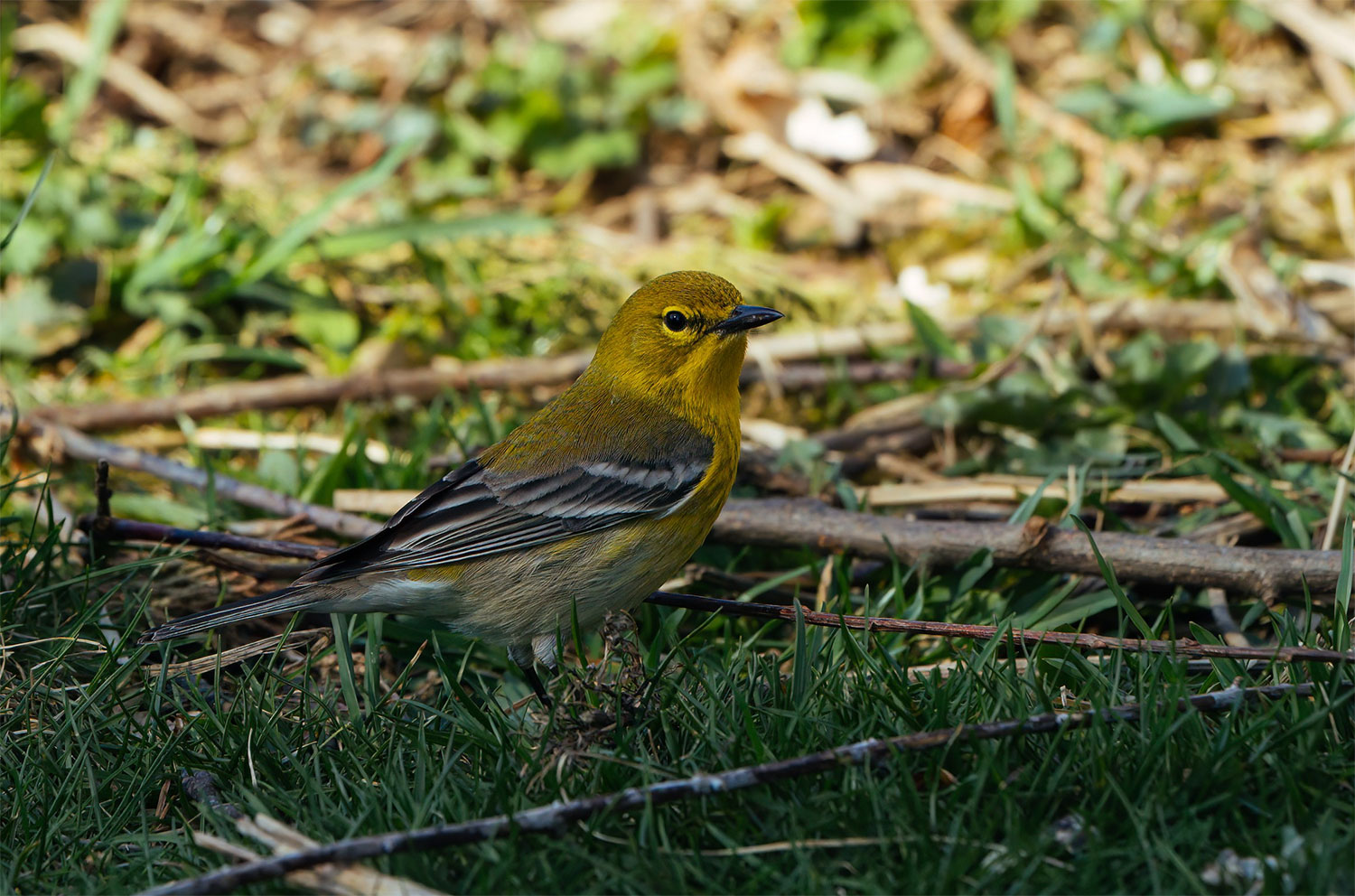
Pine Warbler
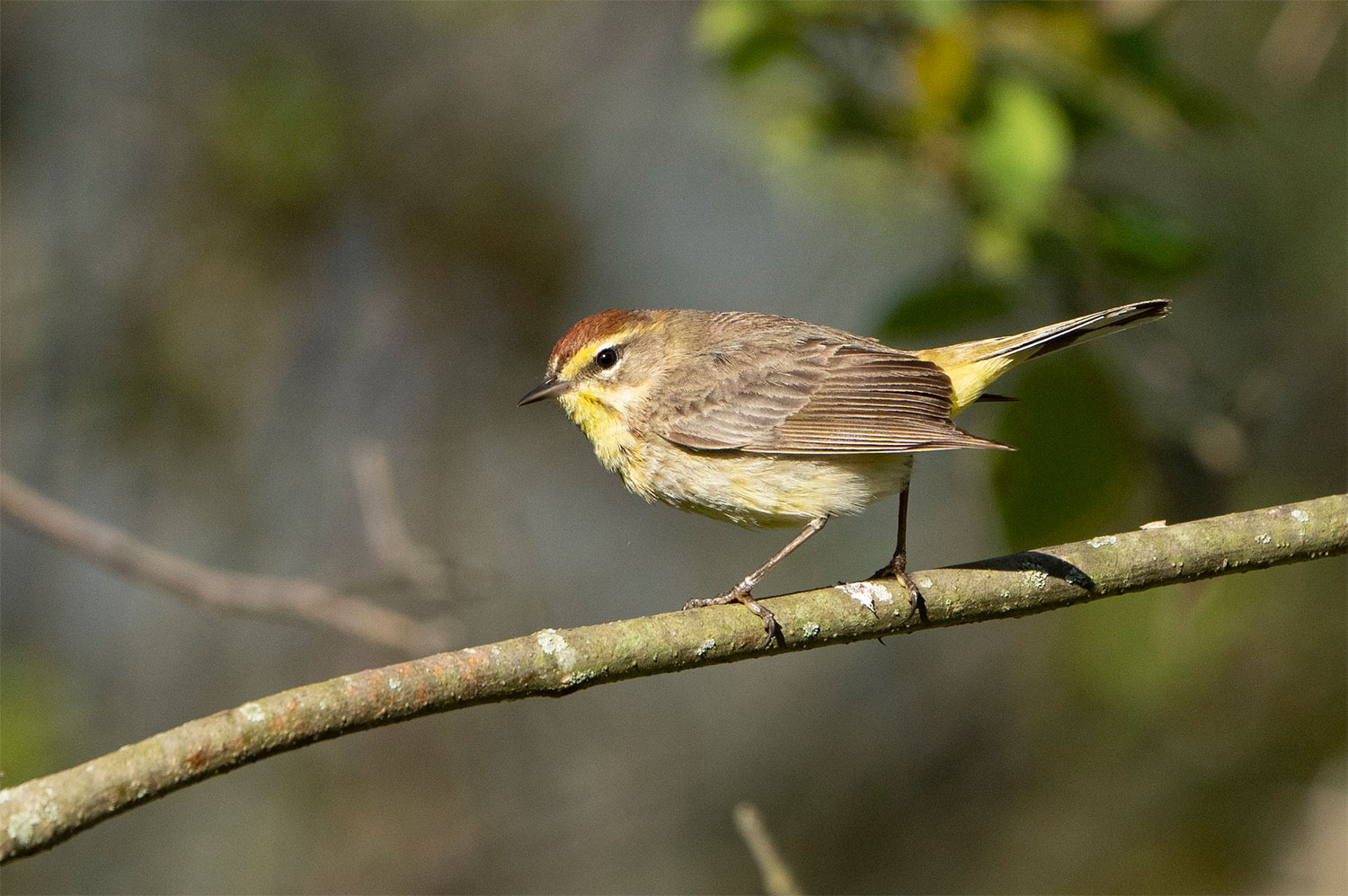
Palm Warbler
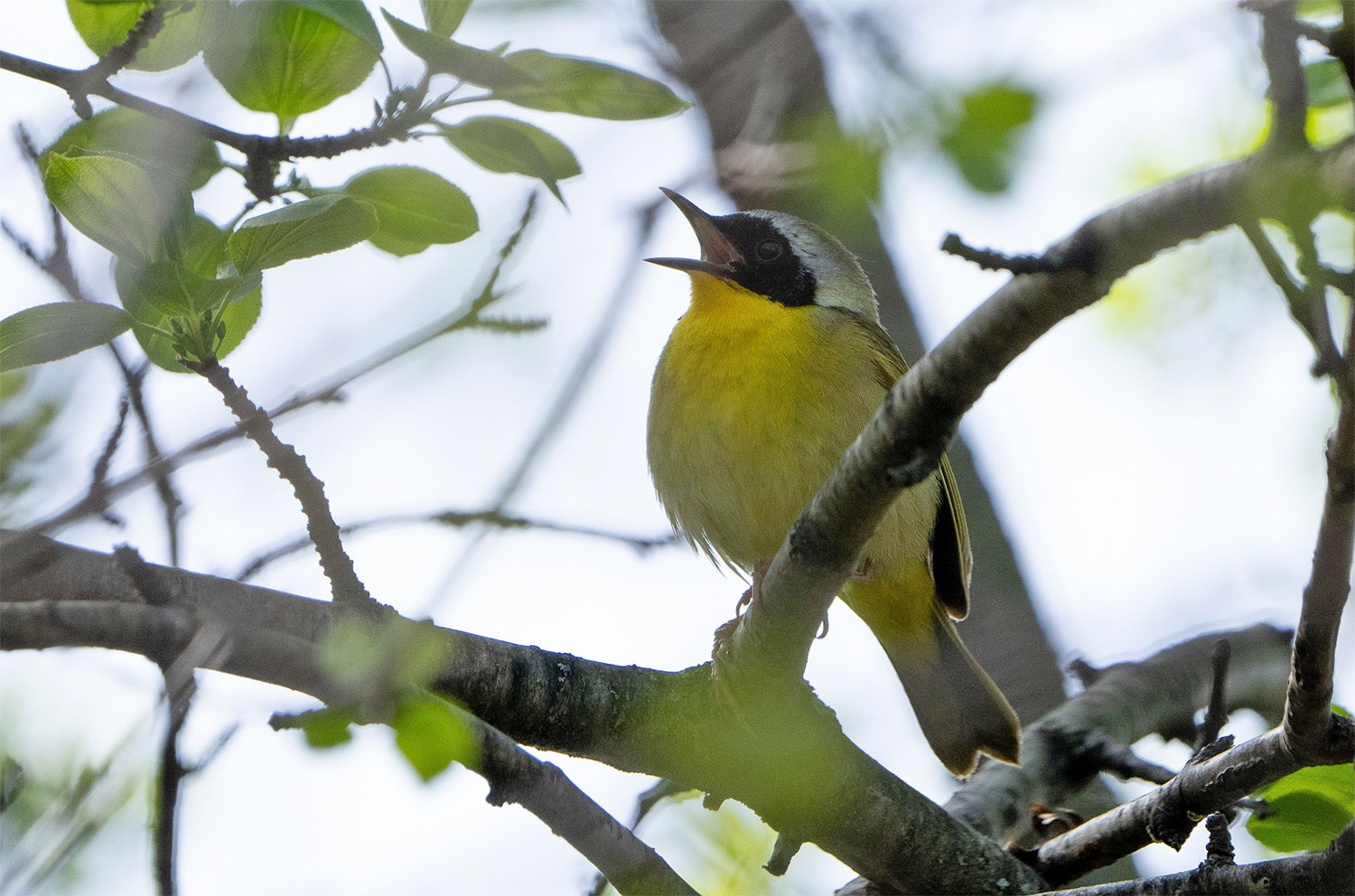
Common Yellowthroat
Early May brings a vibrant bunch headed by the electric orange-striped Blackburnian Warbler.
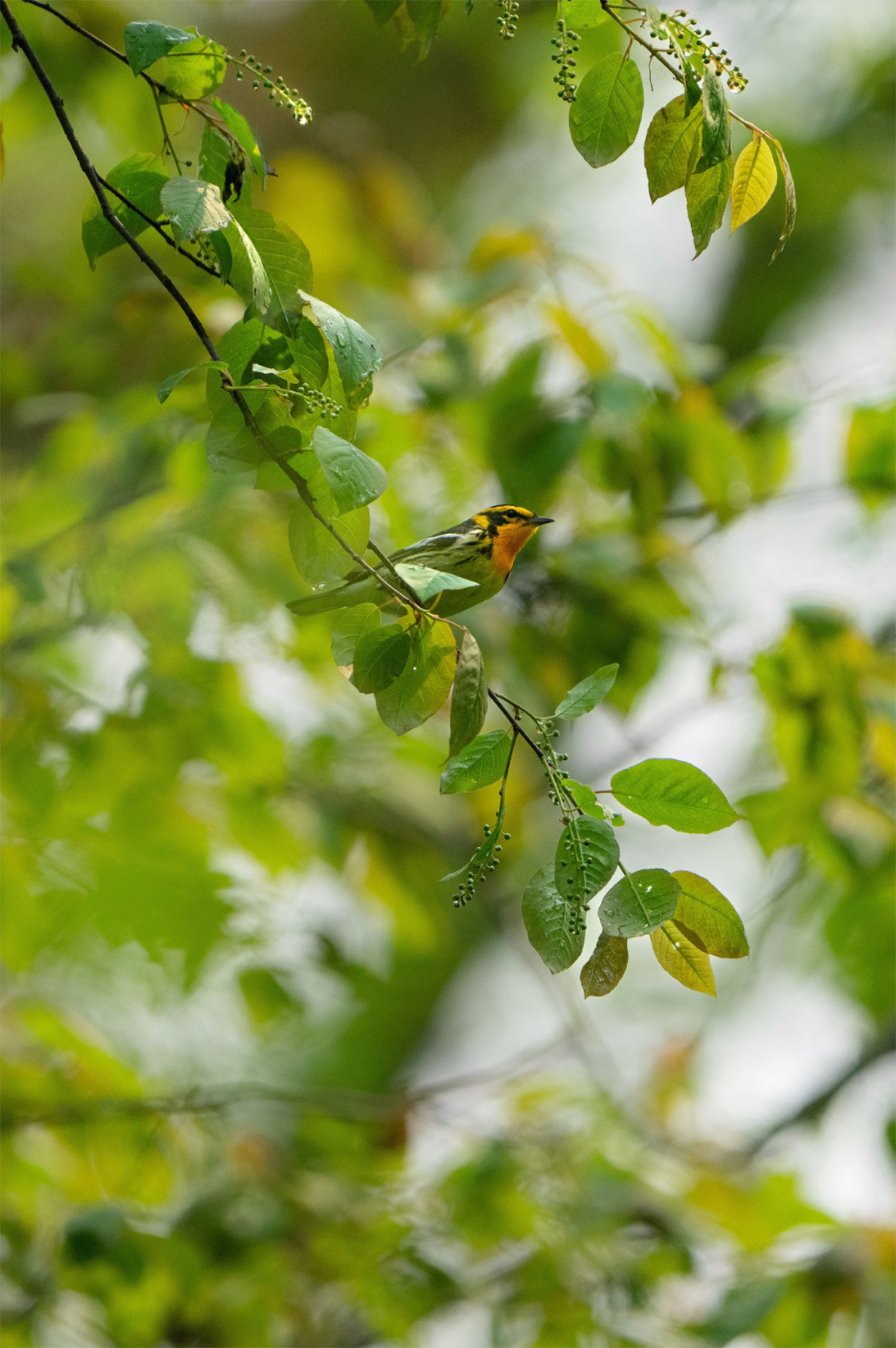
Blackburnian Warbler
Finally, as the second and third weeks of May approach, another explosion brings my personal favorite, the American Redstart. These birds come in two colors—yellow/black for ladies, orangish red/black for men—and are common pillagers of insects in the spring months.
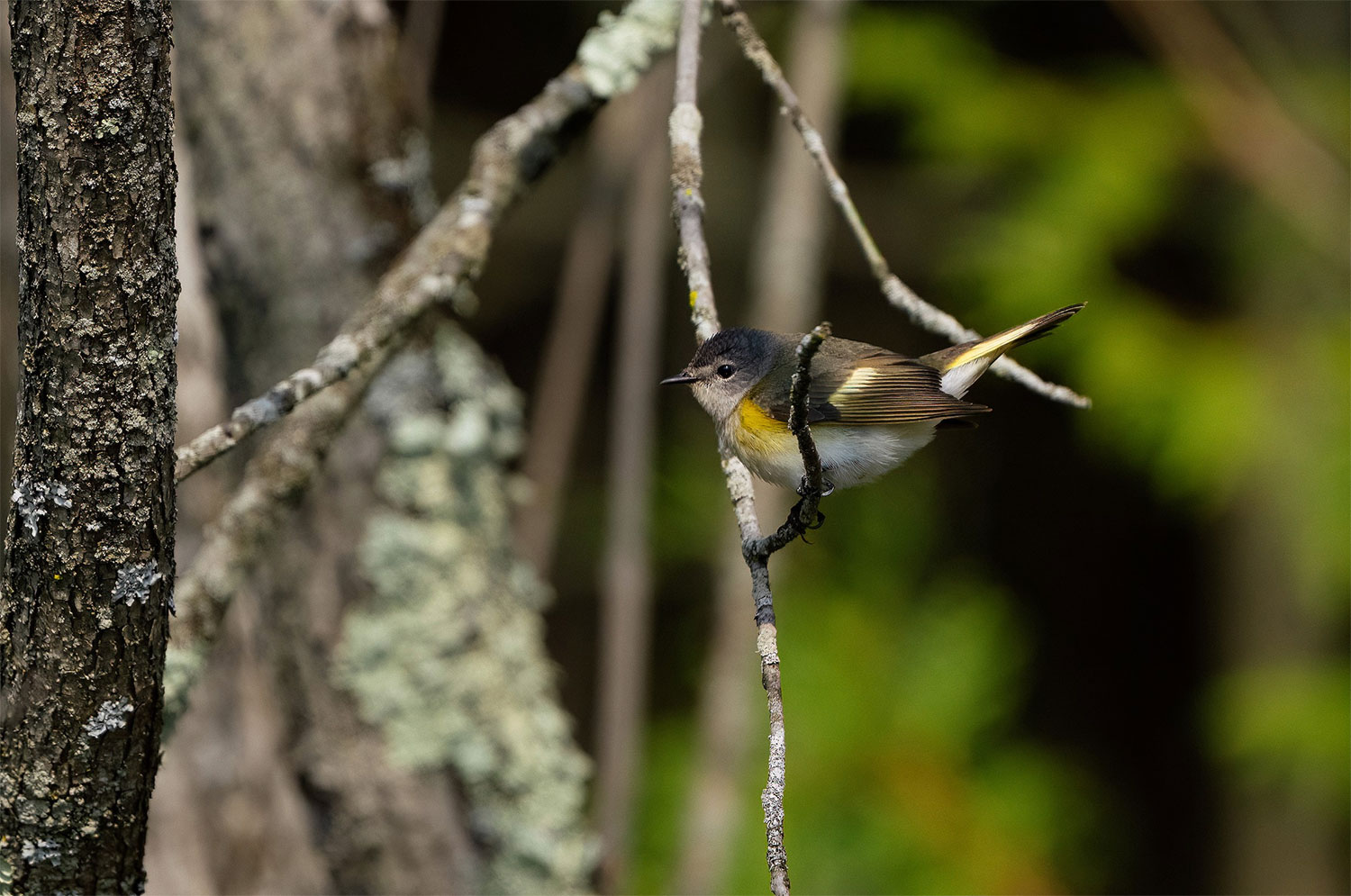
Female American Redstart
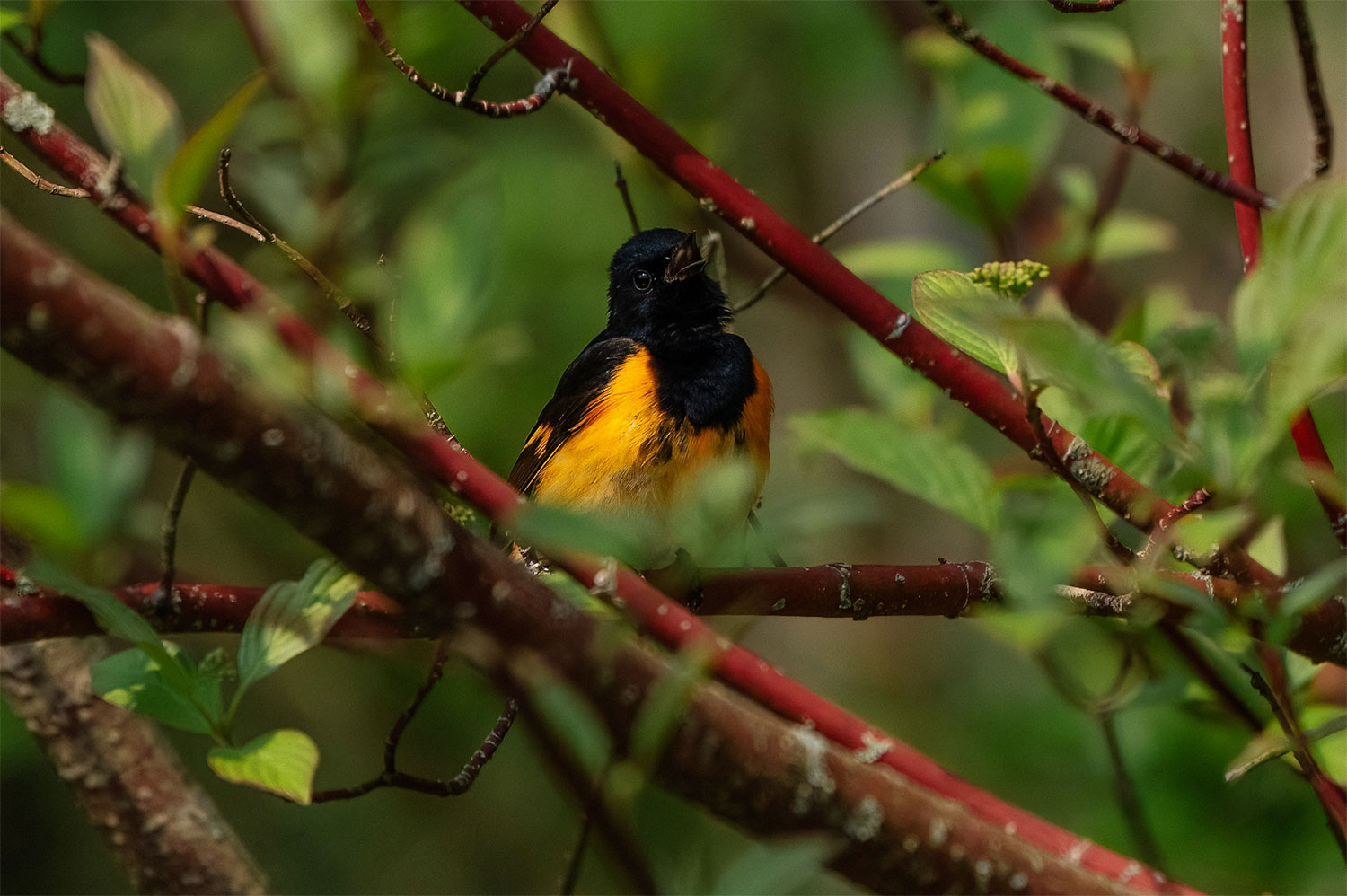
Male American Redstart
These “warbler waves” are pretty fast and loose. What’s true one year might not ring true the next. While a human’s spring break calendar is set up months in advance, birds rely on the winds, the worms, and the wet weather to decide when to continue their journey. The wind is especially important to bird navigation during the migratory season, and a few errant gusts are enough to blow our feathered friends off course. For bird watchers, this detour is usually celebrated as it provides onlookers with a chance to glance at something out of the ordinary. Dubbed “rarities” by the birding world, these are birds that seldom visit Lake Michigan shores. Years ago, I reported on the Flame-colored Tanager, a non-migratory bird primarily spotted in Mexico.
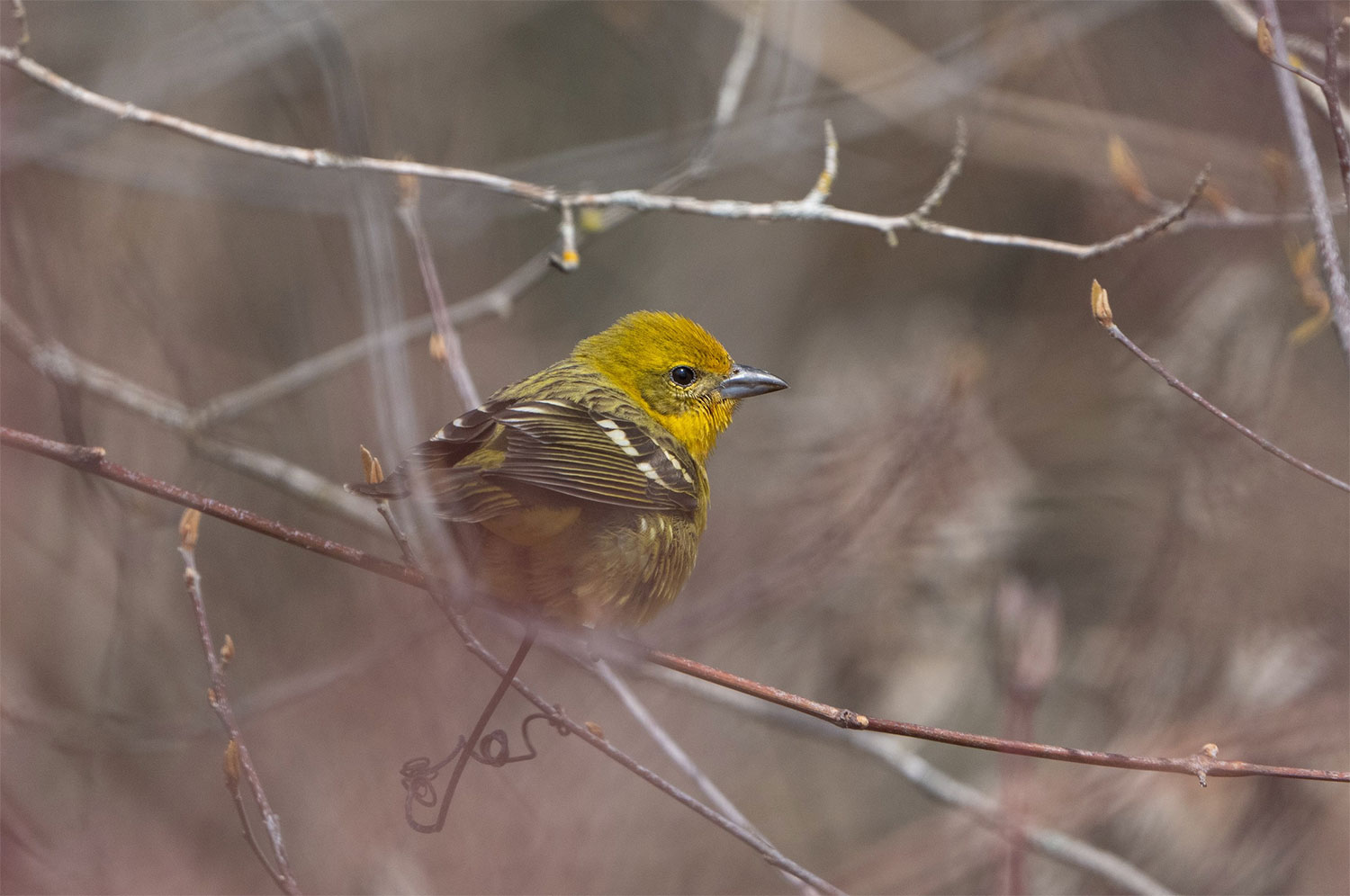
Female Flame-colored Tanager
Earlier this month, a few adventurers spotted a Black Vulture—a bird that I’ve only seen south of Tennessee.
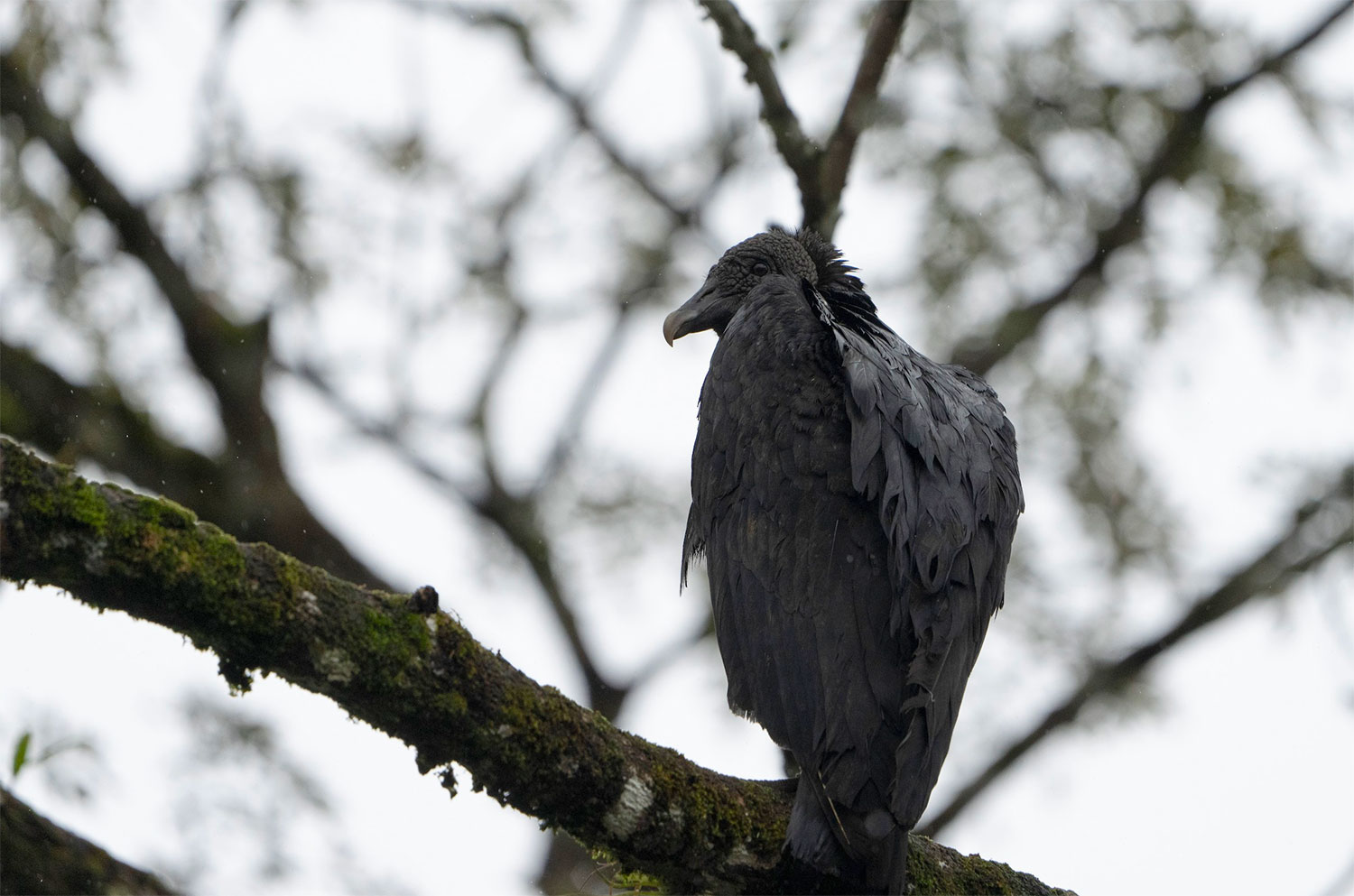
Black Vulture
Harlequin Ducks, scooters, and other water birds show up from time to time. I like to imagine the Calatrava is a popular talking point for all members of the animal kingdom (“Dude, Milwaukee has a giant, white, bird and you can see through parts of its body. Guess what it eats? HUMAN ART!!!”)
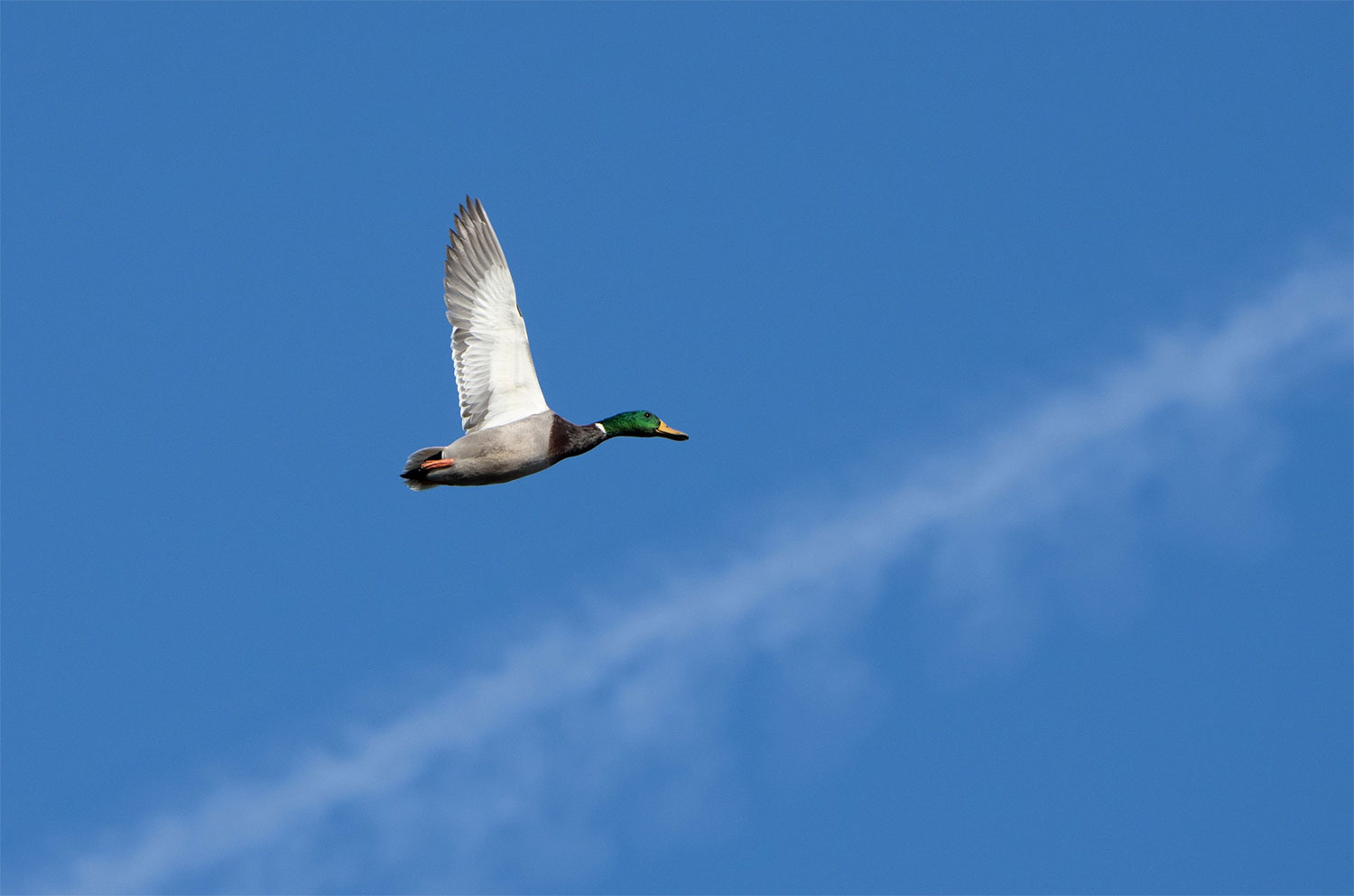
Male Mallard in flight
Lakeside Escapades
Despite our many breweries, deep down we all know the key to living is water. The phrase “where you’ll find water, you’ll find wildlife” is true no matter the time of year, but it’s doubly true during migration. Migrants come from near and far. When birds reach Milwaukee they are tired, hungry, and thirsty, so if you want to keep an eye on them, go where there is water. Inland ponds and lagoons with proper tree cover can be worth the stakeout. Otherwise, the tried-and-true of Milwaukee spring migration is our coastline. There’s no greater refuge when traveling thousands of miles than a great lake, and we just happen to have one of those in our backyard. If your ears need a different tune or your eyes need something bright to shake off winter’s gray, take a pair of binoculars, keen and patient eyes, and search some local ravines for the wonders of spring bird migration.
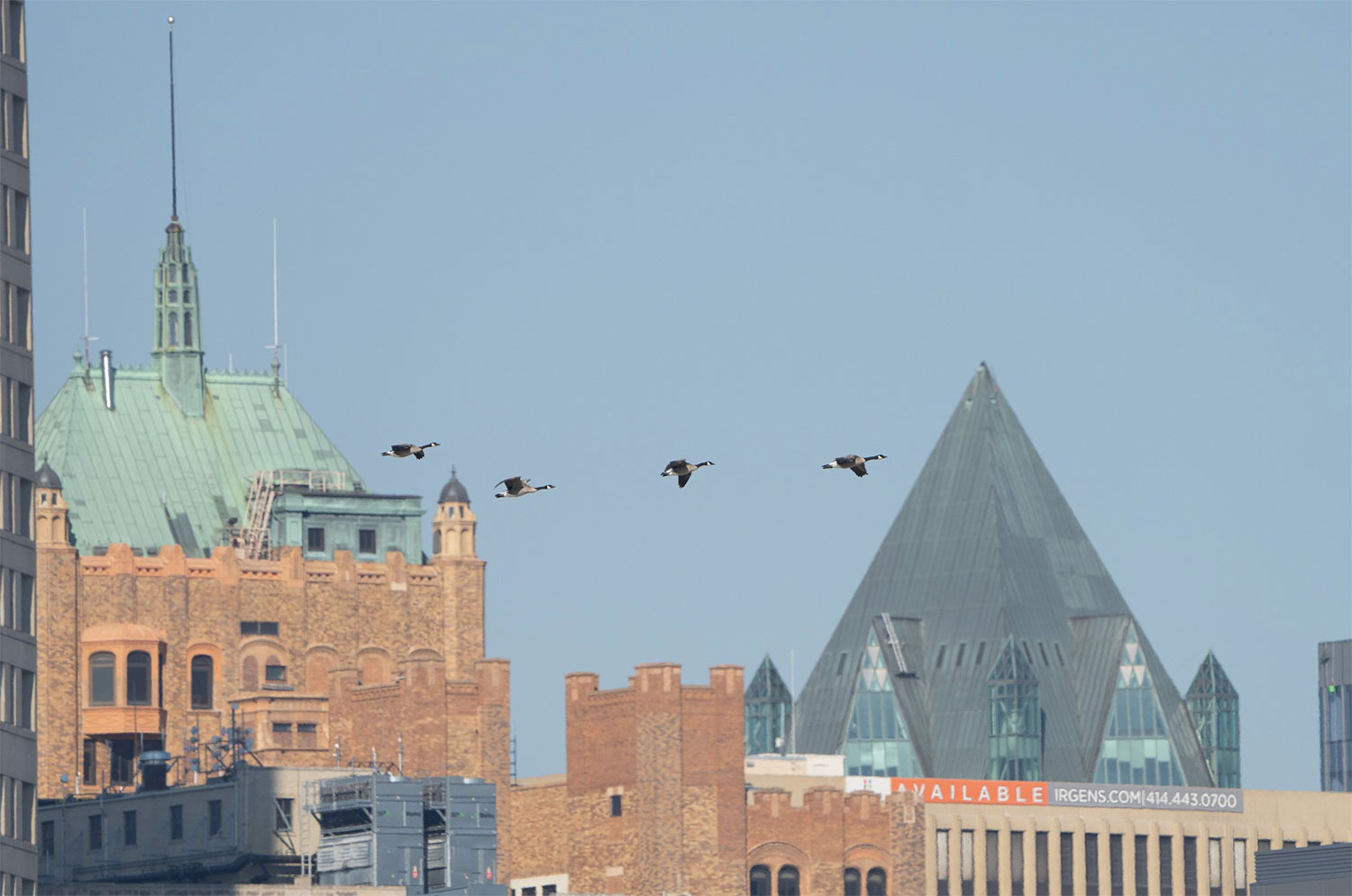
Canada Geese in flight over Milwaukee
Want more Milwaukee Record? Subscribe to our free weekly newsletter and/or support us on Patreon.
RELATED ARTICLES
• Fall signals bird migration season in Wisconsin
• The rarest bird to ever venture to Wisconsin is currently in the region
• Wisconsin Birding Challenge 2022 archives
• Migrating warblers, others bring a world of color to Milwaukee’s spring landscape