
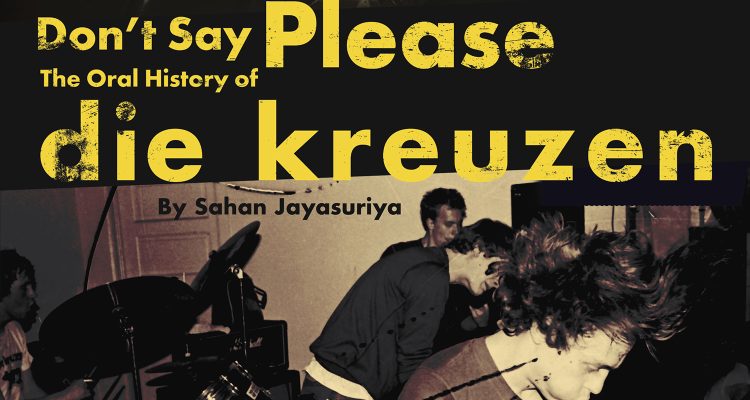
Few bands in Milwaukee music history have a legacy that even comes close to matching that of Die Kreuzen. The seminal outfit defied genre distinction, anchored the local scene, toured relentlessly, and was a favorite band of many of your favorite bands. Though much has been said and written about the band through the years, very little of the group’s story has come from the perspective of the band members themselves. Until now, that is.
In August, Don’t Say Please: The Oral History Of Die Kreuzen was published by Feral House. Written and assembled by Milwaukee-based author Sahan Jayasuriya, the book is an inside look at the origin, development, standout experiences, and the abrupt end of the iconic band, as told in extensive detail by members Keith Brammer, Brian Egeness, Dan Kubinski, and Erik Tunison. There are also Die Kreuzen-specific memories shared by an array of notable musicians.
I just finished the book over the weekend and, as expected, it’s great. In advance of tonight’s Music Book Club special event at Lion’s Tooth with Jayasuriya, Brammer, and moderator Dan Shafer, I thought it might be fitting to tell you five of my favorite things about Don’t Say Please: The Oral History Of Die Kreuzen. So I don’t spoil anything major—and, yeah, because the event is tonight—I’ll keep each entry relatively brief.
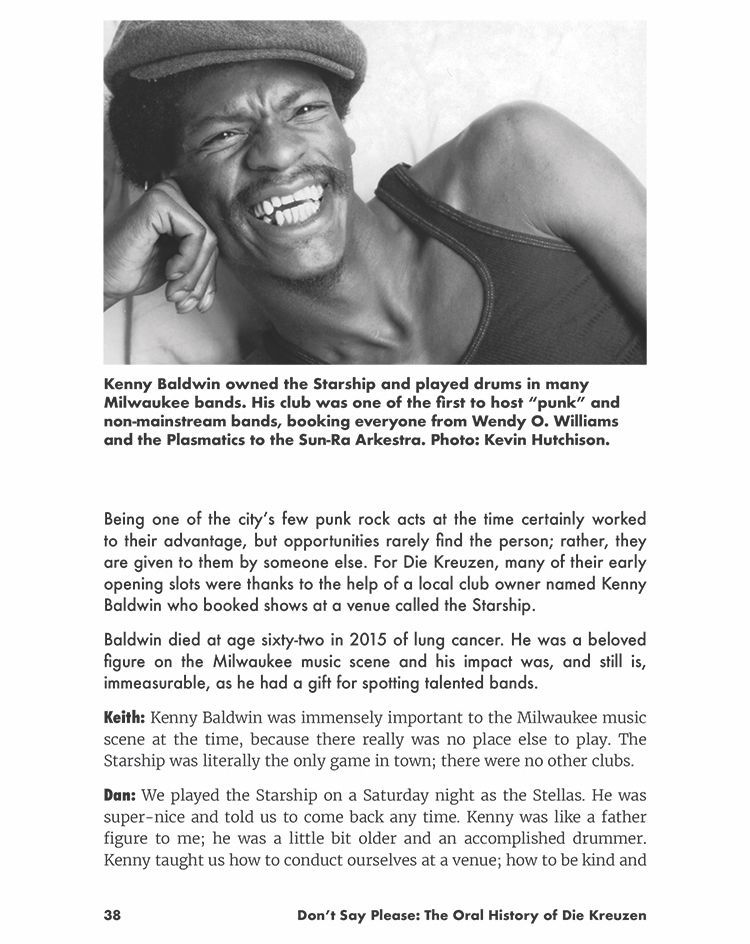
LOCAL HISTORY GALORE
As someone who 1. Was in grade school when Die Kreuzen broke up, and 2. Didn’t move to Milwaukee until 2009, Don’t Say Please is a treasure trove of information about important Milwaukee venues, bands, and other prominent arts-adjacent figures between the late 1970s and early ’90s. I wasn’t there, so it was cool to hear what the city’s music scene was like from those who were. Also, it doesn’t pertain to music, but it was funny to learn that everyone in the band worked at Pizza Man at some point during Die Kreuzen’s tenure.
GREAT STORIES FROM THE ROAD
As noted above, the band toured relentlessly. As you might imagine, the years spent on the road resulted in some pretty great stories from band members about their tour experiences. Some anecdotes that standout include: sleeping on stage in a locked venue after a show to escape the rat-infested floor, camping at state parks between tour stops, having a show fall through out west and Dead Kennedys bailing them out by adding them as an opener on their show, living off of different potato preparations while spending a month squatting at a friend’s place in San Francisco, and getting razzed by Ramones fans (and the band itself) while opening for them once. That’s but a small sampling. There are also great stories chronicling some of their experiences in the recording studio.
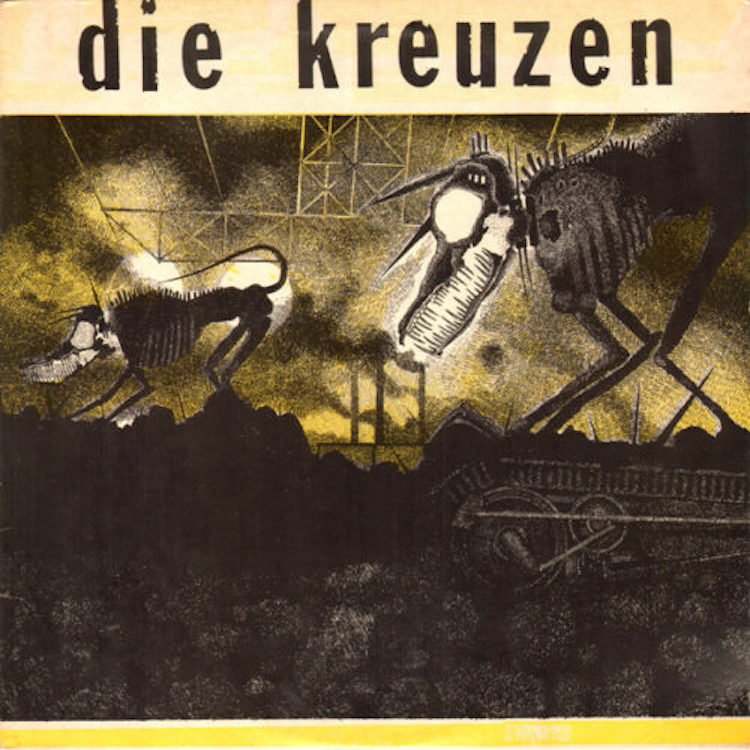
AN EMPHASIS ON ALBUM ART
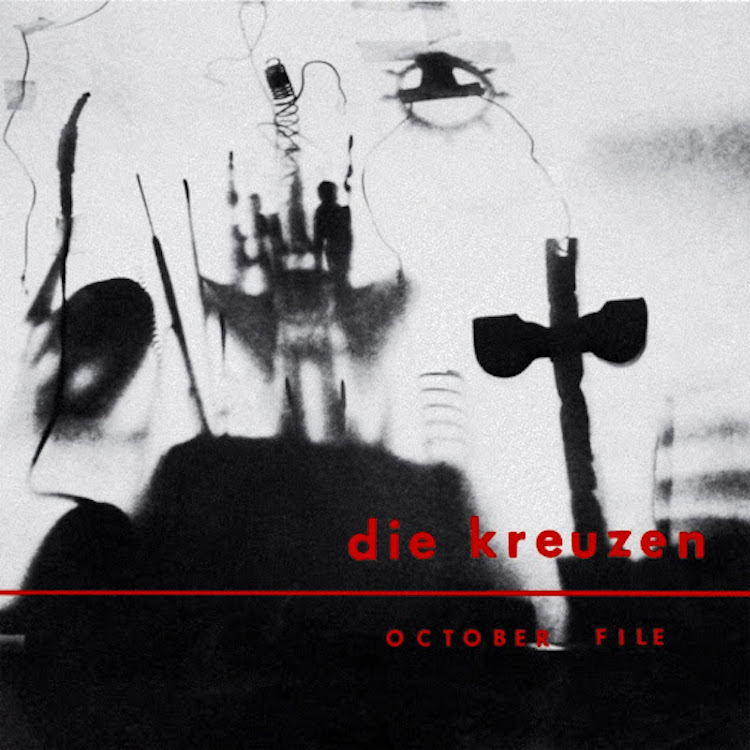
Unexpectedly, one of the most interesting parts of Don’t Say Please is the surprising amount of attention the book allocates to Die Kreuzen’s album art. The band’s former manager Richard Kohl was also the graphic designer responsible for all of the band’s best album covers. Often with no real artistic direction beyond the record’s name and some rough demos to give him an idea of the album’s overall feel, Kohl managed some truly remarkable visual renderings in a variety of mediums.
As readers learn at various points of the book through interviews with Kohl and Jayasuriya’s well-researched encapsulations, some covers were meticulous hand-drawn creations. Others were exercises in experimental photography, Xeroxed collages, and work that seems as if it came from another world. Kohl’s creations were especially impressive when realizing some records came out more than 40 years ago.
IMPRESSIVE INTERVIEWEES
As you might imagine is the case for a book with “The Oral History” in its name, Don’t Say Please: The Oral History Of Die Kreuzen is largely composed of quotes sourced from interviews. Each of the band members has ample quotations throughout, but there’s also a wealth of quotes from a murderers’ row of music icons. Jayasuriya conducted interviews and gathered quotes from likes of Thurston Moore, Neko Case, Steve Albini, Ian MacKaye, Dennis Lyxzen, Kim Thayil, Butch Vig, Lou Barlow, Bob Nastanovich, Jon Reis, and many more. Who knew an independent Milwaukee band from 1980s and early ’90s made such an impact on so many respected artists?
A NEW APPRECIATION
Die Kreuzen is a band I have heard about at length and a group I know people worship around these parts, but to be completely honest, I never fully got them. They just didn’t resonate for whatever reason. However, between the heaps of praise from some of my favorite musicians, Jayasuriya’s descriptive prose and extensive background, and in learning the undeniable thought and intention the band members put into their ever-evolving sound, I’m now hearing Die Kreuzen in an entirely new way. I get it now.
If you’ve made it this far into an article about a Die Kreuzen book, chances are you already like the band. But even if you’re on the fence about the music, there are lots of reasons to read Don’t Say Please: The Oral History Of Die Kreuzen. Hopefully these five highlights inspire you to pick up a copy at Lion’s Tooth tonight (or any other time).