
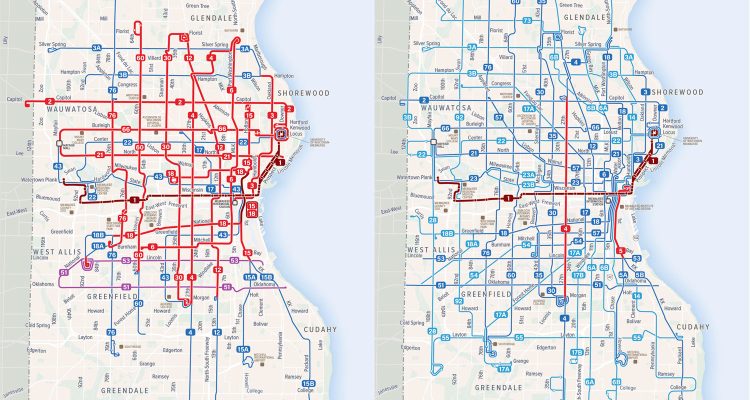
Fewer routes with more frequent service, or the same routes with longer waits? That’s the question posed by a new survey from Milwaukee County Transit System (MCTS).
The survey is part of MCTS Forward, “a collaborative effort to think about the future of public transit in Milwaukee County.” In order to keep its budget in balance through 2030, MCTS is proposing a 25% service reduction beginning in 2027.
“Operating costs at MCTS are rising faster than the revenue available to cover them,” MCTS explains. “Without a change, the gap forces a service reduction, followed by another the next year, and another after that. A reduction of 25% less service keeps the budget in balance through 2028, 2029, and 2030, a three-year horizon.”
The question is how to reduce that service by 25%. MCTS has two ideas: a Ridership Concept that would prioritize higher bus frequency, or a Coverage Concept that would prioritize, well, coverage.
“These are conceptual approaches—not final plans—and community input will help inform decisions about the future of public transportation,” says MCTS.
Following this community input, the Milwaukee County Board of Supervisors is expected to take up the issue this winter. After another round of public input in spring 2027, the final plan is projected to be implemented in summer 2027.
Here are summaries and maps of the two concepts, via MCTS. Weigh in with your thoughts HERE.
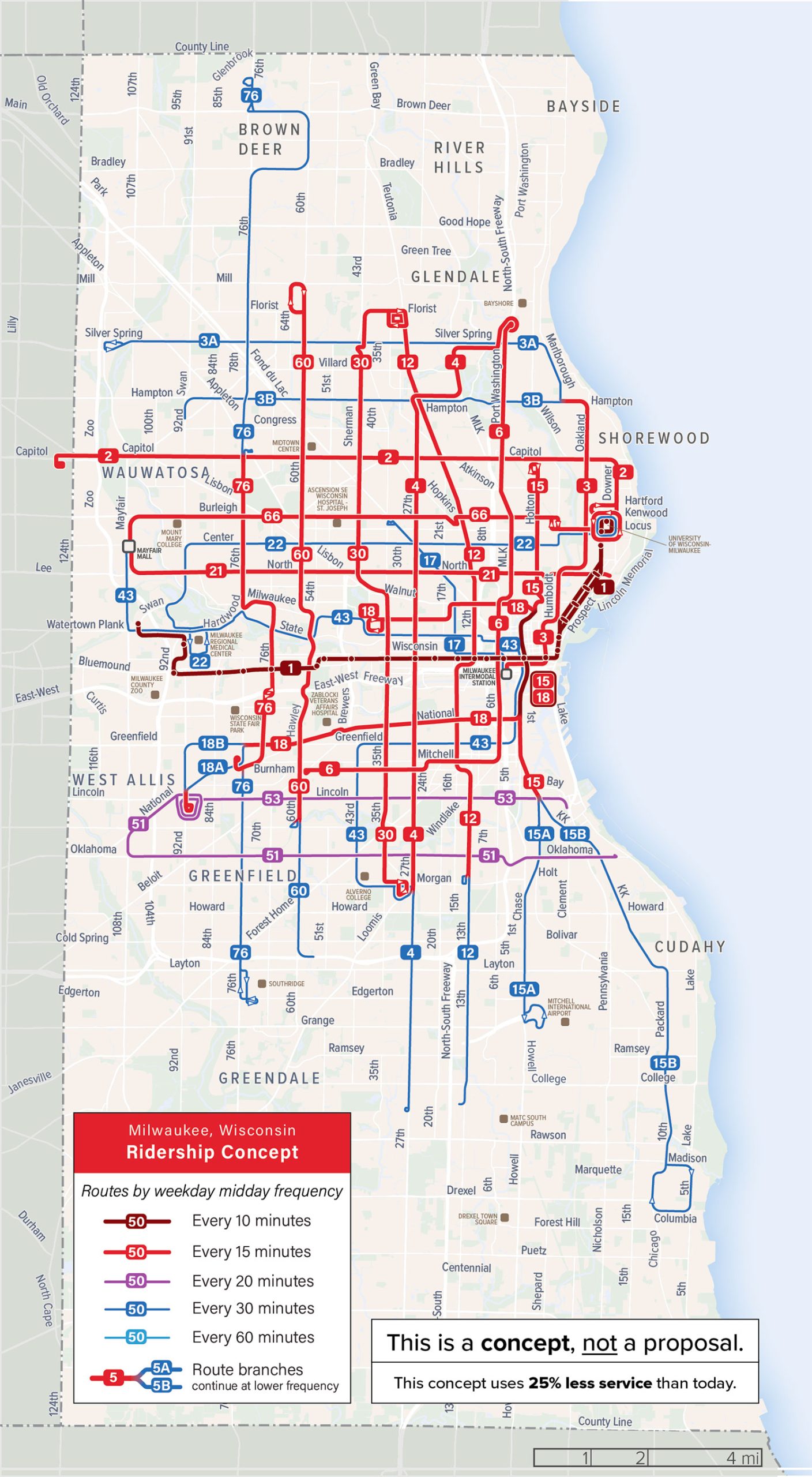
RIDERSHIP CONCEPT
Higher Frequencies
Buses on a grid of routes would come every 15 minutes. The number of residents near frequent service would increase from 30% to 51%, reducing travel time for many trips.
Loss of Coverage
The total number of residents near any transit service would decrease from 82% to 70%.
Slightly Less Access
Residents near transit today would be able to reach an average of 2% less jobs in 45 minutes.
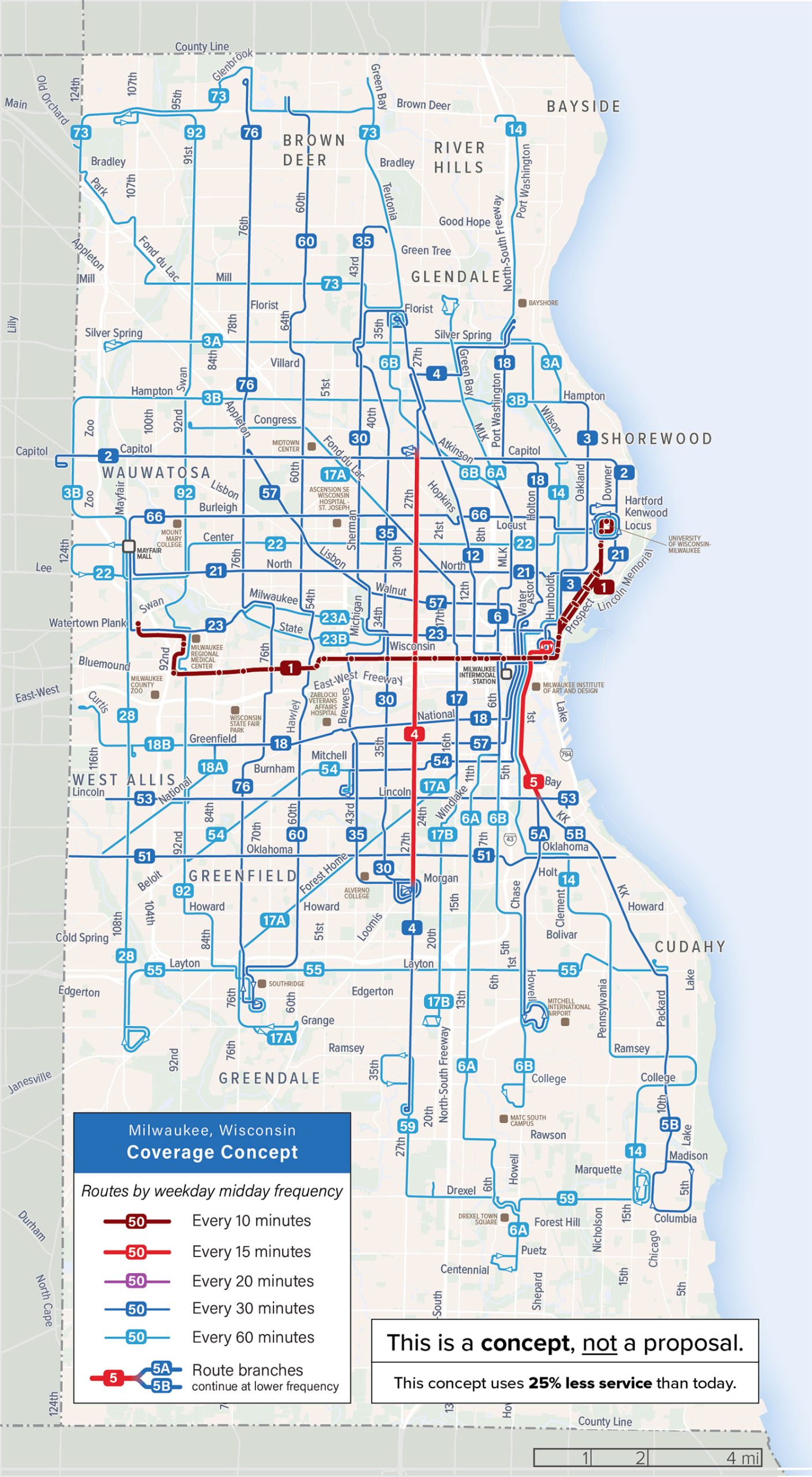
COVERAGE CONCEPT
Longer Waits
Most routes throughout the county would only run every 30-60 minutes. The number of residents near frequent service would decrease from 30% to 16%.
High Coverage
Everybody that is served by transit today would continue to have service nearby.
Much Less Access
Residents near transit today would be able to reach an average of 37% less jobs in 45 minutes.
Want more Milwaukee Record? Subscribe to our free weekly newsletter and/or support us on Patreon.
RELATED ARTICLES
• Here are the MCTS fare increases that go into effect January 1, 2026, and that’s it