
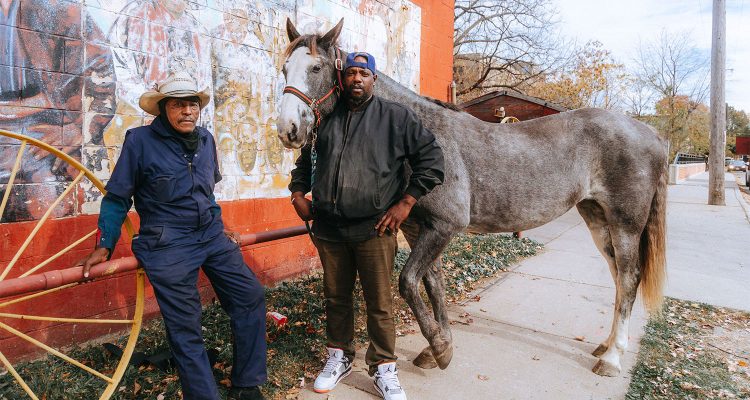
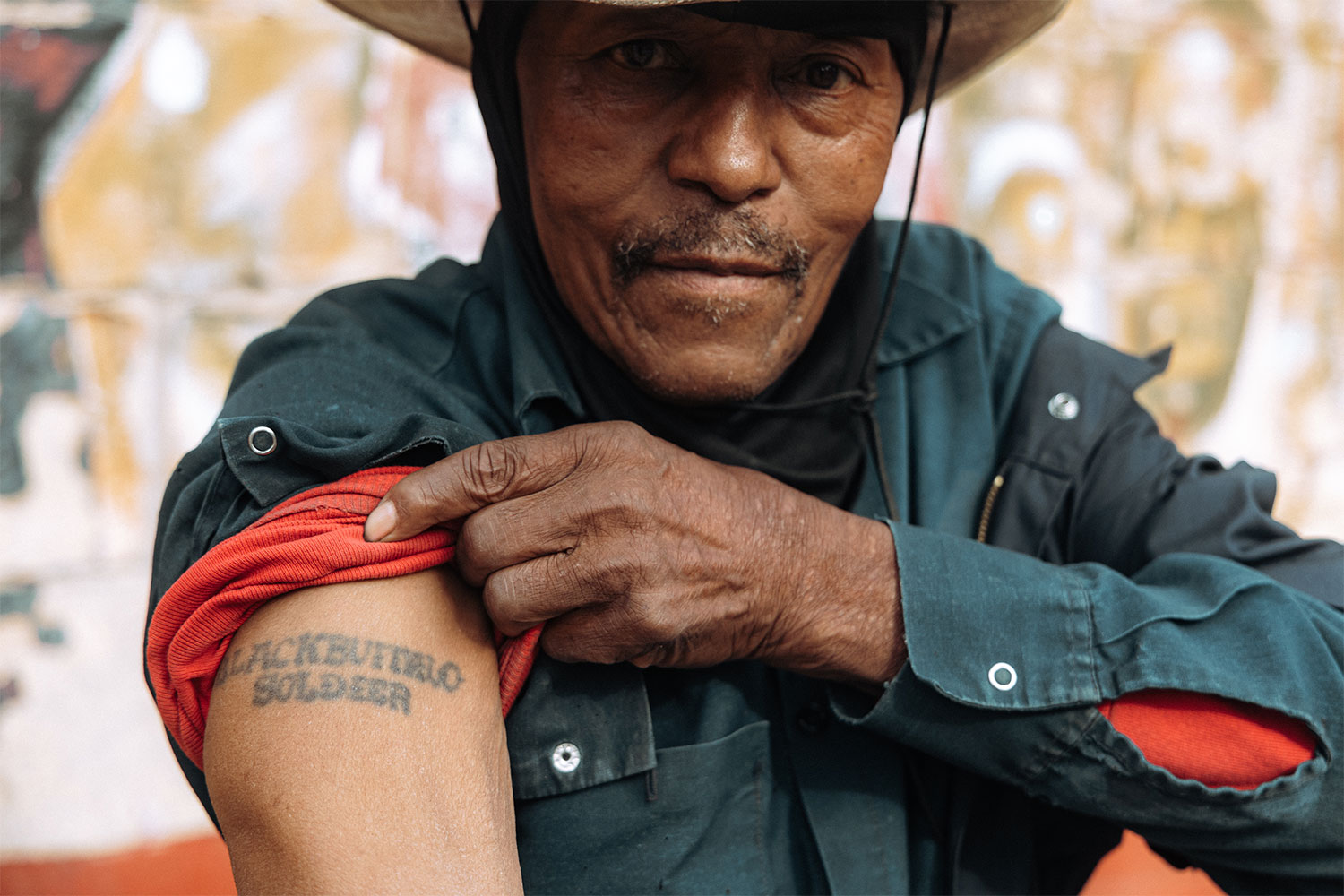
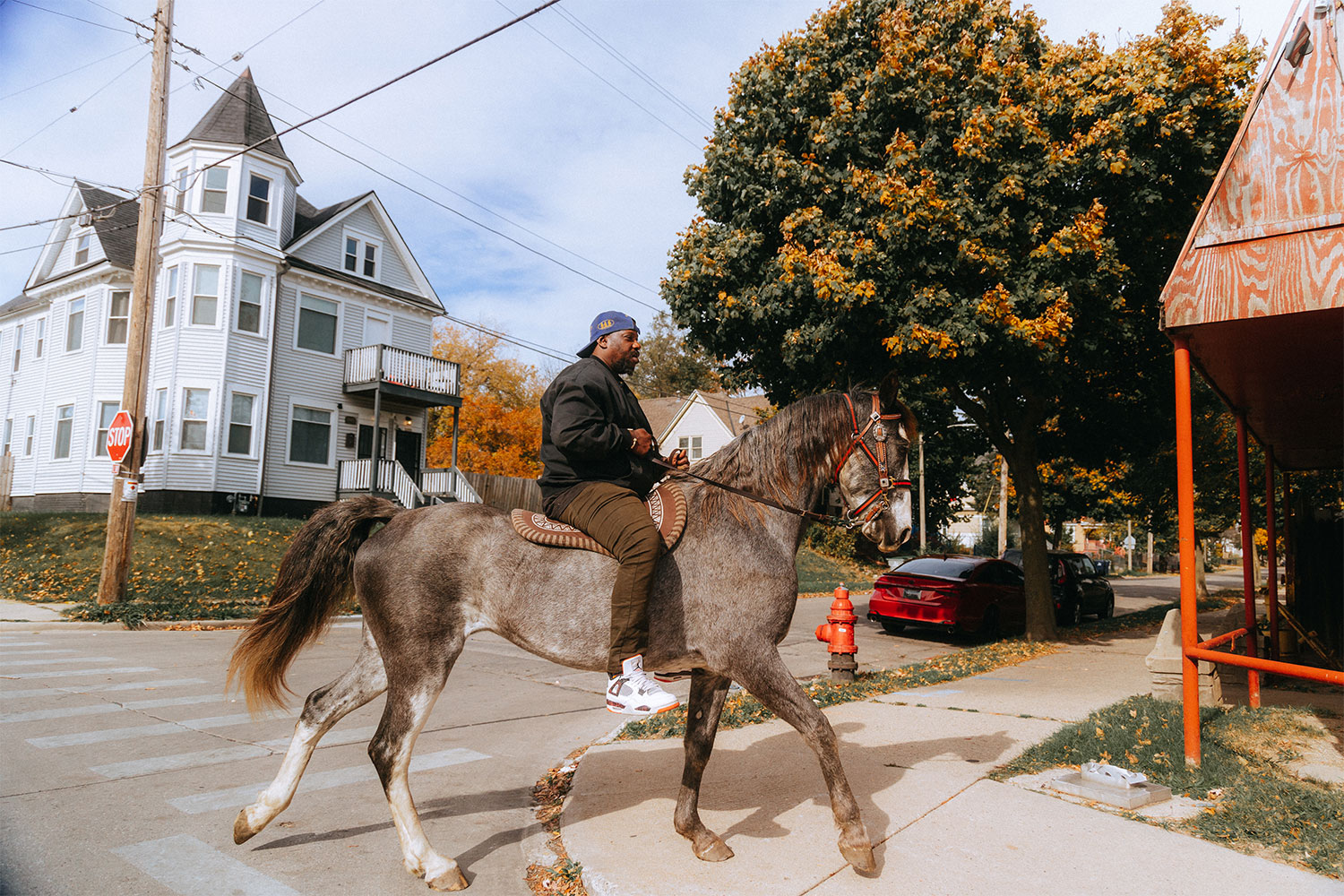
Back in October we told you about Forged By Steele, an upcoming short documentary about Milwaukee man Issac Steele. Who is Issac Steele? Well, Steele is a “third-generation Black cowboy who operates a welding shop in Milwaukee and mentors local youth in the community according to the ways of the frontiersman,” that’s who.
Now, filmmaker Natalie Derr is set to premiere her film at the Oriental Theatre on Sunday, March 29 at 3 p.m.. The screening is free and open to the public. RSVP HERE.
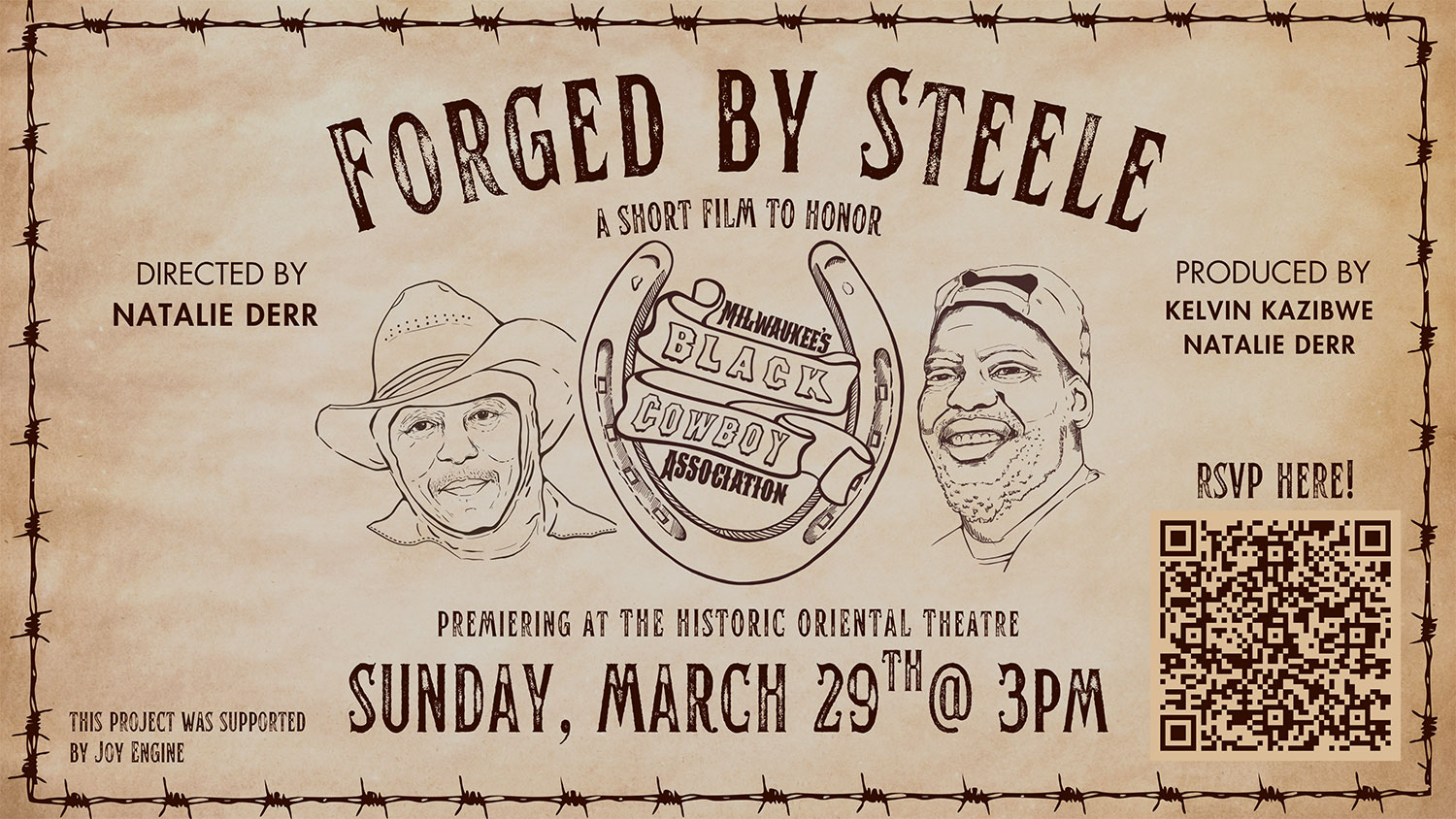
Looking for more info? Here’s the full piece we ran back in October, from contributor Annie Raab:
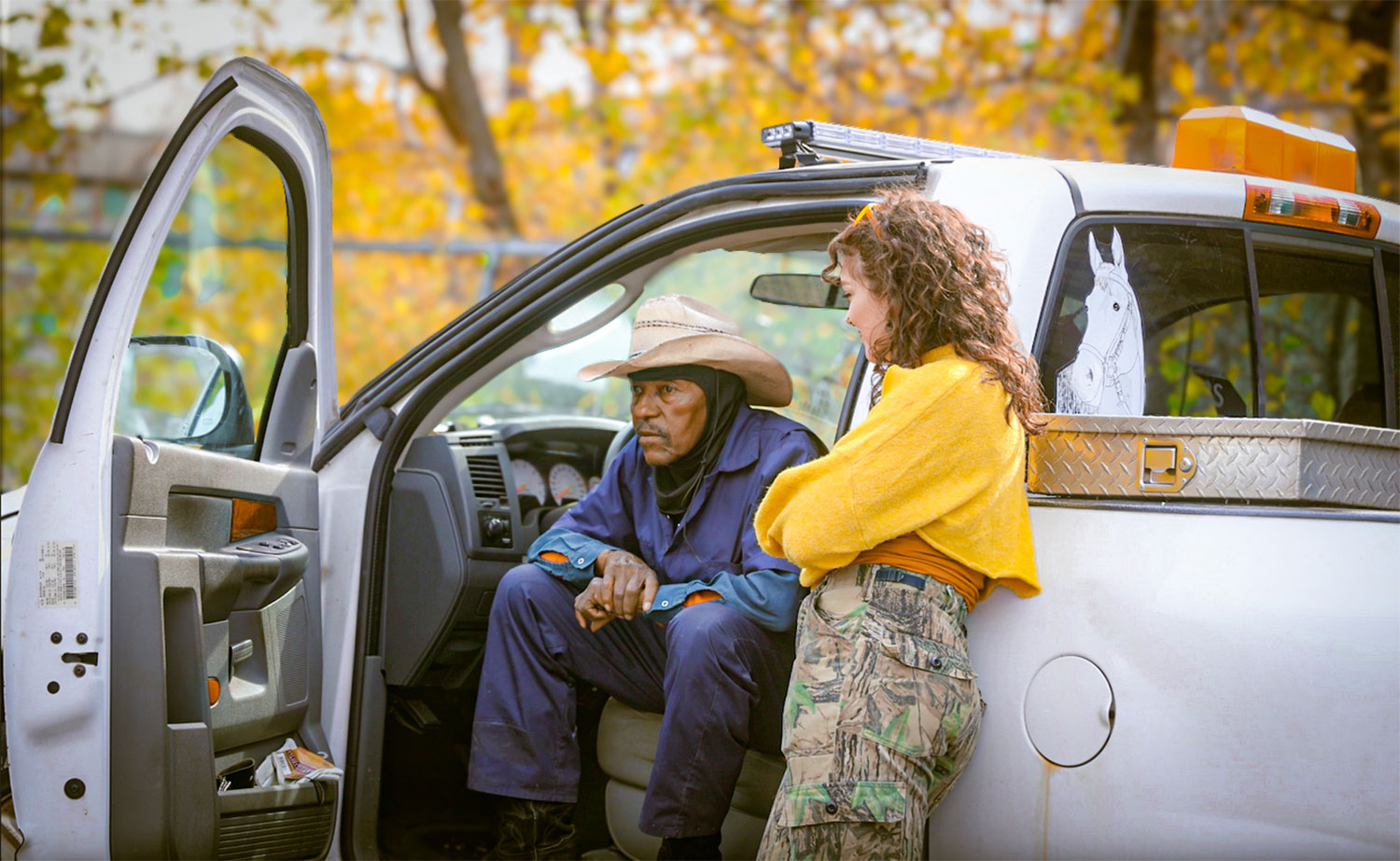
The cowboy in your backyard: Issac Steele is the subject of Natalie Derr’s upcoming documentary
By Annie Raab
You won’t find Natalie Derr, artist and inspired documentarian, promoting her first film, Forged By Steele, on social media. “I’m not sharing it on any platform,” she tells me over the phone at the start of our interview.
There may be several reasons for this. For one, Derr is not a seasoned filmmaker, and therefore has been keeping this project between her crew, her grantors, and her subjects as she navigates a new form. It could also be the continuation of a through-line that runs between her thesis and her presentation: that some histories were poorly preserved or systematically erased and have been difficult to locate in unbroken segments. In either case, most consumable media is not ideal for presenting topics that require depth or nuance, as Derr’s subject requires.
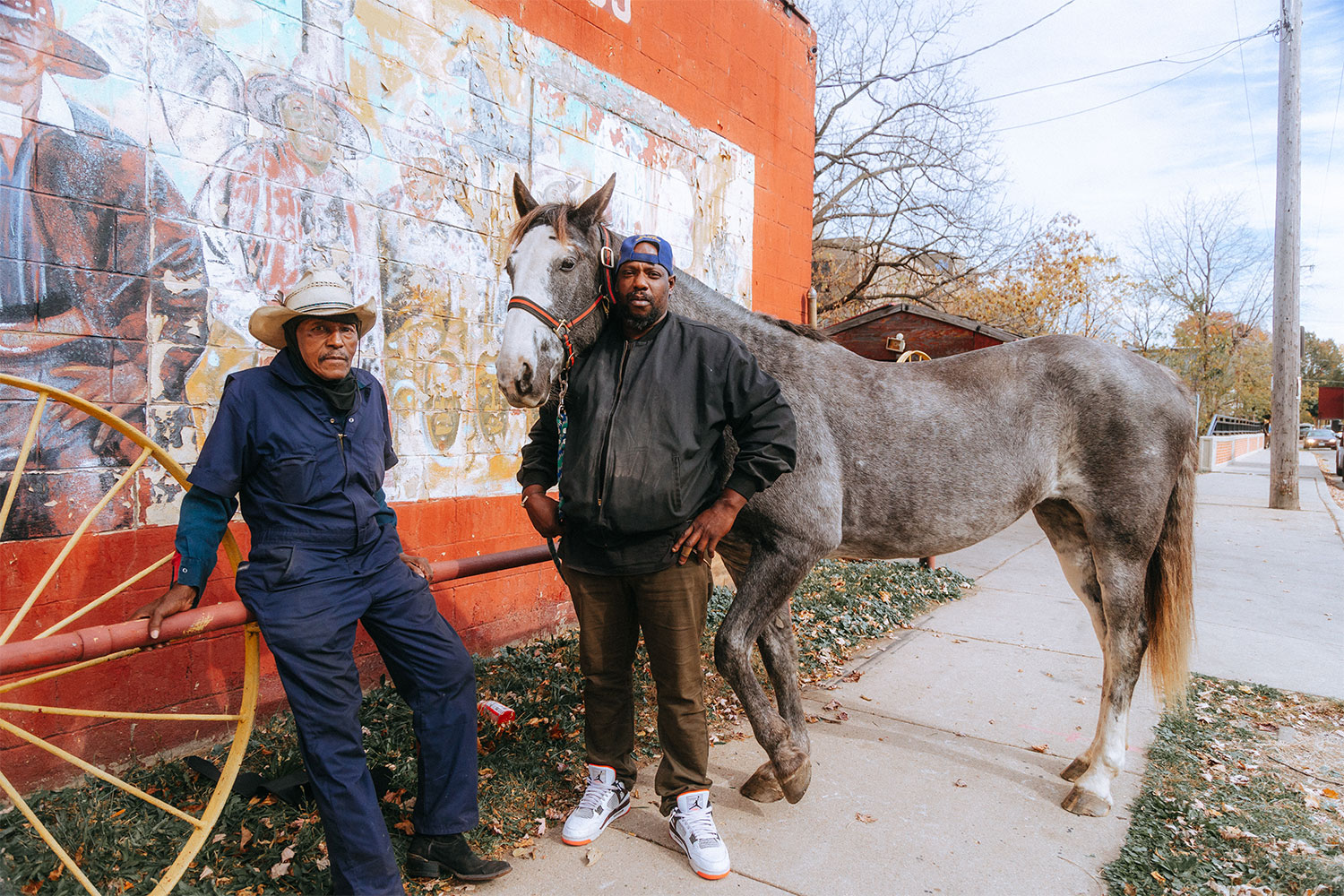
Derr’s subject is Issac Steele, a third-generation Black cowboy who operates a welding shop in Milwaukee and mentors local youth in the community according to the ways of the frontiersman. It seems incongruous at first—a cowboy in Milwaukee’s city center? What makes a cowboy a cowboy when we’ve long replaced hitching posts with parking lots and wild expanses with urban classifications?
“I could give you an answer,” Derr says, “but it wouldn’t be as good of an answer as Issac could tell you. I would say that being a Black cowboy is about living a legacy that once was. This country was built off the backs of the enslaved. To be a Black cowboy is to be a true American symbol.”
Derr has done her research for this film, although the lack of recorded history has not made it easy. She has been diving into Steele’s background and the history of Black cowboys in Milwaukee. She has formed a connection to Steele and his network, wading into a community to which few on the outside have devoted the same attention.
Derr, a Milwaukee artist who mostly works on paper and other physical, colorful media, was tipped off to a project calling for artists to help develop a website for Black cowboys in the area. While at the time she was unfamiliar with Black cowboys, Derr was no stranger to cowboys and Western nostalgia in general.
“My grandpa had passed away recently,” she says. “He was known for being a cowboy, wanting to be one, loving horses, loving the Old West. My parents also have a strong Western flair—Midwestern Western. Growing up, I only saw one side of the cowboy identity, the John Wayne side. But that doesn’t encompass the real, whole Western frontier.”
Tales of the Wild West, when cowboys served as roaming stewards of cattle herds, hardly included African Americans in the narrative. There was a blank space on the page of the American frontier era that former slaves absolutely occupied and contributed to developing. The more Derr learned about Black cowboys, the more she felt a need to preserve their history in a documentary form.
Which is unusual, perhaps, for an artist with zero filmmaking experience. “I’m a hands-on artist. I’ve explored a lot of different media before,” she says. “But I’ve never done video production or filmmaking. I grew up watching PBS and Ken Burns, but I’ve never made a doc myself. So now I’m taking a shot in the dark and hoping the community can help me figure this out.”
This outlook appears to be paying off. Forged By Steele received funding from Joy Engine‘s 2025 Joy Grant, which supports projects with a focus on civic engagement.
The target release date for the film is December 31, 2025. The documentary is slated to run about 20 minutes, providing a perfect introduction to a local character and his own historical narrative. And although there is much to say about race and history in this city, it won’t focus too much on the heavy topics. “It always comes back to joy. What is more joyful than the story about a cowboy that lives in the city?” Derr says. “It doesn’t always need to be a story of trauma. There are more stories to tell, stories that are quirky and sweet and wholesome.”
There’s a lot of silencing of historical narratives in the world, and a lot of fear that illuminating those stories for educational purposes pushes some kind of DEI agenda. It’s horrifying at best and downright apocalyptic to compassion, critical thinking, and community connection at second best. If a wholesome story about Issac Steele and his legacy can draw us back a little from the cliff of insanity and pull his story back from the brink of erasure, then we’re all better for it.
At the core of this endeavor is a sense of bipartisan optimism for rural and urban ways of life. “Look at someone who lives in the country and someone in the city,” Derr says. “They both work hard for a living, provide for their family. There are so many parallels, but we focus on how different they are.”
Steele seems, then, like the perfect representation of those dynamic parallels, and those incongruities start to make more sense and seem less like a portrait of conflicting identities and more like a deeply human exploration. Derr addresses this with a laugh. “Just because you live in the city doesn’t mean you can’t take care of a horse!”
Want to see the film? Look for a showing soon. And follow Natalie Derr on Instagram @bootscootin_natty. She promises to post about the documentary.
Derr’s project is supported by the 2025 Joy Grant from Joy Engine. 2026 applications are now open.
Want more Milwaukee Record? Subscribe to our free weekly newsletter and/or support us on Patreon.
RELATED ARTICLES
• The Joy Engine Community Challenge will distribute $50,000 in grants to 7 Milwaukee art projects