
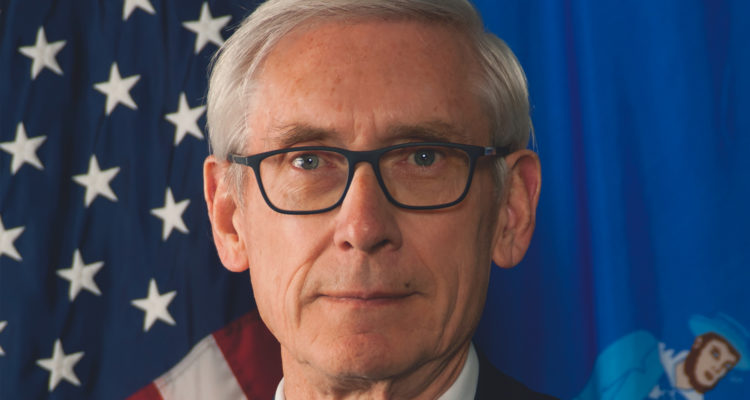
Gov. Evers Becomes the First Governor Since Former Gov. Thompson to Grant Commutations
After Wisconsin’s process for issuing commutations was reinstated earlier this year, the governor today announced the first commutations grants issued since the Thompson Administration
MADISON — Gov. Tony Evers today became the first Wisconsin governor since former Gov. Tommy Thompson, Wisconsin’s 42nd governor, to grant a commutation after signing two executive orders earlier this year, reinstating the state’s commutation process for the first time in decades.
Gov. Evers has made history during his tenure through his use of constitutional executive clemency powers, granting over 2,443 official pardons so far—more than any other governor in Wisconsin state history. A pardon restores certain civil rights and offers forgiveness, and individuals are currently only eligible to receive a pardon from Gov. Evers after they have completed their entire sentence and have been “off paper” for at least five years. Individuals are also not currently eligible for a pardon if they are a registered sex offender or have any pending criminal cases or charges in any jurisdiction. More information about the current pardon process in Wisconsin is available on Gov. Evers’ website.
Unlike a pardon, a commutation may reduce a sentence an individual is currently serving; however, a formal grant of commutation does not necessarily mean the incarcerated individual will be released or have their sentence shortened. Commutations may, for example, make an individual eligible for supervised release earlier pending continued positive behavior, may consider factors such as age that evidence-based research indicates affect decision-making for youth offenders, or may make someone eligible for parole so they have a future opportunity to be considered for parole by a body of commissioners with criminal justice experience.
According to Executive Order #287, the granting of commutations “promotes rehabilitation by providing a system that rewards the positive efforts of incarcerated individuals who demonstrate personal growth and a commitment to change with the possibility of a second chance to contribute to society, become productive members of their communities, make amends, and improve their lives and those of the people around them.” Additionally, the order notes, “the granting of commutations can also encourage incarcerated individuals to be accountable, take responsibility, make amends, and seek forgiveness for their actions that have harmed other individuals and the community.” Additional information about the different types of executive clemency in Wisconsin is available in the attached PDF. A list of questions frequently asked regarding the commutations process is available on Gov. Evers’ website. More information about executive clemency powers and their use by past governors is available in a memo prepared by the nonpartisan Legislative Reference Bureau.
The governor has received many applications for commutations. Importantly, just because an individual has applied for a commutation does not mean they are eligible under current commutations criteria. Further, just because an individual is eligible to apply does not necessarily mean they will be considered by this Board; just because an individual is considered by the Board does not mean they will be granted a commutation; and just because someone receives a commutation does not mean they will necessarily be released immediately. The governor’s Commutation Advisory Board, which is comprised of individuals who have extensive experience in law enforcement, criminal law, and victim advocacy to commutations review, is charged with reviewing and considering applicants and making a recommendation to the governor. In evaluating applications for commutations, under the governor’s directives in Executive Order #287, the board must consider:
• The impact of a commutation on victims, survivors, and community members;
• Whether a commutation is consistent with public safety and in the interests of justice;
• An applicant’s prison conduct record; and
• An applicant’s personal growth and development since conviction, including the completion of rehabilitative programs, treatment, education, and work history during their incarceration.
The governor today announced he has granted commutations to 14 individuals who were considered and recommended by the Governor’s Commutation Advisory Board. A total of twenty-four individuals were heard at public hearings conducted by the Commutation Advisory Board on Aug. 21, 2026, and Sept. 18, 2026. The remaining 10 individuals’ applications for commutations have been denied. While the Board and the governor congratulate those applicants for the positive strides they have made while incarcerated, they have not been granted a commutation by the governor at this time. Those individuals are: Aaron Smith, Natalie Murphy, Christopher Sutton (Smith), Demian McDermott, Lawrence Northern, Mistye Doughty, Efrain Campos, Richard Sulla, Richard Perekovich, and Yatau Her.
A list of the people for whom Gov. Evers granted commutations is below.
August 21 Hearing
Sharif Green was found in possession of controlled substances and was convicted of Possess with IntentCocaine (>40g) and Possess with Intent-Heroin (>50g). On Aug. 5, 2015, he was sentenced to 20 years of confinement—significantly more than the 12 years requested by the prosecutor—as well as 10 years of extended supervision. To date, Green has completed more than half of his sentenced confinement. During that time, he obtained a GED and completed further educational coursework. He also completed the Inside Out Dad Program, an evidence-based fatherhood program for incarcerated fathers; the Making the Peace Program, a conflict resolution and violence prevention program; and participated in National Crime Victims’ Rights Week and fundraising events. He has also been employed in multiple capacities throughout his time incarcerated, including as a servery worker, a canteen worker, and a food service worker. In recognition of his rehabilitation efforts and positive adjustments while incarcerated, Green’s sentence was changed to 13 years of confinement and six years of extended supervision, which means he will serve three more years of incarceration followed by six years of extended supervision.
Mighty Howell was 17 years old when he and three other individuals attempted to rob a victim at gunpoint in his car, resulting in his death. Howell was convicted of First-Degree Intentional Homicide Party to a Crime and Attempted Armed Robbery Party to a Crime and, on Dec. 15, 1993, was sentenced to life imprisonment with parole eligibility in 2038. After 33 years of confinement, Howell is now 50 years old and is seeking a Juvenile Life Sentence Commutation. During his three decades of confinement, he obtained a High School Equivalency Diploma (HSED) and a technical diploma in building maintenance and care, completed further educational coursework, completed a cognitive-behavioral program and the Able Minds program, completed and later taught the Framework for Recovery Program for substance use and mental health challenges and the Commitment to Change Program, as well as mentoring new inmates. He has been continuously employed throughout his incarceration, including with Badger State Industries, as a lead server, a custodian, and a special needs worker assisting elderly and disabled inmates. Howell has received 20 letters of support, including from multiple family members offering rooms for Howell to live in and jobs at family-owned businesses, from a retired correctional officer who Howell worked for and who reached out to the Second Look Clinic at the University of Wisconsin (UW) Law School’s Remington Center to recommend his case, from a second correctional officer, and from nonprofit organizations offering reentry services. In the future, he hopes to move in with his mother, join his brother’s business, mentor at-risk youth, and get involved with his mother’s church.
In recognition of his work to rehabilitate himself while incarcerated, as well as his young age when he was sentenced to serve the remainder of his life in prison, Howell’s parole eligibility date was changed to September 2027. After that date, Howell will be eligible to be considered for parole by future members of Wisconsin’s Parole Commission, who will evaluate Howell’s status at that time and determine whether his request will be approved or denied through the existing process detailed under Wisconsin State Statutes, as established by the Wisconsin State Legislature.
Sammy Cole robbed two victims at gunpoint, taking $80 in cash. He was convicted of Armed Robbery with Threat of Force and, on Dec. 21, 2001, was sentenced to 35 years of confinement and 10 years of extended supervision. Cole has now completed over two-thirds of his sentenced confinement, having spent 24 years incarcerated. During that time, he obtained an HSED and certificates in custodial services, entrepreneurship, human relations, and as a powered industrial lift operator. He also completed a Journeyman custodial services apprenticeship and a service dog training program. He has also received mental health treatment, including completing the “Thinking for a Change” cognitive behavioral program and multiple reentry-related courses, as well as maintaining sobriety and serving as a youth mentor. He has been employed throughout his incarceration, including with Badger State Industries and as a food service worker, a special needs worker assisting elderly and disabled inmates, and a service dog trainer. In recognition of his positive adjustments and rehabilitation while incarcerated, Cole’s sentence was changed to 28 years of confinement, meaning he will serve four more years of confinement before being released to 10 years of extended supervision, which remains unchanged from his initial sentencing decision. In the future, Cole hopes to move in and reconnect with family, including his sister and cousin who wrote letters of support, as well as mentor youth and start his own custodial service company for individuals with disabilities and the elderly.
Michael Maldonado was 15 years old when he and two other individuals shot and killed a victim. He was convicted of 1st Degree Intentional Homicide (Use of a Dangerous Weapon) (Party to a Crime) and, on June 27, 1995, was sentenced to life imprisonment with parole eligibility in 2044. In 2025, Maldonado’s sentence was modified by a court, making him immediately parole eligible based on new evidence proving he was not the gunman in the crime for which he was charged, convicted, and sentenced. Despite this, Maldonado is the only individual involved in the homicide who is still incarcerated today. At 47 years old, Maldonado is seeking a Juvenile Life Sentence Commutation after serving 31 years of confinement. During that time, he obtained an HSED, an associate degree in business management with honors, vocational degrees in building services and tool safety/cabinetry, and tutoring certification, participated in and helped coordinate the Reach Out Program in which inmates speak to at-risk youth, volunteered to train service dogs with two different organizations, volunteered with multiple departments in his institution, and participates in fundraisers for multiple community organizations. He has been employed throughout his incarceration, including with the Badger State Industries print shop and workshop, and as a clerk and tutor for the building services vocational program, a maintenance department worker, and a custodian. He received 12 letters of support and an additional 10 letters of support from his resentencing in 2022. The letters include those from multiple family members and friends who offer housing and employment for Maldonado, from the WISDOM organization, and from a registered nurse and a former sergeant, both of whom worked at Maldonado’s institution. In recognition of his rehabilitation efforts while incarcerated, as well as his age at the time at which he was sentenced to spend the remainder of his life in prison, Maldonado’s sentence was changed to a maximum of four more years of incarceration before transitioning to serve the remainder of his sentence on parole. Maldonado will remain eligible for parole until that date and may be considered for parole by future members of Wisconsin’s Parole Commission, who will evaluate Maldonado’s status at that time and determine whether his request will be approved or denied through the existing process detailed under Wisconsin State Statutes, as established by the Wisconsin State Legislature. His current parole eligibility remains unchanged.
Daniel Cerney was 16 years old when he and another individual shot and killed two victims during an armed robbery. He was convicted of two counts of 1st-Degree Intentional Homicide (PTAC) (Use Dangerous Weapon), Armed Robbery (PTAC), two counts of Burglary-Armed with Dangerous Weapon (PTAC), and Theft-Movable Property (PTAC) and, on June 30, 2000, was sentenced to two concurrent life sentences with parole eligibility in 2044. At 43 years old, Cerney has now served 26 years of confinement and is seeking a Juvenile Life Sentence Commutation. During that time, he obtained an HSED, a vocational degree in cabinetry-wood techniques, and completed further educational coursework, completed Anger Management, substance abuse programming, Rational-Emotive Therapy programming, the Turning Point treatment program, a Cognitive Interventions program, and the A Better Way program, and started a Bible study group. He has been employed in multiple capacities during his incarceration, including as a Badger State Industries advanced sewer worker, a mechanic, a service dog trainer/senior handler, and as a Certified Peer Specialist, mentoring over 500 fellow inmates in just six years. He received 16 letters of support, including letters of support from family members offering assistance upon his hopeful release and a letter from one of the victims’ daughter and sister. Members of the victim’s family support his release, including a family member who used to visit Cerney on a weekly basis before health issues prevented her from doing so. In recognition of his rehabilitation efforts while incarcerated, as well as his age at the time at which he was sentenced to spend the remainder of his life in prison, Cerney’s parole eligibility date was changed to August 2030. After that date, Cerney will be eligible to be considered for parole by future members of Wisconsin’s Parole Commission, who will evaluate Cerney’s status at that time and determine whether his request will be approved or denied through the existing process detailed under Wisconsin State Statutes, as established by the Wisconsin State Legislature.
Amanda Weaver and several other individuals entered churches and a restaurant, taking cash and other items of value in 2007 and 2008. She was convicted of five counts of Burglary-Building or Dwelling (PTAC). At her sentencing hearing, the prosecution and defense made a joint recommendation of five years of confinement and 12 years of extended supervision. The other individuals involved in the burglaries were sentenced to no more than three years of confinement. On Nov. 19, 2008, Weaver was sentenced to 30 years of confinement and 20 years of extended supervision. Weaver has now served 17 years of confinement. During that time, she obtained an HSED as valedictorian of her class, an associate degree in business management, and is currently pursuing an associate degree in small business entrepreneurship and certification in cosmetology. She has completed further educational coursework, established behavioral healthcare, and completed intensive therapeutic programming, including the Childhood Trauma and Abuse Program, Emotions Management Skills Program, AWARE Program—a wellness and recovery program, and the Trauma Recovery and Empowerment Model Program. She presented at a reflecting and redirecting seminar and volunteered with a community service project. Weaver has been employed in multiple capacities during her incarceration, including as a kitchen worker, maintenance worker, chaplain’s assistant, library clerk, tutor, and community service worker. In recognition of her rehabilitation while incarcerated as well as the length of the original sentence, especially based on the joint recommendation made by the prosecution and defense and the length of the sentences imposed upon her associates, Weaver’s sentence was changed to allow for her immediate release from confinement followed by two years of extended supervision.
Sabir Wilcher was 15 when he joined a street gang and was coerced into fatally shooting a victim with another individual. He was convicted of First Degree Intentional Homicide, While Armed (PTAC) and, on Dec. 19, 1995, as a juvenile, was sentenced to life imprisonment with parole eligibility in 2025. Wilcher, now 46 years old, has served 31 years of confinement and is seeking a Juvenile Life Sentence Commutation. During his time incarcerated, he obtained an HSED, a bachelor’s degree in biblical studies with a minor in psychology with cum laude honors, vocational degrees in building management/construction and welding/production welding, and completed further educational coursework. He completed anger management, rational emotional therapy, substance abuse programming, the Cognitive Interventions Program, the Thinking for a Change Program, the Turning Points Program, and a restorative justice program. He has also served as a mentor to fellow inmates through a pilot program that became the Certified Peer Specialist Program and volunteered as a panelist, discussing his experience with visiting groups from the community. He has been employed in multiple capacities during his incarceration, including as kitchen supervisor, lead sweets baker, maintenance/plumbing assistant, barber, and respite care worker, where he assisted inmates with special needs. The victim’s son spoke on Wilcher’s behalf at his recent parole hearing and supports his commutation. The prosecuting District Attorney’s office in the case also supports Wilcher’s commutation. Wilcher also received several letters of support from family members, as well as offers for both housing and employment upon release. Wilcher’s sentence was changed to reflect a maximum of three more years of incarceration before transitioning to parole. Before that date, Wilcher remains eligible to be considered for parole by future members of Wisconsin’s Parole Commission, who will evaluate his status at that time and determine whether an earlier release is appropriate through the existing process detailed under Wisconsin State Statutes, as established by the Wisconsin State Legislature.
September 18 Hearing
Touissant Harley was 18 years old when he shot two people, killing one victim and injuring the other. He was convicted of 1st Degree Murder (Use of Dangerous Weapon) and 1st-Degree Reckless Injury (Use of Dangerous Weapon) and, on April 20, 1992, was sentenced to life in prison with parole eligibility in 2027. Harley was resentenced on Jan. 2, 2025, to life imprisonment with a parole eligibility date of July 26, 2025. At his original sentencing, the prosecutor asked for a parole eligibility after 30 years, which would have made Harley eligible for parole in 2022. At 53 years old, Harley has now served over 34 years of confinement and is seeking a Juvenile Life Sentence Commutation. During his time in prison, he has obtained an HSED, completed employment and educational programming, became a certified peer support specialist, completed anger management, the Thinking for a Change Program, cognitive behavioral programming, restorative justice programming, and substance use treatment. He participates in mental health counseling, writes poetry, and actively engages in his Muslim faith. Harley is a mentor to others both in and out of his institution, mentoring fellow inmates and also having written and responded to letters from students, counseling them on how to avoid the path that led him to prison. Further, he has been employed in multiple capacities during his incarceration, including as a custodian, law clerk, kitchen worker, and as a tutor and mentor. Additionally, both the deceased victim’s mother and the surviving victim, who spoke on his behalf at his 2024 resentencing hearing, have previously expressed support for a sentence reduction. His commutation is supported by the prosecuting District Attorney’s office. He also received letters of support from his family members offering him housing and employment, and from the Reentry Specialist at the UW Law School’s Remington Center, pledging to provide support upon reentry. Harley hopes to work at a family business, pursue further education, become involved in his faith community, volunteer with Partners in Hope, a reentry support organization, and partner with the victim’s mother to serve others in memory of her son. He also has aspirations of starting a gang prevention program for at-risk youth. Harley’s sentence was reduced to reflect a mandatory transition to parole no later than June 1, 2027. His current parole eligibility remains unchanged. Harley will continue to be eligible to be considered for parole by future members of Wisconsin’s Parole Commission, who will evaluate his status at that time and determine whether earlier release is appropriate through the existing process detailed under Wisconsin State Statutes, as established by the Wisconsin State Legislature.
Wazir El-Amin, formerly known as Wade Curtis, was 18 years old when he fatally shot a victim three times. He was convicted of First Degree Intentional Homicide with Dangerous Weapon and, on Nov. 21, 1990, was sentenced to life imprisonment and a consecutive five years of confinement, with parole eligibility in 2028. Now 55 years old, El-Amin has served 36 years of confinement and is seeking a Juvenile Life Sentence Commutation. During his time in prison, he has obtained an associate degree in Liberal Arts, a bachelor’s degree in biblical studies with a minor in psychology, a barber/cosmetology license, a Literacy Council tutor certification, as well as other educational and employment-related certifications and programming. El-Amin has also participated in various cognitive-behavioral programming, including anger management, the Challenges & Possibilities Program that provides social responsibility and reflection programming, the Violent Offender Program, the Cognitive Interventions Program, a life coping skills program, the Turning Point Program, and the Processing Sociohistorical Trauma Program. He also participated in the Childhood Trauma Group and has spoken to at-risk youth through a program at his institution. Further, El-Amin has been employed in multiple capacities, including as a tutor, barber, food service worker, custodian, laundry worker, respite worker, and server trainee. He received several letters of support, including from his wife, his pastor, a reentry specialist from the UW Law School’s Remington Center, and the WISDOM Commutations Committee. He has secured employment with a construction company upon release, and he plans to continue his work with the “From Experiences” nonprofit organization that he developed with his wife to provide support for recently released individuals. He also plans on enrolling in a mechanical and computer drafting program at MATC-Milwaukee. El-Amin was made parole eligible immediately and is to be given a hearing before the Parole Commission as soon as practicable. El-Amin will be eligible to be considered for parole by members of Wisconsin’s Parole Commission, who will evaluate his status at the time he is considered and will determine whether his release to parole will be approved or denied through the existing process detailed under Wisconsin State Statutes, as established by the Wisconsin State Legislature.
Casey Fisher was 22 when he was accused of robbing a victim at gunpoint and fatally shooting him. He was convicted of First Degree Intentional Homicide While Armed and Armed Robbery (Threat of Force) and, on June 2, 1994, was sentenced to life imprisonment and a consecutive 20 years of confinement with a parole eligibility date in 2049. Now 55 years old, Fisher has served 32 years of confinement. While he has been incarcerated, Fisher has obtained a GED, a Paralegal Studies certificate, and an Inmate Special Needs Worker training certificate, and he has completed coursework on various topics like financial literacy and business basics, data interpretation, and reentry planning. Additionally, Fisher completed programming on restorative justice, positive thinking, communication skills, pet therapy, and a healthy living group course. He has also participated in the Restorative Justice Week and Crime Victims’ Rights Week, volunteered as an intramural basketball official, mentored younger inmates, and was selected to speak about his experience with visitors from the Leadership Fox Cities Tour. Further, Fisher has been employed in multiple capacities, including as a pass control worker, garbage and yard crew, painter, custodian, recreation, certified inmate special needs worker, and a sanitation/recycling worker. He received several letters of support from family members, the Wisconsin Innocence Project, the Illinois Innocence Project, and the LovingKindness Homes organization, where he plans to live upon release before moving in with family. He hopes to use the job training he’s received while incarcerated, especially his special needs worker training, to help others. Fisher’s parole eligibility date was changed to 2039. Fisher will be eligible to be considered for parole by members of Wisconsin’s Parole Commission, who will evaluate Fisher’s status at the time he is considered and will determine whether his request will be approved or denied through the existing process detailed under Wisconsin State Statutes, as established by the Wisconsin State Legislature.
Robert Patterson was 20 years old when he and his co-defendant shot and killed two victims. Patterson was convicted of 2nd Degree Intentional Homicide (Party to a Crime). At his sentencing hearing, the prosecutor asked for a sentence of 20 years of confinement. On March 19, 2003, he was instead sentenced to 27 years of confinement and 18 years of extended supervision. At 44 years old, Patterson has now served 24 years of confinement. During his incarceration, Patterson has obtained technical diplomas in welding and production welding, maintaining a 4.0 grade point average, an associate degree in liberal arts with a 3.9 grade point average, and a ProLiteracy of America tutoring certificate. He has also completed a fiction workshop through the Wisconsin Humanities Prison Project and participated in a multitude of programming, including: the Cognitive Intervention Program (Phases 1-4), the Commitment to Change Program (1-3) that focuses on emotional regulation and personal accountability, the Framework for Recovery Substance Abuse Program, Victim Impact Program, Long-Distance Dads Program, Abused Boys/Wounded Men Program, the Able Minds Program that uses literature to transform behavior, and completed Diversity Circle, which discusses racial, social, political, and gender issues. Further, Patterson has tutored other inmates for 10 years to help them obtain high school and vocational diplomas, served as choir director for the Waupun Choir for five years, obtained a publishing contract and published 24 books, served as a peer mentor to fellow inmates, and obtained a baptismal certificate. Patterson has also maintained consistent employment throughout his incarceration, including as a servery worker, program clerk, education clerk, classroom tutor, upholstery worker for Badger State Industries, and for a community service project crocheting hats and gloves for people in homeless shelters. He is currently on work release doing construction for Trachte LLC. He received letters of support from his current employer and the superintendent of his correctional institution, among others, who state Patterson has demonstrated exceptional behavior and growth. Patterson will serve the remainder of his initial confinement sentence and his period of extended supervision, which he will serve after completing his sentence of confinement, which was changed to 10 years.
DeQuelvin Douglas was 15 years old when he shot two individuals three times, causing serious injuries to one victim and causing the death of the other. He was convicted of 1st- Degree Intentional Homicide and Attempted 1st-Degree Intentional Homicide and, on Dec. 19, 1995, was sentenced to life imprisonment and a consecutive 14 years of confinement, with a parole eligibility date of 2056. Now 47 years old, Douglas has served 31 years of confinement and is seeking a Juvenile Life Sentence Commutation. During his incarceration, Douglas has obtained an HSED, vocational degrees in Computer Literacy and Horticulture, a certificate in Commercial Pesticide Applicator, a Certified Peer Specialist certificate, certificates in Student Success and Workplace Success Strategies, Educational Math, and Occupational Communications. Douglas has also completed tutor training, participates in the Wisconsin Department of Correction’s (DOC) Community Education Program, speaking to at-risk youth about his experience, completed the Restorative Justice Program, attended individual counseling, volunteered with a “Lifer Group” designed to help provide clinical support and mentorship to men serving life sentences, helped develop the Healing Offender Past/Present Experiences (HOPE) workshop, and collaborated with the Chicago Community Connectors and Violence Interrupters nonprofit organization to share his experience and consult on designing programs and events to engage the community and share his experience and steer at-risk youth away from crime. He has maintained employment throughout his incarceration, working in multiple capacities, including as a janitor, painter, and tier tender on restrictive housing/mental health units, a cleaner of security offices, a Certified Peer Specialist, and a tram driver. He received several letters of support, including a letter from a retired DOC Sergeant who stated, “of all the individuals I supervised, he stands out as someone who truly deserves a second chance.” He plans to enroll in a community college, obtain a bachelor’s degree, and continue therapy treatment. Douglas’s parole eligibility date was changed to 2029. Douglas will be eligible to be considered for parole by future members of Wisconsin’s Parole Commission, who will evaluate his status at the time he is considered and will determine at that time whether his request will be approved or denied through the existing process detailed under Wisconsin State Statutes, as established by the Wisconsin State Legislature.
Harlan Schwartz and his co-defendant drove to the victim’s residence and attempted to set fire to the garage, failing to start a significant fire, and several months later, Schwartz and a different co-defendant went back to the same victim’s home and threw a glass bottle containing gasoline with a cloth wick through the living room window, starting a fire in the residence, but not physically injuring the victim or his family. Schwartz was convicted of Arson of Building Without Owner’s Consent, Arson of Building Without Owner’s Consent (Party to a Crime), and Sell/Possess/Manufacture Molotov Cocktail (Party to a Crime) and, on Jan. 25, 2001, was sentenced to 37 years of confinement and 18 years of extended supervision. Since Schwartz was initially sentenced, the Wisconsin State Legislature passed legislation changing the maximum sentence for felony Arson of a Building to 25 years of initial confinement. At 53 years old, Schwartz has served 26 years of confinement. While he has been incarcerated, Schwartz has completed Careers in Criminal Justice coursework, a course on suicide prevention, participates in a weekly reentry simulation, attended grief counseling groups, completed Health Module and Wellness Module classes, completed the Helping Offenders Manage Effectively (HOME) Program, completed Alcohol and Other Drug Abuse (AODA) programming, participated in the Reaching Youth Through Education (RYTE) Program, helped establish the RYTE Program in a different institution, completed restorative justice programming, and participated in the Restorative Justice Alumni Group, Crime Victim Rights Weeks, and victim impact seminars. He has also coached recreational sports, spoke twice at Volunteer Appreciation Dinners, had his essay “Illuminating the Darkness” published in the National Liberator Magazine, volunteered as an intake worker, and participates in Jewish faith studies, meeting weekly with Rabbis for study groups, services, and counseling. Schwartz has maintained employment in various capacities, including as a kitchen and laundry worker, maintenance worker, pass control, janitor, recreation worker, unit runner, auto detailer, unit bathroom worker, unit sergeant station cleaner, property worker, and special needs worker for the medical unit. Two victims in Schwartz’s case support his release to extended supervision. He received over 30 letters of support, including from two correctional officers at his correctional institution attesting to his character, as well as from several individuals offering housing, financial support, and help finding employment. He hopes to continue mentoring at risk youth and to obtain a peer specialist license. Schwartz’s sentence was changed to reflect a transition to extended supervision in March 2027, after which he will be on extended supervision for 12 years.
Dawn Dobbs helped plan the murder of the victim, who was her then-partner and father of her two children, and provided the gun to the individual who shot and killed him. Dobbs explained that she and her partner both had traumatic childhoods, were struggling with drug and alcohol use, and that the victim was physically abusive. She was convicted of First Degree Intentional Homicide (Party to a Crime) and, on July 1, 1994, was sentenced to life imprisonment with a parole eligibility date in 2035. At 59 years old, Dobbs has served 32 years of confinement. While she has been incarcerated, she has completed courses in Creative Writing and Literary Escapes, graduated from the Wisconsin Women’s Resource Center (WWRC) Intensive Trauma Program, completed Restorative Justice, Thinking for a Change, and Emotions Management Skills programming, moral reconation therapy, the Grief & Loss Program, art therapy, a domestic violence program, Trauma Recovery and Empowerment Model (TREM) Group, AWARE program, the Coping Skills Program, the Positive Thinking Program, the Journey Through Trauma Program, Trauma After Care, Steps Program, Relationships-What’s Healthy course, a wellness program, CPT-Cognitive Processing Therapy, and the Self Image Program, and a psycho-educational class on Childhood Trauma and Abuse. She also completed a wellness program, helped prepare a DOC training video on suicide prevention in 2010 that is still being used today, served as a peer mentor, reports sobriety, presented at the “15 Minutes of Reflecting and Redirecting” Program, and volunteered during COVID to make masks for schools and the military reserves. Dobbs has also maintained employment in multiple capacities, including as lead laundry worker, a silk screener and shipping clerk for Badger State Industries, mobility assistant, community service worker, personal care worker, housing unit janitor, and medical assistant. She received several letters of support for her release. Notably, the District Attorney’s Office and her son, whom she shared with the victim, support her commutation and invited her to live with him and his family. She plans to live with her son or sister and hopes to have a positive impact on her community by speaking to at-risk youth and rescuing and training dogs. Dobbs’s parole eligibility date was changed to November 2026. Dobbs is eligible to be considered for parole by members of Wisconsin’s Parole Commission, who will evaluate her status at the time she is considered and will determine whether her request will be approved or denied through the existing process detailed under Wisconsin State Statutes, as established by the Wisconsin State Legislature. Dobbs will transition to parole in 2029 unless the Parole Commission determines it is appropriate to release her sooner.
Find more press releases HERE.